

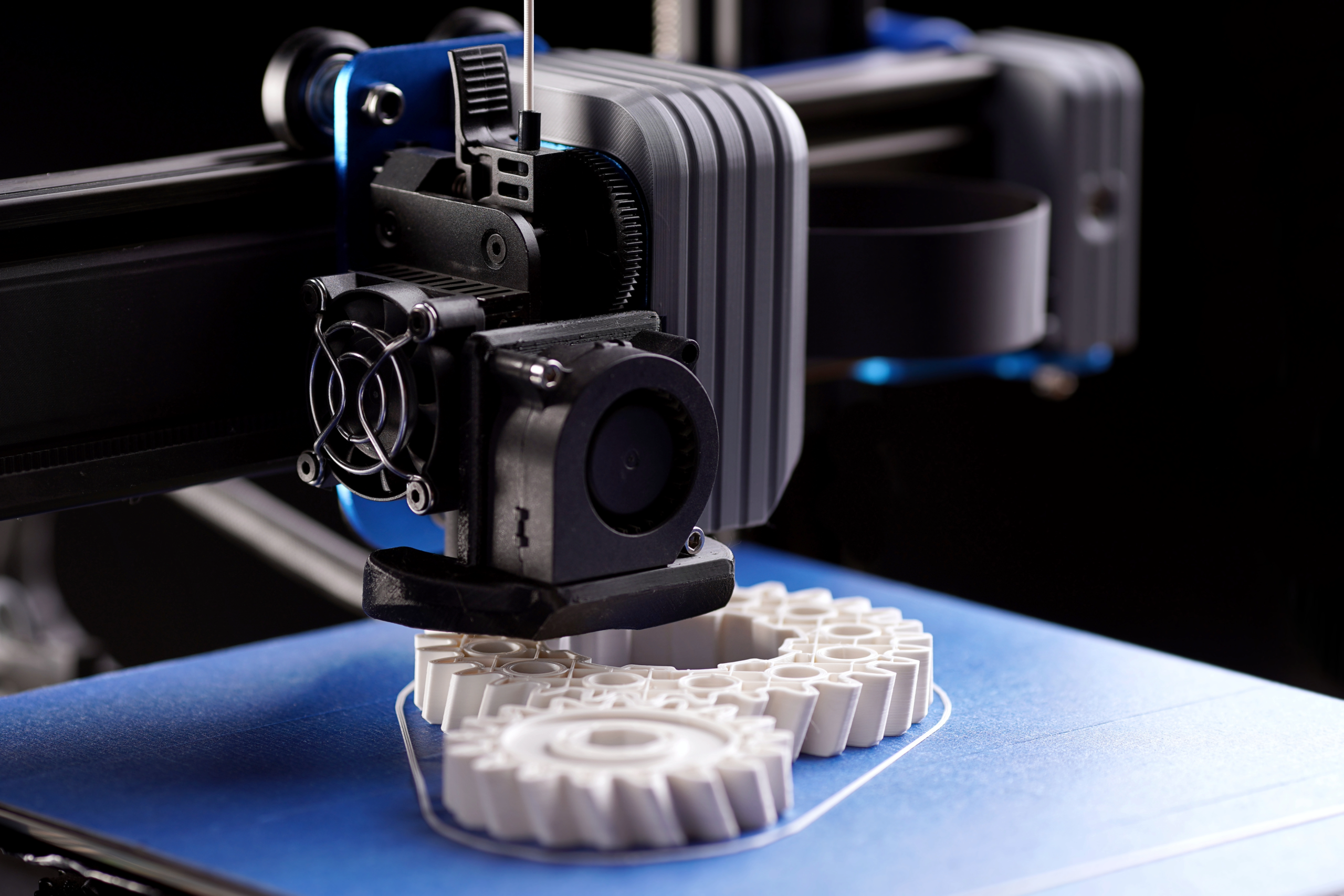
3D printing, also known as additive manufacturing, is transforming the robotics industry by enabling rapid prototyping and scalable production of complex components. From designing custom robotic parts to producing functional end-use components, 3D printing offers unmatched flexibility and efficiency. As a global leader in contract manufacturing, E-BI leverages its facilities in China, Vietnam, and Thailand to deliver 3D-printed components that power autonomous robotics. This article explores how 3D printing drives robotics from prototyping to production and how E-BI’s expertise fuels this innovation.
The Role of 3D Printing in Robotics
3D printing builds components layer by layer, allowing for complex geometries and customization that traditional manufacturing struggles to achieve. The global robotics market, valued at USD 40.1 billion in 2023, is projected to grow at a CAGR of 15.2% through 2030, with additive manufacturing playing a key role Grand View Research. 3D printing is used in robotics for rapid prototyping, custom end-effectors, and lightweight structural parts, accelerating development and production.
Rapid Prototyping for Robotics
3D printing enables engineers to create and test prototypes quickly, reducing development time and costs. For example, a robotic gripper prototype can be printed in hours, allowing iterative design improvements before final production Jabil. This speed is critical for robotics startups and innovators iterating on autonomous systems.
Production of Functional Parts
Beyond prototyping, 3D printing produces functional end-use parts, such as lightweight housings, brackets, and sensor mounts. Advanced materials like carbon-fiber-reinforced plastics and metals enable durable, high-performance components for robots in industries like manufacturing and healthcare Manufacturing Tomorrow.
Customization and Complexity
3D printing excels at creating complex, customized parts without the need for expensive tooling. This is ideal for robotics, where unique designs, such as tailored end-effectors or intricate internal structures, enhance functionality Assembly Magazine. The ability to produce small batches efficiently makes 3D printing a game-changer for scalable robotics production.
E-BI’s 3D Printing and Contract Manufacturing Expertise
E-BI’s facilities in China, Vietnam, and Thailand are equipped with advanced 3D printing technologies, including fused deposition modeling (FDM), selective laser sintering (SLS), and metal additive manufacturing. Our contract manufacturing services provide end-to-end solutions, from prototyping to high-volume production, tailored to robotics needs.
Advanced 3D Printing Capabilities
Our 3D printers support a wide range of materials, from PLA and ABS for prototyping to titanium and aluminum for production parts. We achieve tolerances as tight as 0.05 mm, ensuring precision for robotic components like gears and housings The Robot Report. Our expertise in multi-material printing enables hybrid components that combine strength and flexibility.
Contract Manufacturing for Scalability
As a contract manufacturer, E-BI streamlines the transition from prototype to production. We integrate 3D printing with other processes like CNC machining and injection molding to produce complete robotic assemblies. Our quality control ensures components meet stringent robotics standards Foundry Management & Technology.
Regional Manufacturing Strengths
China’s advanced additive manufacturing ecosystem provides access to cutting-edge 3D printing technologies and skilled engineers, driving innovation. Vietnam and Thailand offer cost-effective production and robust supply chains, enabling E-BI to deliver scalable, high-quality components for global robotics brands IndustryWeek.
Challenges in 3D Printing for Robotics
Despite its advantages, 3D printing faces challenges, including material limitations, production speed, and integration with IoT systems. Some materials lack the strength for heavy-duty robotic applications, while large-scale production can be slower than traditional methods Wiley. Integrating IoT-enabled sensors into 3D-printed parts adds complexity Automation World.
Overcoming 3D Printing Challenges
E-BI addresses these challenges through advanced material selection, using reinforced composites and metals for durability. We optimize printing processes to improve speed and scalability, and our expertise in IoT integration ensures 3D-printed components support smart robotics functionalities.
Powering Robotics Innovation with E-BI
3D printing is revolutionizing robotics, enabling rapid prototyping and scalable production of complex, customized components. E-BI’s contract manufacturing expertise in China, Vietnam, and Thailand delivers high-quality 3D-printed parts that power autonomous robotics, from prototypes to functional end-use components.
For robotics innovators aiming to accelerate development and scale production, partnering with E-BI offers a strategic edge. Our advanced 3D printing and contract manufacturing solutions can bring your robotic designs to life with precision and efficiency. Connect with E-BI today to drive the future of robotics.
Sources
- Grand View Research: Robotics Technology Market
- Jabil: 3D Printing in Robotics Manufacturing
- Manufacturing Tomorrow: 3D Printing in Robotics
- Assembly Magazine: 3D Printing for Robotics
- The Robot Report: 3D Printing in Robotics Prototyping
- Foundry Management & Technology: 3D Printing for Robotics
- IndustryWeek: Additive Manufacturing in Robotics
- Wiley: 3D Printing Challenges in Robotics
- Automation World: IoT in 3D Printing for Robotics