

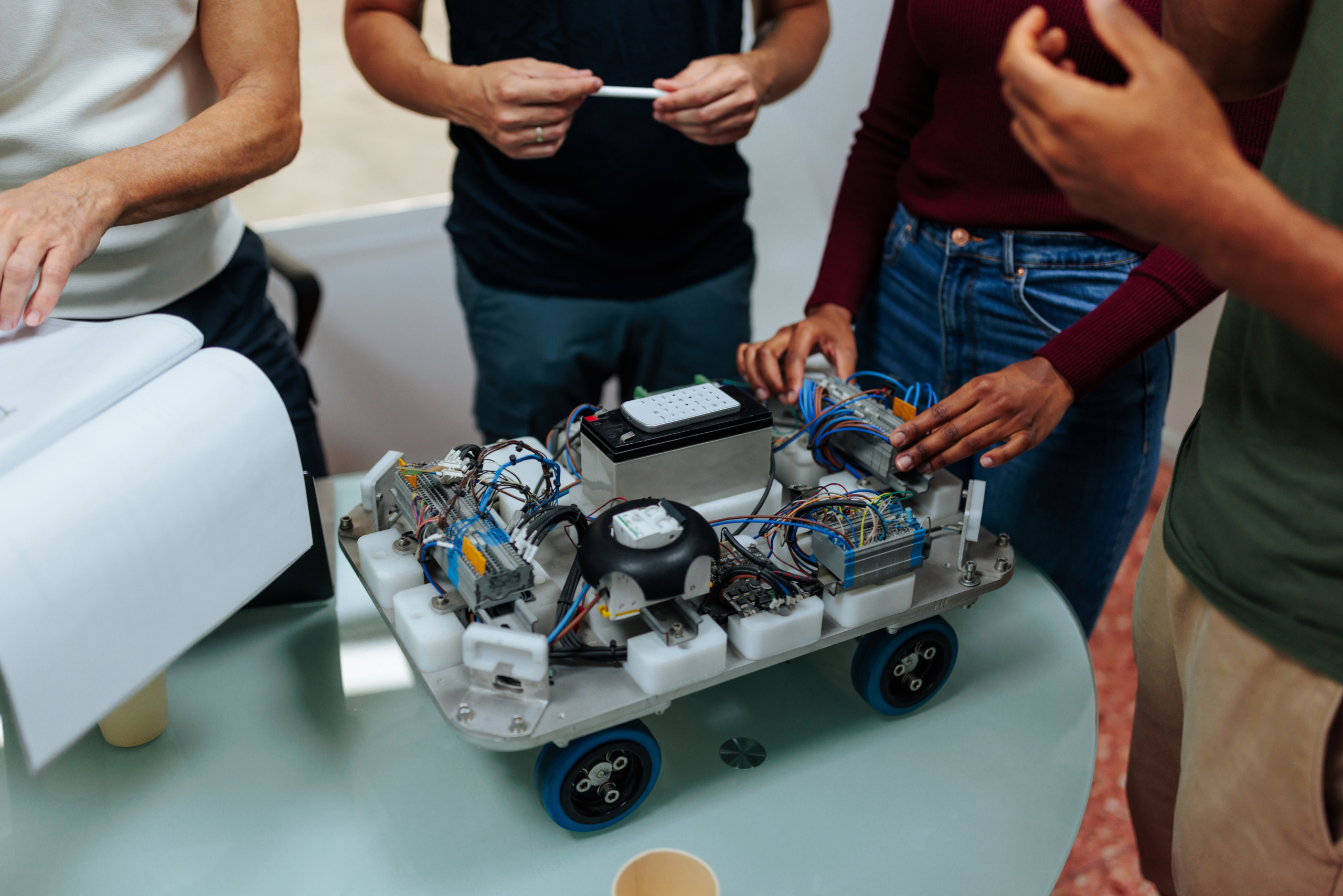
Autonomous robotics is driving innovation across industries like manufacturing, logistics, and healthcare, but scaling structural components for mass production presents significant challenges. Structural components, such as chassis, frames, and joints, require precision, durability, and cost-efficiency to meet growing demand. As a global leader in technical manufacturing, E-BI leverages its facilities in China, Vietnam, and Thailand to overcome these hurdles, delivering scalable solutions for robotics. This article explores the challenges in scaling structural robotics components and how E-BI’s expertise drives mass production.
The Importance of Structural Components in Robotics
Structural components form the backbone of autonomous robots, providing the framework for mobility, strength, and functionality. The global robotics market, valued at USD 40.1 billion in 2023, is projected to grow at a CAGR of 15.2% through 2030, driven by demand for scalable automation Grand View Research. Scaling these components for mass production requires overcoming challenges in manufacturing processes, material selection, and integration with smart systems.
Precision and Consistency
Structural components like chassis and joints require high precision to ensure robotic performance. Manufacturing processes must maintain tight tolerances, often within 0.01 mm, across thousands of units to ensure consistency in high-volume production Jabil. Variations in component dimensions can lead to assembly issues or reduced robot reliability.
Material Selection and Cost
Choosing the right materials—metals, plastics, or composites—balances strength, weight, and cost. High-strength materials like titanium are ideal but expensive, while cost-effective materials like aluminum may require additional processing to meet durability standards Manufacturing Tomorrow. Scaling production demands cost-efficient materials without compromising performance.
Integration with IoT Systems
Modern robots often incorporate IoT capabilities for connectivity and data exchange. Structural components must accommodate sensors, wiring, and modules, adding complexity to manufacturing processes. Ensuring compatibility with IoT systems while maintaining structural integrity is a significant challenge Assembly Magazine.
E-BI’s Expertise in Scaling Robotics Components
E-BI’s manufacturing facilities in China, Vietnam, and Thailand are equipped with advanced technologies, including CNC machining, injection molding, and additive manufacturing, to produce scalable structural components for robotics. Our expertise ensures precision, cost-efficiency, and IoT compatibility.
Advanced Manufacturing Capabilities
Our facilities use high-precision CNC machining and injection molding to produce consistent structural components with tolerances as tight as 0.01 mm. Automated production lines ensure repeatability, while advanced quality control, including CMM inspections, verifies component accuracy The Robot Report.
Material Optimization and Cost Management
E-BI optimizes material selection, using cost-effective alloys like aluminum and reinforced composites to balance performance and affordability. Our expertise in process optimization, such as lean manufacturing and mold simulation, reduces production costs while maintaining quality Foundry Management & Technology.
Regional Manufacturing Strengths
China’s advanced manufacturing ecosystem provides access to cutting-edge technologies and skilled engineers, driving innovation in robotics components. Vietnam and Thailand offer cost-effective production and robust supply chains, enabling E-BI to deliver scalable solutions for global robotics brands IndustryWeek.
Challenges in Scaling Structural Components
Scaling structural components faces challenges, including high tooling costs, supply chain disruptions, and IoT integration complexity. Complex components require expensive molds or tooling, while global supply chain issues can delay production Wiley. IoT integration demands precise design to accommodate sensors without compromising structural strength Automation World.
Overcoming Scaling Challenges
E-BI addresses these challenges through advanced tooling design and simulation, reducing costs and lead times. Our resilient supply chains in Vietnam and Thailand mitigate disruptions, while our IoT integration expertise ensures structural components support smart robotics functionalities without sacrificing durability.
Scaling Robotics with E-BI
Scaling structural robotics components for mass production is critical for meeting the growing demand for autonomous systems. E-BI’s manufacturing expertise in China, Vietnam, and Thailand delivers high-quality, scalable components that overcome production challenges, ensuring precision and reliability.
For robotics innovators aiming to scale production with robust structural components, partnering with E-BI offers a strategic advantage. Our advanced manufacturing capabilities and regional strengths can deliver tailored solutions with precision and efficiency. Connect with E-BI today to drive the future of robotics.
Sources
- Grand View Research: Robotics Technology Market
- Jabil: Robotics Manufacturing Trends
- Manufacturing Tomorrow: Scaling Robotics Components
- Assembly Magazine: Scaling Structural Components for Robotics
- The Robot Report: Scaling Robotics Production
- Foundry Management & Technology: Scaling Robotics Components
- IndustryWeek: Scaling Robotics Manufacturing
- Wiley: Scaling Challenges in Robotics
- Automation World: IoT in Robotics Scaling