

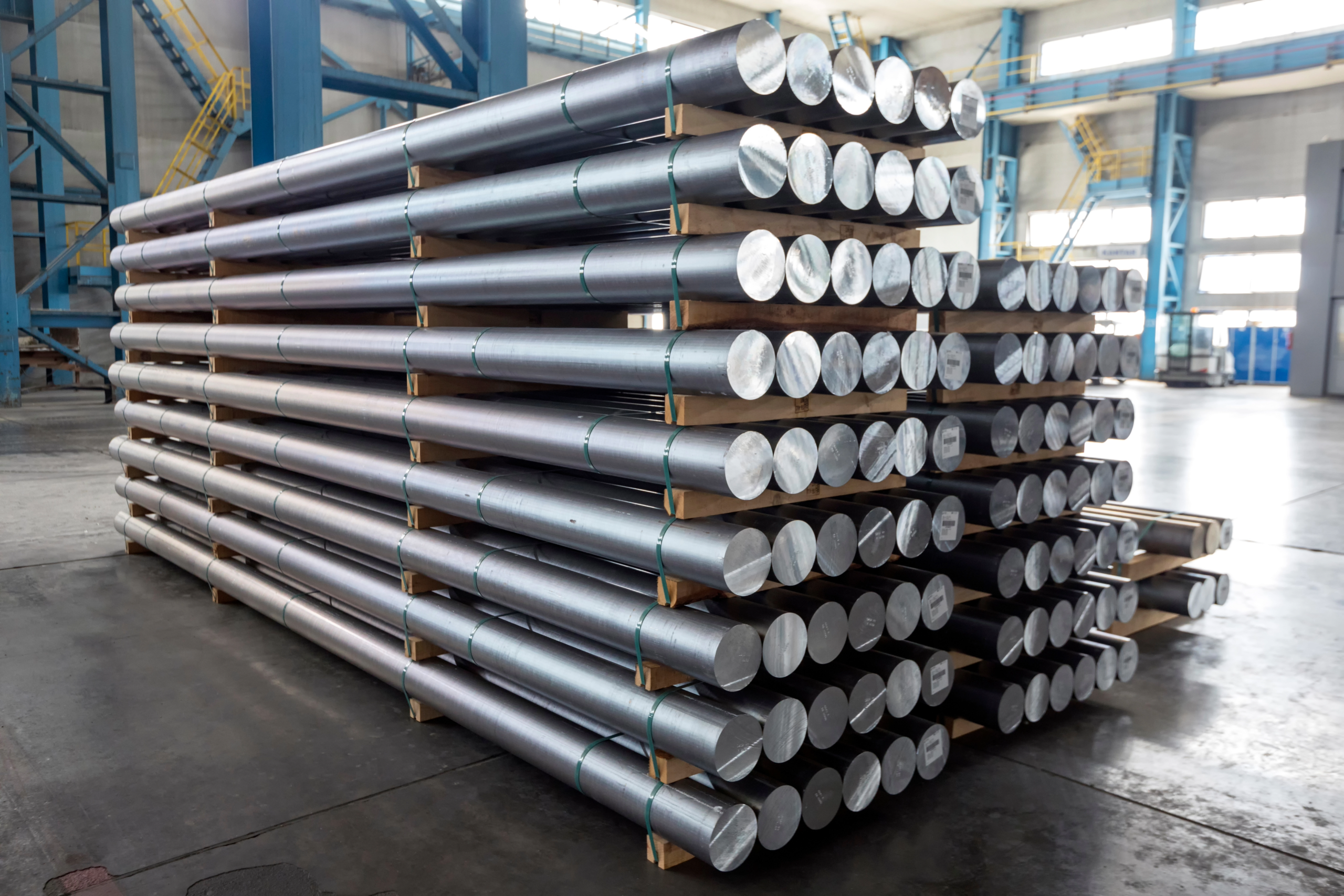
Picking aluminum for a humanoid robot isn’t about “strongest alloy wins.” It’s about matching the alloy to how the part is made (machined, welded, extruded, or die cast) and what failure looks like (fatigue at joints, stress corrosion in humid environments, thread pullout, impact from falls, thermal cycling near motors).
A useful mental model is to choose in this order:
- Manufacturing route: billet CNC vs extrusion vs sheet vs die casting
- Load case: static strength vs fatigue vs impact vs stiffness
- Environment: indoor lab vs sweaty/humid field use vs coastal/salt exposure
- Assembly details: threads/inserts, bearing seats, anodize/paint, galvanic couples
What humanoid robot parts usually need from aluminum
Frames & torso structures: stiffness, easy machining, good corrosion resistance, often extrusions
Arms/legs links: fatigue resistance, high stiffness, good machinability, sometimes weight-critical
Joint housings & actuator cases: dimensional stability, thermal behavior, good finish options, often cast + machined
Covers & fairings: light, formable, cosmetic finish, dent resistance
Mounts & brackets: machinable, repeatable threads, low cost
The short list of aluminum alloys that cover most humanoid robots
6061-T6 (the default for prototypes and general structure)
Best for: machined brackets, plates, general frames, many structural links, parts that may be revised often
Why: strong all-around performance, good corrosion resistance, easy to machine, and generally weldable compared to many high-strength alloys.
Reference (general properties/corrosion): https://www.ryerson.com/metal-resources/metal-market-intelligence/grade-anatomy-aluminum-6061
Reference (T6 and machinability/weldability context): https://www.kloecknermetals.com/blog/why-is-t6-the-most-popular-6061-aluminum-grade/
When to avoid: when you’re genuinely strength-limited (not stiffness-limited) and mass is very tight.
7075 (T6 / T651 for max strength, T73 / T7351 when SCC risk matters)
Best for: high-load links, compact joint yokes, parts where you can’t add section thickness and must raise strength
Why: very high strength-to-weight, excellent for highly stressed structural parts.
Important caveat: 7xxx alloys (including 7075-T6) are known to be susceptible to stress-corrosion cracking (SCC) in certain conditions; overaged tempers like T73/T7351 are used to improve SCC resistance.
Reference (7075 corrosion/SCC temper note in a manufacturer datasheet): https://www.spacematdb.com/spacemat/manudatasheets/alcoa_alloy_7075.pdf
Reference (7075-T6 SCC susceptibility discussion): https://www.sae.org/articles/susceptibility-aluminum-alloy-7075-t6-stress-corrosion-cracking-05-14-02-0013
When to avoid: welded assemblies, salty/humid environments without a corrosion plan, or where ductility/impact toughness matters more than strength.
5083 (and other 5xxx series) for corrosion + “strength after welding”
Best for: welded structures, panels, harsh or marine-like environments, parts where you expect welding and don’t want big strength loss from heat treatment changes
Why: commonly used for marine/corrosion-resistant applications; often chosen when corrosion and weld performance dominate.
Reference (marine-grade overview mentioning 5083 characteristics): https://continentalsteel.com/blog/marine-grade-aluminum/
(If you want a deeper technical view on 5xxx corrosion behavior): https://www.sciencedirect.com/science/article/pii/S2214785320306106
When to avoid: ultra-precise machined bearing seats (still doable, but many teams prefer 6061/7075 for tight-machined interfaces).
6082-T6 (common for extrusions; often higher strength than 6061)
Best for: structural extrusions (especially outside the US supply chain), rails, long members where extrusion performance matters
Why: widely used for structural applications; often positioned as higher-strength than 6061 in extrusion contexts.
Reference (6082 bar/extrusions datasheet): https://www.rightonblackburns.co.uk/datasheets/view/aluminium-alloy-6082-t6-bar-extrusions
Rule of thumb: if your robot’s structure is extrusion-heavy and you have good vendor support, 6082 is worth evaluating; many teams still default to 6061 for broad machinability and familiarity.
Aluminum for actuator housings and joint cases: die cast vs CNC billet
Humanoids frequently end up here: cast the housing for packaging + ribs, then CNC machine critical features (bearing bores, sealing lands, datum pads).
A380 (the common “default” die casting alloy)
Best for: general die cast housings and covers where cost and castability dominate
Reference (A380 as the common/default die casting alloy): https://www.gabrian.com/a380-aluminum-alloy/
A383 / A384 (alternatives when fill/hot-cracking resistance is the pain point)
Best for: intricate housings with tricky fill and cracking risk
Reference (383/384 as alternatives for intricate components, better fill/hot-cracking resistance): https://www.diecastingdesign.org/aluminum-alloys/
360 / A360 (when corrosion and pressure-tightness matter more)
Best for: housings exposed to moisture, thermal cycling, or pressure-tight needs (depending on process control and design)
Reference (ASM handbook entry mentioning properties like corrosion resistance and pressure tightness for 360/A360): https://dl.asminternational.org/handbooks/edited-volume/91/chapter/2085873/360-0-and-A360-0-1-Al-Si-Mg-General-Purpose-Die
Reference (die casting design guidance noting 360 vs 380 corrosion): https://www.diecastingdesign.org/aluminum-alloys/
A practical “which aluminum should I use?” map for humanoids
Use this as a starting point (teams often converge on these patterns):
1) Early prototypes (EVT-like builds)
- Most machined structure: 6061-T6
- A few critical high-load links: 7075 (consider T73/T7351 if SCC risk)
- Any welded experimental frames: 6061 or 5xxx (5083)
2) High-load, weight-critical links (arms/legs)
- If section thickness can grow: stay with 6061 (often stiffness-limited anyway)
- If you’re strength-limited and compact: 7075 (with corrosion strategy)
3) Joint housings / actuator cases
- Low volume / changing geometry: CNC 6061 for speed
- Scaling up: die cast A380/A383/A360 + CNC post-machining on critical features
4) Covers, fairings, cosmetic panels
- If formed sheet: typically 5052/5xxx (common in sheet forming) or 6061 depending on forming and finish needs
(Choose based on forming method and vendor capability.)
5) Threads, inserts, and wear interfaces
- For frequent service disassembly: plan for threaded inserts / helicoils regardless of alloy
- For bearing seats: prioritize machining quality + fit control; alloy choice is secondary to process control
Failure modes that should drive alloy choice
Stiffness vs strength (the most common “mistake”)
If your link deflects too much, switching from 6061 to 7075 may not fix it—because stiffness depends largely on geometry and modulus (which is similar across aluminum alloys). Often you need:
- thicker section
- better ribbing
- shorter load path
- different topology
Save 7075 for when you truly can’t add section and you’re hitting yield/fatigue limits.
Stress corrosion cracking (SCC) risk in high-strength 7xxx
If the robot will see humidity, sweat, outdoor use, coastal air, or stored preloaded parts:
- consider 7075-T73/T7351 for improved SCC resistance compared to T6/T651 (with some strength tradeoff)
- enforce a surface protection plan (anodize/paint + isolation)
Galvanic corrosion in mixed-metal assemblies
Humanoids frequently combine: aluminum + steel fasteners + stainless shafts + carbon fiber + copper grounding.
Design for:
- coatings (anodize, conversion coat, paint)
- isolating washers/bushings
- controlled grounding points (don’t “accidentally” ground through a bearing)
Finishes and surface treatments that pair well with humanoids
Typical stack that works across many robots:
- Type II anodize for general corrosion protection and cosmetics
- Hard anodize (Type III) for wear surfaces (careful with dimensional change)
- Conversion coating + paint/powder for cast housings or when you need conductivity control
7075 anodizing response is generally considered workable (including clear/hard coat) per common datasheets.
Quick selection checklist you can paste into an RFQ
When you ask a supplier for parts, specify:
- Alloy + temper (example: “6061-T6” or “7075-T7351”)
- Process route (CNC from billet, extrusion machining, die cast + post-machine)
- Critical interfaces: bearing seats, gear mounting faces, sealing lands
- Finish requirement (anodize type + color, paint, conversion coat)
- Environment (indoor, outdoor, coastal, sweat exposure)
- Assembly details (steel inserts required? torque specs? service cycle count?)
Outbound references used in this guide
6061 overview: https://www.ryerson.com/metal-resources/metal-market-intelligence/grade-anatomy-aluminum-6061
6061-T6 context: https://www.kloecknermetals.com/blog/why-is-t6-the-most-popular-6061-aluminum-grade/
7075 datasheet with SCC temper note: https://www.spacematdb.com/spacemat/manudatasheets/alcoa_alloy_7075.pdf
7075-T6 SCC susceptibility discussion: https://www.sae.org/articles/susceptibility-aluminum-alloy-7075-t6-stress-corrosion-cracking-05-14-02-0013
A380 die casting alloy overview: https://www.gabrian.com/a380-aluminum-alloy/
Die casting aluminum alloy comparisons (383/384/360): https://www.diecastingdesign.org/aluminum-alloys/
ASM handbook entry on 360/A360 (corrosion + pressure tightness context): https://dl.asminternational.org/handbooks/edited-volume/91/chapter/2085873/360-0-and-A360-0-1-Al-Si-Mg-General-Purpose-Die
Marine-grade aluminum overview (5083): https://continentalsteel.com/blog/marine-grade-aluminum/
6082 bar/extrusions datasheet: https://www.rightonblackburns.co.uk/datasheets/view/aluminium-alloy-6082-t6-bar-extrusions
Takeaways
- Default most machined humanoid structure to 6061-T6 until you have a measured reason not to.
- Use 7075 selectively for compact, highly stressed links—and treat corrosion/SCC as a real design input (consider T73/T7351).
- For actuator housings at scale, plan die cast (A380/A383/A360) + CNC post-machining on critical datums and bores.
- If welding and harsh environments dominate, consider 5xxx (e.g., 5083).