

Introduction
Driver 1: FDA-Compliant and Durable Materials
Food containers for automated packaging lines must use FDA-approved materials that are safe for direct food contact and durable enough to withstand the rigors of high-speed processing. Thermoplastics like polypropylene (PP), polyethylene (PE), and polyethylene terephthalate (PET) are ideal due to their chemical inertness, impact resistance, and compliance with 21 CFR regulations. For example, PP containers resist cracking during stacking and filling, ensuring reliability in automated systems, as noted by McKinsey & Company.
At E-BI, we prioritize FDA-compliant thermoplastics sourced from certified suppliers to ensure safety and traceability. Our facilities in China and Vietnam produce injection-molded PP trays for ready-to-eat meals that meet FDA standards for food contact, with no risk of leaching or flavor transfer. We conduct rigorous material testing, including migration and extractables analysis, to verify compliance and ensure containers remain safe under processing conditions like heat sealing or freezing.
E-BI’s material expertise includes selecting plastics with enhanced durability for automated handling, such as PET for beverage bottles that withstand high-pressure filling. We also incorporate additives like UV stabilizers to protect containers during storage or transport. By leveraging our capabilities, we help clients create molded food containers that ensure safety and longevity in automated packaging lines.
Driver 2: Precision Design for Machine Compatibility
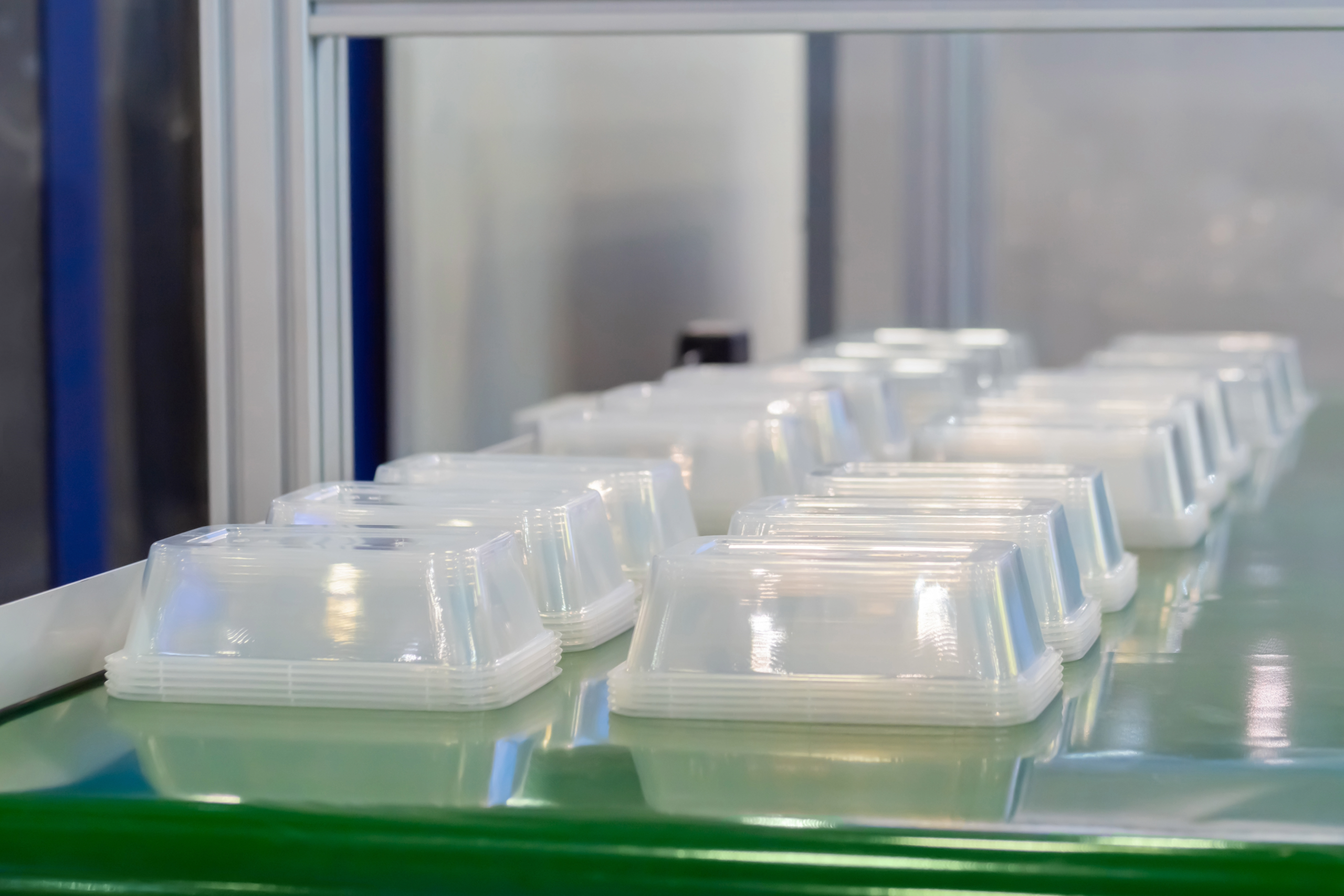
Molded food containers must be designed with precise geometries to ensure seamless integration with automated packaging machinery, such as fillers, sealers, and stackers. Injection molding delivers containers with tight tolerances, typically within ±0.02 mm, enabling consistent performance in high-speed lines. According to Boston Consulting Group, precision design is critical for automated packaging, where dimensional inconsistencies can cause jams or product waste.
E-BI’s facilities in Thailand and China utilize advanced molding technologies, including multi-cavity molds and in-mold labeling, to produce containers with exact dimensions and features like stacking ribs or tamper-evident seals. For example, we manufacture injection-molded PET clamshells for salads with uniform flanges that align perfectly with sealing machines, ensuring leak-proof closures. Our expertise in mold flow analysis eliminates defects like warping or uneven walls, delivering containers that perform reliably in automated systems.
Precision design also supports functional integration, such as molded-in handles or nesting features that optimize storage and handling. E-BI’s design-for-manufacturability (DFM) approach ensures that container designs are optimized for both machine compatibility and production efficiency, reducing downtime and enhancing throughput in automated packaging lines.
Driver 3: Hygienic Manufacturing and Cleanroom Standards
Food containers for automated packaging must be free from contaminants to ensure product safety and compliance with food safety regulations. Cleanroom manufacturing, adhering to ISO 13485 or GMP standards, is essential to prevent particulate or microbial contamination during injection molding. Research from Deloitte emphasizes that hygienic manufacturing is non-negotiable in food packaging, where contamination risks can lead to recalls or consumer harm.
E-BI’s facilities in China, Vietnam, and Thailand feature ISO Class 7 and Class 8 cleanrooms, equipped with high-precision molding machines and strict environmental controls. We produce PP containers for dairy products in cleanroom settings, ensuring they are free from dust or microbes. Our protocols include regular equipment sterilization, air filtration, and operator training to maintain cleanliness throughout production.
Design considerations for hygienic manufacturing include smooth surfaces and radiused edges to prevent bacterial growth, as well as materials that withstand sterilization methods like hot water or chemical cleaning. E-BI conducts validation testing to ensure that molded containers maintain FDA compliance and structural integrity post-cleaning, providing manufacturers with hygienic, safe solutions for automated packaging lines.
Driver 4: Cost Efficiency and Scalability
Automated packaging lines require high-volume production of food containers to meet market demand, making cost efficiency a critical driver. Injection molding offers low per-unit costs, minimal material waste, and fast cycle times, enabling manufacturers to achieve economies of scale. According to PwC, injection-molded plastic containers can reduce packaging costs by up to 20% compared to alternatives like glass or metal in high-volume applications.
E-BI’s manufacturing hubs in China, Vietnam, and Thailand are optimized for scalability, with automated production lines and rapid tooling capabilities that support high-volume production of food containers. For instance, we produce PET bottles for soft drinks in large quantities, ensuring consistent quality and cost efficiency. Our flexible processes also accommodate low-volume runs for custom containers, such as specialized trays for premium foods.
The durability of molded containers enhances cost efficiency by reducing damage during automated handling and transport. Unlike glass, which can shatter, or metal, which may dent, plastics resist impact and deformation. E-BI’s rigorous quality control, including drop and pressure testing, ensures that every container meets industry standards, delivering long-term value to manufacturers by minimizing waste and downtime.
Conclusion
Designing molded food containers for automated packaging lines is driven by FDA-compliant durable materials, precision machine-compatible designs, hygienic cleanroom manufacturing, and cost-effective scalability. These four drivers enable manufacturers to create safe, efficient, and reliable containers that optimize high-speed packaging operations. At E-BI, we harness these drivers to deliver high-quality, FDA-approved injection-molded containers from our facilities in China, Vietnam, and Thailand, empowering businesses to enhance food safety and achieve market success.
Whether you’re developing containers for snacks, beverages, or ready meals, E-BI is your trusted partner for precision manufacturing. Our expertise in injection molding ensures that your molded food containers deliver exceptional performance and compliance in automated packaging lines. Visit E-BI.com to explore how we can collaborate to create packaging solutions that streamline your operations and drive your success in the food industry.