

Food processing machinery—slicers, mixers, fillers, pasteurizers, conveyors, and packaging lines—undergoes frequent high-pressure, high-temperature washdowns with caustic detergents to meet strict hygiene standards (HACCP, FDA, EU 1935/2004, 3-A SSI). Electronic control systems in these machines must survive repeated exposure to water jets (up to 80–100 bar), steam, and aggressive chemicals while maintaining full functionality. E-BI manufactures IP69K-rated, food-contact-safe electronic assemblies in its facilities in China, Vietnam, and Thailand. This article explores the design and manufacturing strategies behind water-resistant electronics for food processing and how E-BI ensures compliance and reliability.
Harsh Conditions in Food Processing Environments
Electronics in food processing face extreme challenges:
- High-pressure washdown: 80–130 bar, 80 °C water
- Chemical exposure: alkaline/acidic cleaners, sanitizers, disinfectants
- Temperature cycling: −10 °C (cold storage) to +70 °C (hot fill lines)
- Humidity & condensation: near 100 % RH
- Vibration & mechanical shock from high-speed machinery
- Food-contact & cleanability requirements
Standard IP67 enclosures often fail under repeated high-pressure cleaning; IP69K is the industry benchmark for food-zone electronics Jabil.
IP69K vs IP67 – Critical Difference
IP69K adds high-temperature, high-pressure jet testing (80 °C, 80–100 bar, 14–16 L/min, 120 mm distance, 80 rpm rotation) — conditions far more aggressive than IP67 submersion testing. Only IP69K-rated enclosures and cable entries are considered truly suitable for daily washdown in food processing Assembly Magazine.
Food-Safe & Cleanable Materials
Materials must be:
- Non-toxic & non-absorbent (FDA 21 CFR 177, EU 1935/2004 compliant)
- Resistant to caustic/acidic cleaners (pH 2–12)
- Smooth & crevice-free to prevent bacterial harborage
- Compatible with CIP/SIP processes
E-BI’s Water-Resistant Electronics Manufacturing Capabilities
E-BI operates dedicated food-grade and high-IP lines across its three regions, supporting IP69K electronics for food processing OEMs.
IP69K Enclosure & Sealing Solutions
We deliver:
- Die-cast aluminum or stainless steel 316L enclosures with silicone gaskets
- M12 / M8 connectors with IP69K-rated backshells
- Cable glands & cord grips tested to 100 bar
- Full submersion & high-pressure jet testing in-house
Rugged PCBA & Component Protection
Assemblies feature:
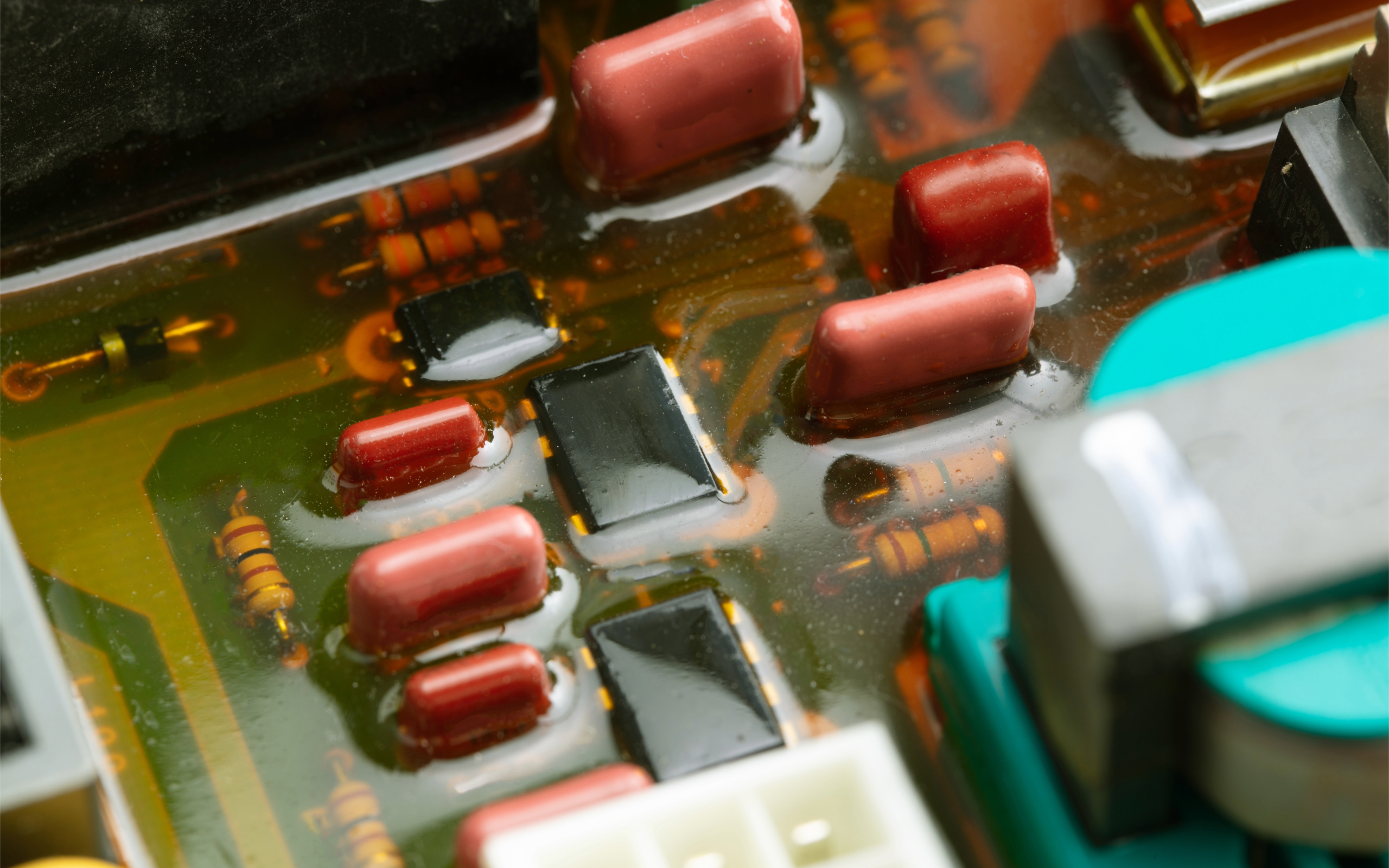
- Conformal coating (silicone or parylene) + selective potting
- Underfill on all BGAs & CSPs
- High-temperature FR-4 or polyimide substrates
- Extended-temperature components (−40 °C to +105 °C)
- Galvanic isolation for sensor inputs & outputs
Regional Manufacturing Advantages
China provides rapid prototyping and access to IP69K-rated connectors & enclosures. Vietnam and Thailand offer cost-effective scaling with short lead times to North America, Europe, and Asia-Pacific markets IndustryWeek.
Challenges in Water-Resistant Electronics for Food Processing
Key challenges include:
- Surviving repeated high-pressure, high-temperature washdowns
- Preventing moisture ingress at cable entries & connectors
- Maintaining electrical performance after chemical exposure
- Ensuring cleanability without crevices or dead spaces
- Balancing IP69K ruggedness with cost in price-sensitive food industry
E-BI mitigates these through 100 bar jet testing, material compatibility validation, hygienic design reviews, and extensive cycle testing Wiley.
Powering Food Safety with E-BI
Water-resistant electronics are essential for reliable control of food processing machinery in washdown environments. E-BI’s manufacturing expertise in China, Vietnam, and Thailand delivers IP69K-rated, food-safe assemblies that withstand daily high-pressure cleaning while maintaining precision and uptime.
For OEMs building slicers, mixers, fillers, pasteurizers, conveyors, or packaging lines, partnering with E-BI ensures your electronics meet the strictest hygiene and durability standards. Connect with E-BI today to build electronics that survive the wettest, toughest food processing environments.