

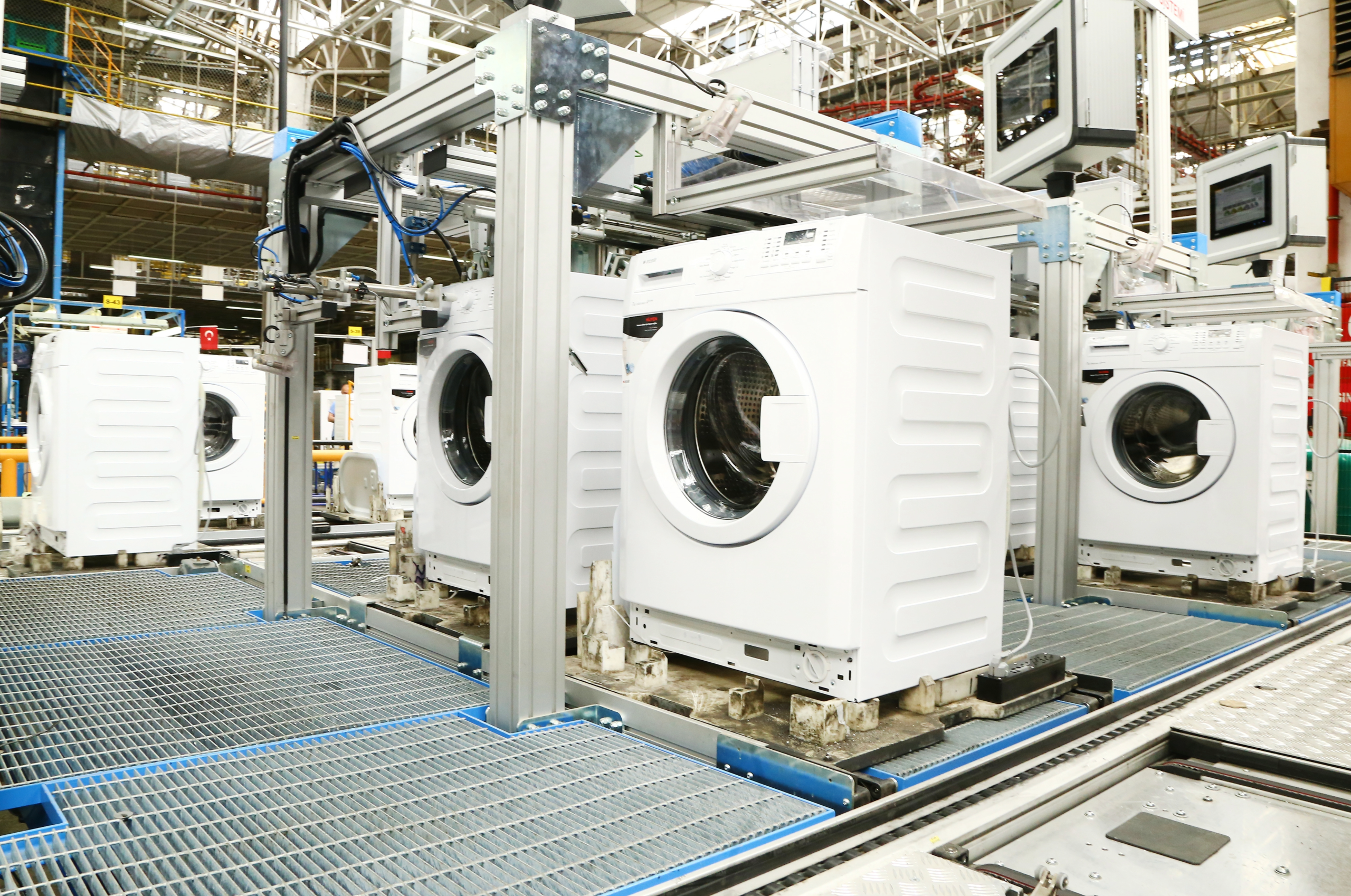
The smart home revolution is redefining how we live, merging technology with daily routines. At its core is the integration of the Internet of Things (IoT) in home appliances, powered by advanced manufacturing in regions like China, Vietnam, and Thailand. As a global leader in technical manufacturing, E-BI is driving this connected future, delivering precision-engineered components for smart home devices that prioritize efficiency, security, and innovation. This article explores the four key drivers propelling the smart home market, starting with IoT integration in home appliances, and highlights how E-BI’s manufacturing expertise supports this thriving industry.
1. IoT Integration in Home Appliances: The Foundation of Smart Homes
The smart home market, valued at USD 127.80 billion in 2024, is projected to grow at a compound annual growth rate (CAGR) of 27.0% through 2030, driven by IoT-enabled devices Grand View Research. IoT integration in appliances—such as refrigerators, washing machines, and thermostats—forms the backbone of this growth. By embedding sensors, connectivity modules, and software, manufacturers create devices that communicate, automate tasks, and enhance user convenience.
Why IoT Matters
IoT-enabled appliances connect to home networks via protocols like Wi-Fi, Bluetooth, Zigbee, or Z-Wave, enabling remote control and real-time data exchange. For example, a smart refrigerator can monitor inventory, suggest recipes, and alert users when supplies run low, while a smart washing machine optimizes cycles based on load and energy rates Jabil. These features improve efficiency and user experience, making IoT integration a critical driver of smart home adoption.
Manufacturing IoT-Ready Devices
Producing IoT-enabled appliances requires advanced manufacturing, including precision assembly, sensor integration, and connectivity testing. E-BI’s facilities in China, Vietnam, and Thailand specialize in these processes, using automation and high-precision robotics to ensure components meet stringent quality standards. Our expertise in printed circuit board assembly (PCBA) and microchip integration guarantees reliable performance in smart home ecosystems.
Regional Manufacturing Strengths
China’s leadership in 5G and IoT innovation, combined with Vietnam and Thailand’s cost-effective production environments, positions E-BI as a strategic partner for global smart home brands. Government support for IoT in China, as noted by Omdia, accelerates innovation, while Vietnam and Thailand offer competitive labor costs and robust supply chains, ideal for high-volume production.
2. Consumer Demand for Convenience and Energy Efficiency
The second driver is the growing consumer demand for convenience and energy efficiency. A World Economic Forum report shows 81% of global consumers are willing to pay a premium for energy-efficient products Market Research Future. Smart home appliances address this by automating tasks and optimizing energy use, reducing costs and environmental impact.
Convenience Through Automation
Smart appliances simplify daily routines. Smart thermostats like Nest or Ecobee learn user preferences and adjust temperatures automatically, while smart lighting systems dim or turn off when rooms are unoccupied XenonStack. These features save time and enhance comfort, appealing to busy households and tech-savvy consumers.
Energy Efficiency and Sustainability
IoT-enabled devices minimize energy waste, with smart meters, power strips, and appliances reducing household consumption by up to 30%, saving homeowners $200–$400 annually XenonStack. In China, where policies promote low-carbon solutions, smart appliances align with national sustainability goals GMI Research.
E-BI’s Role in Efficiency
E-BI supports this driver by manufacturing energy-efficient components, such as low-power sensors and controllers, enabling appliances to operate with minimal energy. Our Vietnam and Thailand facilities use lean manufacturing to reduce waste, aligning with the sustainability goals of smart home brands.
3. Advancements in AI and Voice-Controlled Interfaces
The third driver is the integration of artificial intelligence (AI) and voice-controlled interfaces, enhancing smart home functionality and accessibility. AI-powered assistants like Amazon’s Alexa, Google Assistant, and Apple’s Siri dominate IoT ecosystems, with voice recognition capturing over 60% of the autonomous AI market in 2024 Market.us.
AI-Powered Personalization
AI enables appliances to learn user behaviors and anticipate needs. A smart oven might suggest cooking settings based on past usage, while a security system distinguishes between routine and suspicious activities Softobotics. These personalized experiences drive adoption by making smart homes intuitive and user-friendly.
Voice Control as a Game-Changer
Voice-activated systems simplify device management, allowing users to control appliances with commands. In China, companies like Xiaomi and Alibaba lead in AI-driven ecosystems, integrating voice assistants into affordable devices Omdia. Southeast Asia, with rising smartphone penetration, sees growing demand for voice-enabled smart homes.
Manufacturing AI Components
Producing AI-enabled appliances requires sophisticated components, such as high-performance processors and noise-canceling microphones. E-BI’s expertise in microelectronics and firmware development ensures these components meet AI and voice control demands. Our China facilities, with access to advanced semiconductor supply chains, are ideal for AI-ready hardware.
4. Enhanced Security and Privacy Solutions
The fourth driver is the focus on security and privacy in smart homes. With 80% of IoT devices vulnerable to cyberattacks, security is a top priority SkyQuest. Consumers and manufacturers emphasize robust security features to build trust and ensure safe adoption.
Smart Security Systems
Smart security devices, including cameras, door locks, and motion sensors, provide real-time monitoring and alerts. Xiaomi’s Mi Home platform integrates AI-driven security features into affordable devices, gaining popularity in China and beyond Omdia. These systems enhance safety with remote access and instant notifications.
Addressing Privacy Concerns
Privacy is critical as IoT devices collect sensitive data, like movement patterns or purchase habits GMI Research. Standards like Matter, supported by Huawei and Tuya, improve interoperability and security, reducing fragmentation and boosting consumer confidence Omdia.
E-BI’s Security Contributions
E-BI manufactures secure IoT components, such as encrypted microcontrollers and tamper-resistant sensors, to protect smart home devices. Our Thailand and Vietnam facilities adhere to international security standards, ensuring components meet the needs of brands focused on privacy and safety.
Challenges and Opportunities in Smart Home Manufacturing
The smart home market offers immense opportunities but faces challenges. Device interoperability remains a hurdle, as varying protocols complicate integration Wiley. High setup costs also deter consumers, particularly in emerging markets Market.us. These challenges create opportunities for innovation.
Overcoming Interoperability
E-BI supports standards like Matter by producing components that enable cross-platform compatibility. Our firmware and API expertise ensures devices from different brands work seamlessly, fostering cohesive smart home ecosystems.
Reducing Costs
By leveraging cost-effective manufacturing in Vietnam and Thailand, E-BI helps brands offer affordable smart home solutions. Our scalable production meets the growing demand for budget-friendly IoT devices in Asia and beyond.
Building the Future with E-BI
The smart home market is poised for exponential growth, driven by IoT integration, consumer demand, AI advancements, and security innovations. As a trusted manufacturing partner, E-BI is well-positioned to support this evolution. Our facilities in China, Vietnam, and Thailand combine cutting-edge technology with cost-efficient production, enabling global brands to deliver innovative smart home devices.
For companies aiming to lead the smart home market, partnering with E-BI offers a strategic advantage. Our expertise in IoT component manufacturing—from sensors to secure microcontrollers—ensures your products excel in a connected world. Whether developing AI-powered appliances or energy-efficient security systems, E-BI’s precision engineering and regional strengths can bring your vision to life.
Let’s shape the future of smart homes together. Connect with E-BI today to explore how our manufacturing solutions can drive your success in this dynamic market.
Sources
- Grand View Research: Smart Home Market Report
- Jabil: Why Smart Home Appliances Are the Future
- Omdia: IoT in Smart Homes
- Market Research Future: Smart Home Market
- XenonStack: Smart Home Technology
- GMI Research: Global Smart Home Market
- Market.us: Smart Home Market
- Softobotics: Smart Home Automation with AI
- SkyQuest: Smart Home Market
- Wiley: IoT Interoperability Challenges