

Introduction
The automotive industry is in the midst of a lightweighting revolution, driven by the need to improve fuel efficiency, extend electric vehicle (EV) range, and comply with stringent emissions regulations. Plastic injection molding has become a pivotal technology in this transformation, enabling manufacturers to replace heavy metal components with high-performance plastics that offer comparable strength at a fraction of the weight. At E-BI, our advanced manufacturing facilities in China, Vietnam, and Thailand deliver precision-molded plastic auto parts that empower businesses to achieve lightweighting goals without sacrificing durability or performance. This article explores the four key drivers of plastic injection molding in lightweighting auto part design and outlines how partnering with E-BI can help automotive companies stay ahead in a competitive market.
Driver 1: Advanced Material Innovations
High-performance polymers, such as polyamide (PA), polycarbonate (PC), and carbon-fiber-reinforced plastics (CFRP), are at the forefront of lightweighting in auto part design. These materials provide exceptional strength-to-weight ratios, making them ideal for replacing steel and aluminum in components like dashboards, bumper reinforcements, and seat frames. For instance, injection-molded CFRP parts can reduce weight by up to 50% compared to metal equivalents, while maintaining structural integrity, as noted by McKinsey & Company.
At E-BI, we specialize in working with advanced thermoplastics and composites tailored to automotive applications. Our expertise in material selection and injection molding ensures that parts meet rigorous performance standards, such as impact resistance and thermal stability. By leveraging our manufacturing capabilities in Asia, we help clients reduce vehicle weight, improve fuel economy, and lower production costs. This driver is particularly critical for EVs, where every kilogram saved extends driving range, making plastic injection molding a game-changer for next-generation vehicles.
Moreover, innovations in polymer blends and additives enhance the functionality of molded parts. For example, glass-fiber-reinforced plastics improve stiffness, while flame-retardant additives ensure compliance with safety regulations. E-BI’s facilities in China, Vietnam, and Thailand are equipped to handle these complex materials, delivering precision parts that align with the automotive industry’s lightweighting objectives.
Driver 2: Precision and Design Flexibility
Plastic injection molding offers unparalleled design flexibility, allowing manufacturers to create complex geometries that are difficult or impossible to achieve with metal. This precision is essential for lightweighting, as it enables the production of intricate parts with thin walls, integrated features, and optimized structures. For example, injection-molded intake manifolds and engine covers can incorporate ribs and lattice designs that reduce weight while maintaining strength, as highlighted by Boston Consulting Group.
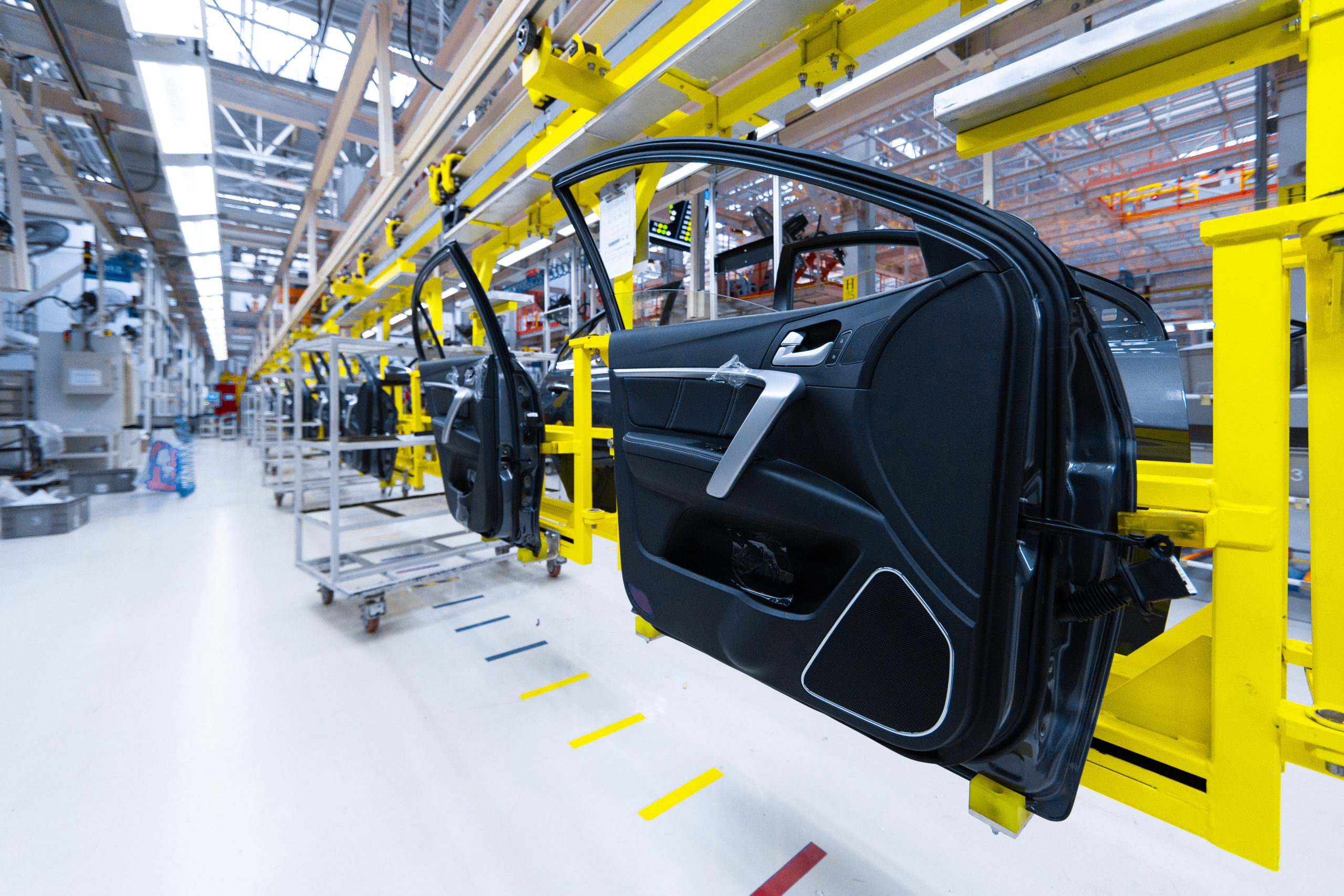
E-BI’s advanced molding technologies, including multi-cavity molds and overmolding, enable the production of lightweight auto parts with tight tolerances and consistent quality. Our facilities in Vietnam and Thailand utilize state-of-the-art equipment to produce components like door panels and interior trim with minimal material waste. This precision not only supports lightweighting but also reduces production costs, making it an attractive solution for high-volume automotive manufacturing.
Design flexibility also facilitates part consolidation, where multiple metal components are replaced with a single molded plastic part. This approach reduces assembly time, lowers costs, and eliminates weak points, such as welds or fasteners. E-BI collaborates with clients to optimize designs for manufacturability, ensuring that lightweight parts meet performance and aesthetic requirements while streamlining production processes.
Driver 3: Cost Efficiency and Scalability
Cost efficiency is a critical driver of plastic injection molding in lightweighting auto part design. While advanced polymers may have higher upfront costs than metals, the overall economics of injection molding are highly favorable. The process allows for high-volume production with minimal labor and material waste, resulting in significant cost savings over time. According to Deloitte, plastic injection molding can reduce manufacturing costs by up to 30% compared to traditional metal fabrication for certain components.
E-BI’s manufacturing hubs in China, Vietnam, and Thailand are optimized for scalability, enabling us to produce lightweight auto parts in large quantities without compromising quality. Our expertise in rapid tooling and automated production ensures fast turnaround times, helping automotive companies meet tight market deadlines. For low-volume or prototype runs, we offer flexible solutions that minimize upfront tooling costs, making lightweighting accessible to both established manufacturers and emerging EV startups.
Additionally, the durability of injection-molded plastics reduces maintenance and replacement costs over a vehicle’s lifespan. Unlike metal parts, which may corrode or fatigue, high-performance plastics are resistant to environmental factors, ensuring long-term reliability. E-BI’s commitment to quality control and material testing ensures that every part meets automotive industry standards, providing cost-effective solutions for lightweighting.
Driver 4: Sustainability and Regulatory Compliance
Sustainability is a growing priority in the automotive industry, driven by consumer demand and regulatory pressures. Plastic injection molding supports lightweighting by reducing vehicle weight, which directly lowers fuel consumption and greenhouse gas emissions. Furthermore, many high-performance plastics are recyclable, aligning with circular economy principles. Research from PwC indicates that lightweighting with plastics can reduce a vehicle’s carbon footprint by up to 20% over its lifecycle.
At E-BI, we prioritize sustainable manufacturing practices, including the use of recycled and bio-based plastics where applicable. Our facilities in China, Vietnam, and Thailand adhere to strict environmental standards, ensuring that our processes minimize waste and energy consumption. By partnering with E-BI, automotive companies can achieve lightweighting goals while meeting regulatory requirements, such as the European Union’s CO2 emissions targets and the U.S. Corporate Average Fuel Economy (CAFE) standards.
Beyond emissions, injection-molded plastics contribute to sustainability through durability and longevity. Components like exterior panels and under-hood parts withstand harsh conditions, reducing the need for frequent replacements. E-BI’s expertise in material selection and process optimization ensures that lightweight parts deliver both environmental and economic benefits, positioning our clients as leaders in sustainable automotive manufacturing.
Conclusion
Plastic injection molding is revolutionizing lightweighting in auto part design through advanced materials, precision engineering, cost efficiency, and sustainability. These four drivers—material innovations, design flexibility, cost-effective scalability, and regulatory compliance—enable automotive manufacturers to reduce vehicle weight, enhance performance, and meet environmental goals. At E-BI, we bring these drivers to life with our world-class manufacturing capabilities in China, Vietnam, and Thailand. Our expertise in injection molding empowers businesses to create lightweight, high-quality auto parts that drive competitive advantage.
Whether you’re developing next-generation EVs or optimizing traditional vehicles, E-BI is your trusted partner for precision manufacturing. Collaborate with us to leverage the power of plastic injection molding and transform your lightweighting strategy. Visit E-BI.com to explore our solutions and start building a lighter, more efficient future for your automotive products.
Sources