

The smart home revolution, powered by the Internet of Things (IoT), is transforming how we live, with devices like smart thermostats, connected lighting, and security systems becoming household staples. Behind these innovative products lies a complex manufacturing process that demands precision, scalability, and expertise. At E-BI, a global leader in technical manufacturing with facilities in China, Vietnam, and Thailand, we specialize in producing the components that make smart home IoT devices possible. This article delves into the four key drivers of manufacturing IoT-enabled smart home products and highlights how E-BI’s capabilities can help bring these technologies to market.
1. Precision Engineering for Complex Components
Smart home IoT devices rely on intricate components such as sensors, microcontrollers, and wireless communication modules. These components must be manufactured with extreme precision to ensure functionality and reliability. For example, a smart thermostat requires temperature sensors accurate to within a fraction of a degree, while a connected camera needs high-resolution imaging chips. According to IDC, the demand for IoT devices is driving advancements in semiconductor manufacturing, with a focus on miniaturization and performance.
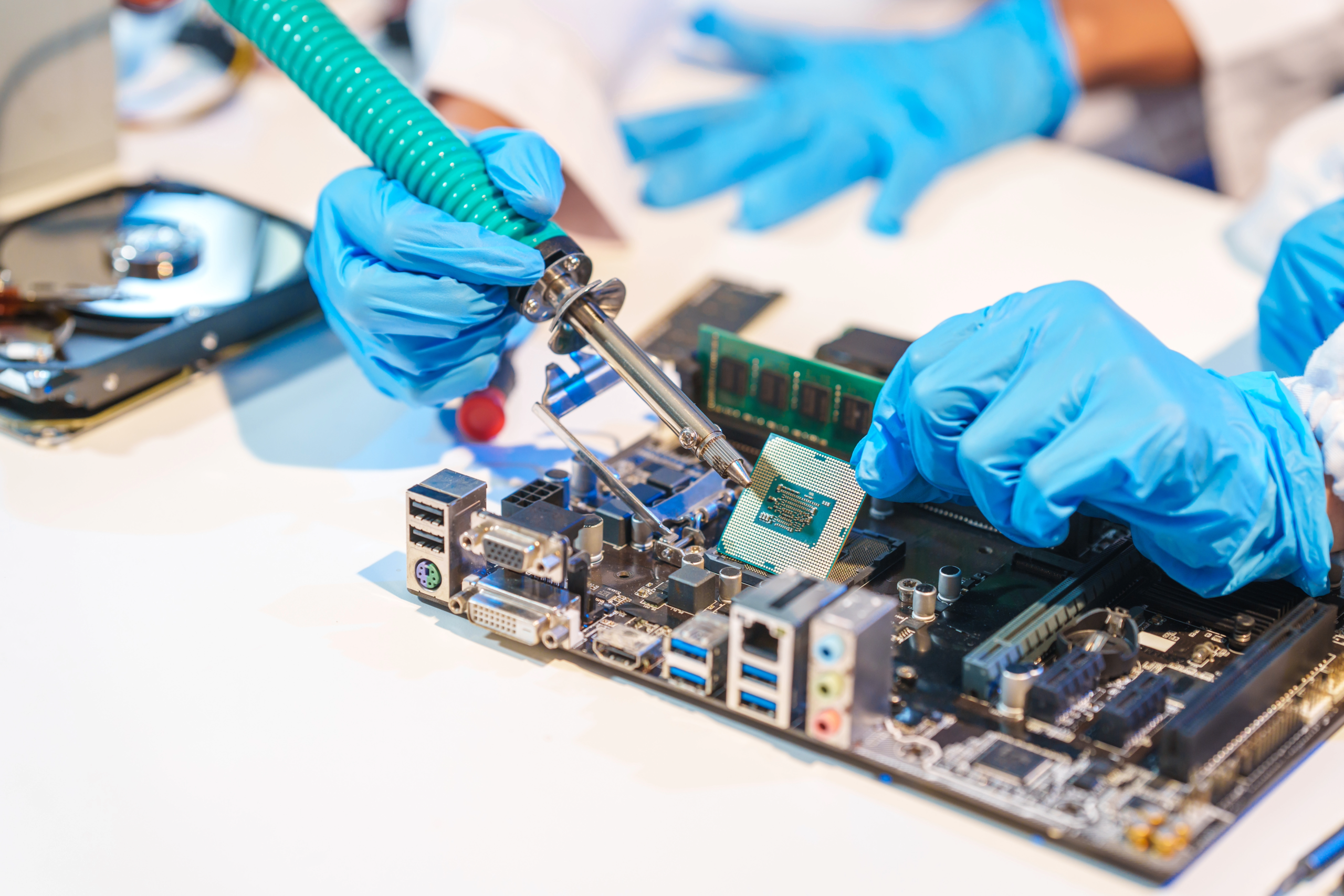
At E-BI, we leverage state-of-the-art equipment and rigorous quality control processes to produce these critical components. Our facilities in China, Vietnam, and Thailand are equipped with advanced cleanroom environments and automated assembly lines, ensuring that every sensor and chip meets exacting standards. By partnering with E-BI, companies can access the precision engineering needed to create smart home devices that perform flawlessly in real-world conditions.
2. Scalable and Flexible Supply Chains
The global demand for smart home IoT devices is skyrocketing, with Statista projecting that over 1.8 billion smart home devices will be shipped worldwide by 2027. Meeting this demand requires a robust and adaptable supply chain capable of scaling production while maintaining cost efficiency. Manufacturers must also navigate challenges like component shortages and geopolitical uncertainties.
E-BI’s strategic manufacturing locations in China, Vietnam, and Thailand provide a competitive advantage in supply chain management. Our multi-country presence allows us to diversify sourcing, optimize logistics, and mitigate risks associated with regional disruptions. Whether producing small batches for prototyping or scaling to millions of units, E-BI’s flexible supply chain ensures timely delivery of high-quality components, helping brands meet market demand without compromise.
3. Integration of Connectivity and Interoperability Standards
Connectivity is the backbone of IoT-enabled smart home devices, enabling them to communicate within ecosystems like Amazon Alexa, Google Home, or Apple HomeKit. Manufacturing these devices requires expertise in integrating wireless technologies such as Wi-Fi, Bluetooth Low Energy (BLE), Zigbee, and Z-Wave. Additionally, ensuring interoperability—where devices from different brands work seamlessly together—is critical to consumer adoption. A report by McKinsey emphasizes that interoperability is a key enabler of IoT market growth.
E-BI excels in manufacturing components that meet industry-standard connectivity protocols. Our engineering teams collaborate closely with clients to ensure that wireless modules and firmware are optimized for compatibility and performance. By producing components that adhere to global standards, E-BI enables brands to create smart home devices that integrate effortlessly into diverse IoT ecosystems, enhancing user experience and market appeal.
4. Commitment to Quality and Regulatory Compliance
Smart home IoT devices must meet stringent quality and regulatory requirements to ensure safety, reliability, and consumer trust. These requirements include certifications like CE, FCC, and RoHS, as well as adherence to regional standards for electromagnetic compatibility and energy efficiency. Non-compliance can result in costly recalls or market entry delays. According to UL Solutions, regulatory complexity is a top challenge for IoT device manufacturers.
At E-BI, quality is at the core of our manufacturing process. Our facilities are ISO 9001-certified, and we implement comprehensive testing protocols to verify component performance and durability. We also stay abreast of evolving regulations across global markets, ensuring that our clients’ products comply with all necessary standards. By partnering with E-BI, companies can confidently navigate the regulatory landscape and deliver smart home devices that meet the highest quality benchmarks.
The E-BI Advantage in IoT Manufacturing
Manufacturing smart home IoT devices is a multifaceted challenge that requires technical expertise, operational agility, and a commitment to excellence. At E-BI, we bring these qualities together to deliver end-to-end manufacturing solutions. From precision-engineered components to scalable production and regulatory compliance, our capabilities empower brands to innovate and succeed in the competitive smart home market.
Our global footprint in China, Vietnam, and Thailand enables us to offer cost-effective, high-quality manufacturing tailored to the unique needs of IoT products. We also provide value-added services like design-for-manufacturing (DFM) support, helping clients optimize their products for production efficiency and performance. With E-BI as a partner, companies can focus on innovation while we handle the complexities of manufacturing.
Collaborate with E-BI to Shape the Smart Home Future
The smart home IoT market is poised for explosive growth, and the ability to manufacture high-quality, innovative devices will determine who leads the way. By focusing on precision engineering, scalable supply chains, connectivity standards, and regulatory compliance, E-BI is helping to shape the future of smart living. For companies looking to bring their smart home visions to life, E-BI offers the expertise and resources to make it happen.
Let’s build the next generation of smart home devices together. Whether you’re developing a cutting-edge security system or a sustainable smart appliance, E-BI is ready to support your journey from concept to market. Reach out to E-BI today to explore how our manufacturing solutions can drive your success in the IoT revolution.