

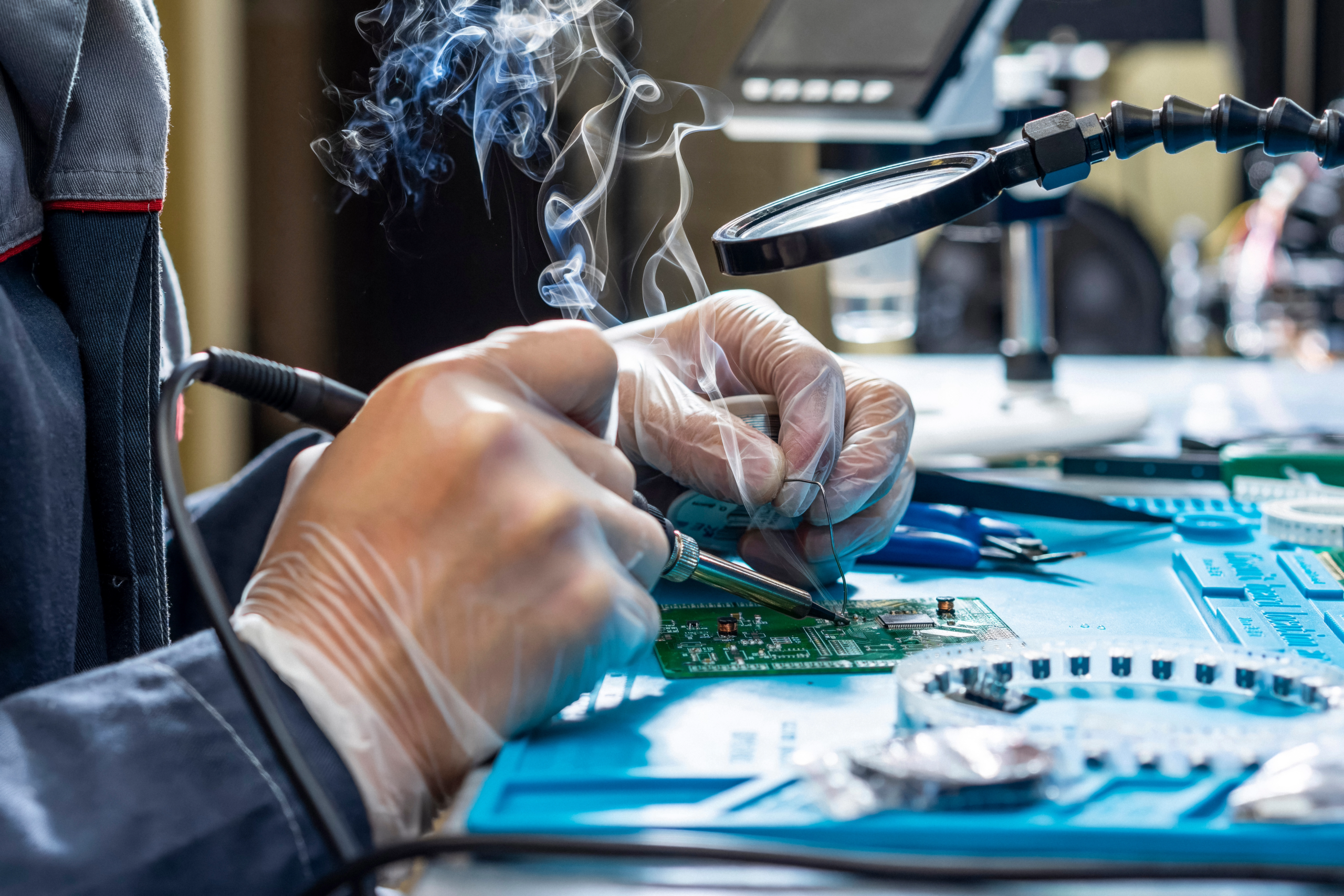
Analytical instruments—mass spectrometers, chromatographs, spectrometers, sequencers, and elemental analyzers—require electronics of extraordinary precision, low noise, and long-term stability. These devices detect and quantify substances at parts-per-trillion levels, making even the smallest electronic artifact capable of ruining an analysis. E-BI manufactures these ultra-high-reliability assemblies in its ISO 13485 and ISO 9001-certified facilities across China, Vietnam, and Thailand. This article explores the specialized requirements of electronic assemblies in analytical instrumentation and how E-BI meets the demanding standards of leading scientific instrument manufacturers.
Why Analytical Instruments Demand Extreme Precision
The global analytical instrumentation market is projected to reach USD 68.5 billion by 2030, growing at a CAGR of 6.2% Grand View Research. These instruments rely on analog front-ends, high-resolution ADCs, low-noise power supplies, and ultra-stable timing circuits to deliver repeatable results at trace levels.
Low-Noise & High-Resolution Signal Chains
Most analytical detectors produce nanoamp-to-picoamp signals. PCBAs must achieve:
- Input-referred noise < 1 nV/√Hz
- 24–32 bit effective resolution ADCs
- Femtoampere leakage currents
- Guard rings, kelvin connections, and star grounding
- Shielded analog sections separated from digital planes
Multi-layer boards (10–20 layers) with dedicated analog ground planes are standard Jabil.
Ultra-Stable Power & Clocking
Power supplies must deliver:
- < 1 mV ripple / noise
- Sub-ppm temperature drift
- Long-term stability (years) for calibration retention
Clock sources often require OCXO or rubidium references with < 1 ppb stability.
EMC & Environmental Isolation
Analytical instruments must operate in labs with high RF noise from other equipment. PCBAs require:
- Full metal shielding cans
- Filtered power entry
- Low-EMI clocking and spread-spectrum techniques
- Thermal stability for drift-sensitive analog circuits
E-BI’s Precision Instrumentation Capabilities
E-BI operates dedicated low-noise and high-stability assembly lines optimized for analytical and scientific instrumentation.
Low-Noise PCB Layout & Assembly
We routinely produce:
- 12–20 layer boards with split analog/digital planes
- Guard traces, kelvin sense lines, and star grounding
- Ultra-low-noise LDOs and precision references
- 24–32 bit delta-sigma ADCs with PGA
- Shielded enclosures and Faraday cage integration
Thermal & Long-Term Stability
Techniques include:
- Low-TCR resistors and capacitors
- OCXO / TCXO clock modules with < 0.1 ppb stability
- Active thermal compensation circuits
- Extended burn-in and aging protocols
Regional Manufacturing Advantages
China provides rapid access to precision analog components and low-noise materials. Vietnam and Thailand offer cost-effective scaling with short lead times to North America and Europe IndustryWeek.
Challenges in Precision Analytical Electronics
Key challenges include:
- Achieving sub-ppm long-term drift
- Maintaining femtoampere leakage in humid environments
- Ensuring noise performance after soldering & cleaning
- Managing component obsolescence over 10–15 year instrument lifecycles
- Balancing ultra-high performance with reasonable cost
E-BI mitigates these through low-noise layout guidelines, extensive post-assembly testing, and proactive obsolescence management Wiley.
Powering Scientific Discovery with E-BI
Precision electronic assemblies are the foundation of accurate, repeatable analytical instrumentation. E-BI’s manufacturing expertise in China, Vietnam, and Thailand delivers the low-noise, high-stability, and long-term reliability required by leading instrument makers.
For companies developing mass spectrometers, chromatographs, atomic absorption systems, or next-generation sequencers, partnering with E-BI ensures your electronics meet the highest scientific standards. Connect with E-BI today to enable the next breakthrough in analytical science.