

Introduction
Driver 1: Advanced Conductive Materials and Coatings
Effective EMI shielding requires materials that block or absorb electromagnetic waves, preventing interference with sensitive electronics. Thermoplastics, such as polycarbonate (PC) and acrylonitrile butadiene styrene (ABS), can be enhanced with conductive fillers, like carbon fibers or metal particles, to create EMI-shielding housings. Alternatively, injection-molded housings can be coated with conductive layers, such as nickel or copper, to achieve similar results. According to McKinsey & Company, conductive plastics are increasingly critical for shielding compact devices like smartphones and IoT sensors.
At E-BI, we specialize in formulating and processing conductive thermoplastics to produce housings with integrated EMI shielding. Our facilities in China and Vietnam use advanced compounding techniques to ensure uniform distribution of conductive fillers, achieving shielding effectiveness of up to 60 dB. For applications requiring secondary coatings, we apply precision spray or vacuum metallization processes to create seamless, conductive surfaces. These solutions are ideal for devices like wireless routers and medical monitors, where EMI can compromise performance.
E-BI’s material expertise ensures that EMI-shielding housings maintain mechanical properties, such as impact resistance and lightweight design, without sacrificing conductivity. By leveraging our manufacturing capabilities, we help clients protect their electronics from interference while meeting weight and durability requirements, ensuring reliable performance in demanding environments.
Driver 2: Precision Molding for Seamless Integration
EMI shielding is most effective when housings are designed with precise geometries that eliminate gaps and ensure continuous conductive pathways. Plastic injection molding excels in producing complex, seamless housings with tight tolerances, critical for maintaining shielding integrity. For example, molded housings for automotive control units must align perfectly with internal components to prevent EMI leakage, as noted by Boston Consulting Group.
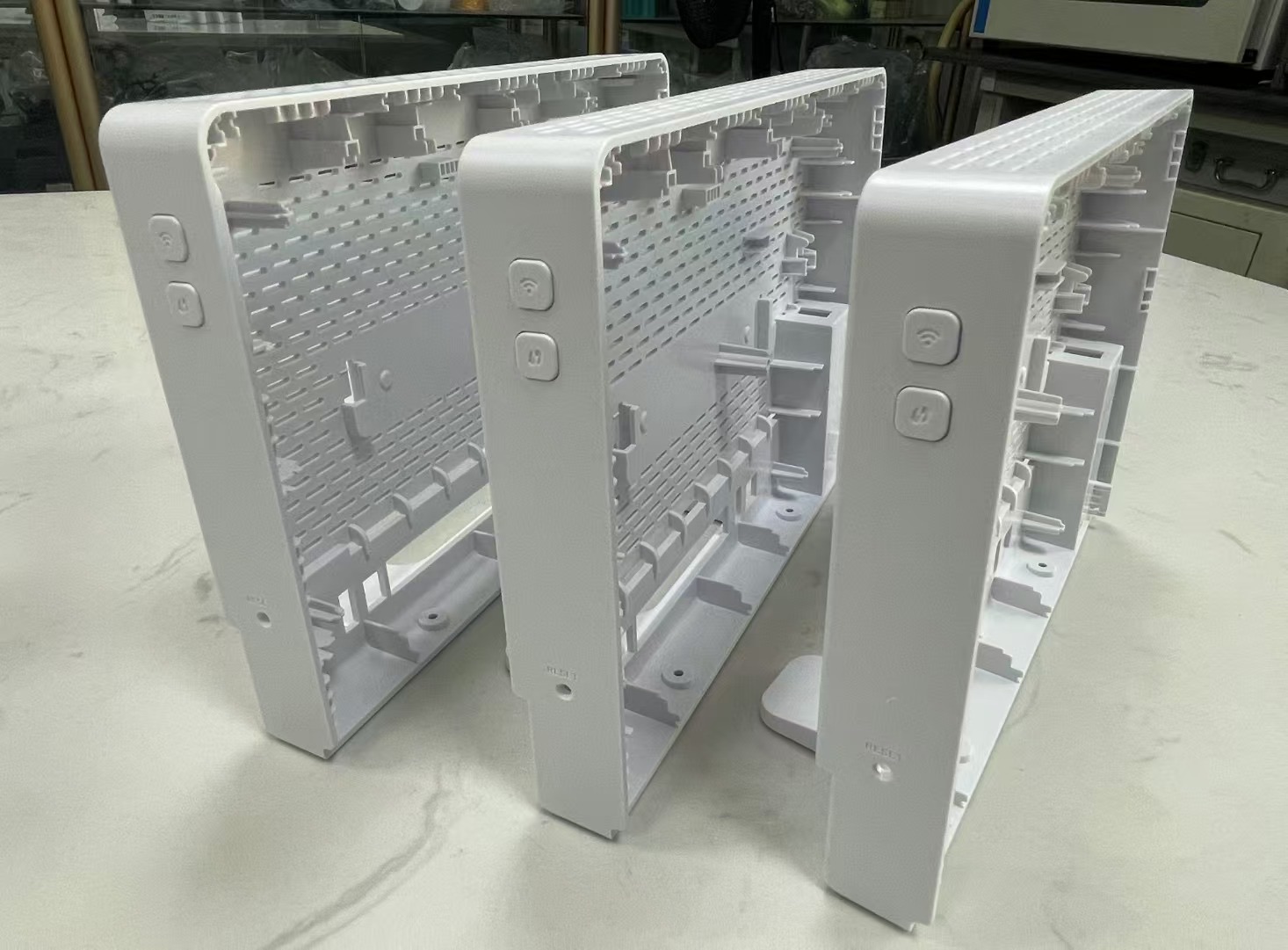
E-BI’s facilities in Thailand and China are equipped with high-precision molding technologies, including multi-cavity molds and overmolding, to produce housings with intricate features like molded-in gaskets and connector slots. Our expertise in mold flow analysis ensures that parts are free from defects, such as sink marks or weld lines, which could compromise shielding performance. For instance, we produce injection-molded enclosures for smart home devices with integrated shielding layers that align seamlessly with antennas and circuit boards.
Precision molding also supports design flexibility, allowing manufacturers to incorporate EMI shielding without adding bulk or complexity. E-BI collaborates with clients to optimize housing designs for manufacturability, ensuring that shielding features are integrated efficiently while maintaining aesthetic appeal and structural integrity. This precision is essential for compact electronics, where space constraints demand innovative shielding solutions.
Driver 3: Cost-Effective Scalability
As consumer electronics markets grow, manufacturers require EMI-shielding solutions that are both effective and cost-efficient at scale. Plastic injection molding offers significant advantages over traditional metal enclosures, with lower material and production costs for high-volume runs. According to Deloitte, injection-molded plastic housings can reduce manufacturing costs by up to 30% compared to machined metal alternatives for EMI shielding applications.
E-BI’s manufacturing hubs in China, Vietnam, and Thailand are optimized for scalability, with automated production lines and rapid tooling capabilities that support high-volume production of EMI-shielding housings. For example, we produce conductive plastic enclosures for wireless earbuds in large quantities, ensuring consistent shielding performance across batches. Our multi-cavity molds and streamlined processes minimize cycle times, enabling us to meet tight delivery schedules without compromising quality.
Cost efficiency extends to the lifecycle of molded housings, as thermoplastics are resistant to corrosion and environmental degradation, reducing maintenance and replacement costs. E-BI’s rigorous quality control, including EMI testing and dimensional inspections, ensures that every housing meets industry standards, such as FCC and CE requirements for electromagnetic compatibility. By partnering with E-BI, manufacturers can achieve cost-effective EMI shielding solutions that scale with market demand.
Driver 4: Regulatory Compliance and Sustainability
Consumer electronics must comply with strict regulatory standards for EMI, such as those set by the Federal Communications Commission (FCC) and the International Electrotechnical Commission (IEC). Custom molded housings provide a versatile platform for meeting these requirements while supporting sustainability goals. Injection-molded plastics can be formulated to meet RoHS and REACH standards, and recyclable thermoplastics align with circular economy principles, as emphasized by PwC.
E-BI’s injection molding expertise ensures that EMI-shielding housings meet global regulatory requirements, with conductive materials and coatings designed to achieve compliance without hazardous substances. Our facilities in China, Vietnam, and Thailand adhere to environmental standards, incorporating energy-efficient processes and recycled plastics where applicable. For example, we produce EMI-shielding housings for IoT devices using recycled PC-ABS blends, reducing environmental impact while maintaining performance.
Sustainability is further enhanced by the lightweight nature of plastic housings, which reduces material usage and shipping costs compared to metal alternatives. E-BI’s commitment to eco-friendly manufacturing helps clients meet consumer demand for sustainable electronics while ensuring reliable EMI shielding. By partnering with E-BI, manufacturers can deliver compliant, environmentally responsible products that resonate with today’s market.
Conclusion
Custom molded electronic housings, produced through plastic injection molding, are revolutionizing EMI shielding by leveraging advanced conductive materials, precision engineering, cost-effective scalability, and regulatory compliance. These four drivers enable manufacturers to protect sensitive electronics from interference while meeting the aesthetic, functional, and environmental demands of consumer markets. At E-BI, we bring these drivers to life with our world-class manufacturing capabilities in China, Vietnam, and Thailand, delivering tailored EMI-shielding solutions that empower businesses to innovate and succeed.
Whether you’re developing next-generation smartphones or IoT-enabled devices, E-BI is your trusted partner for precision injection molding. Our expertise ensures that your electronic housings provide robust EMI shielding while enhancing product performance and sustainability. Visit E-BI.com to explore how we can collaborate to create EMI-shielding housings that protect your electronics and drive market success.