

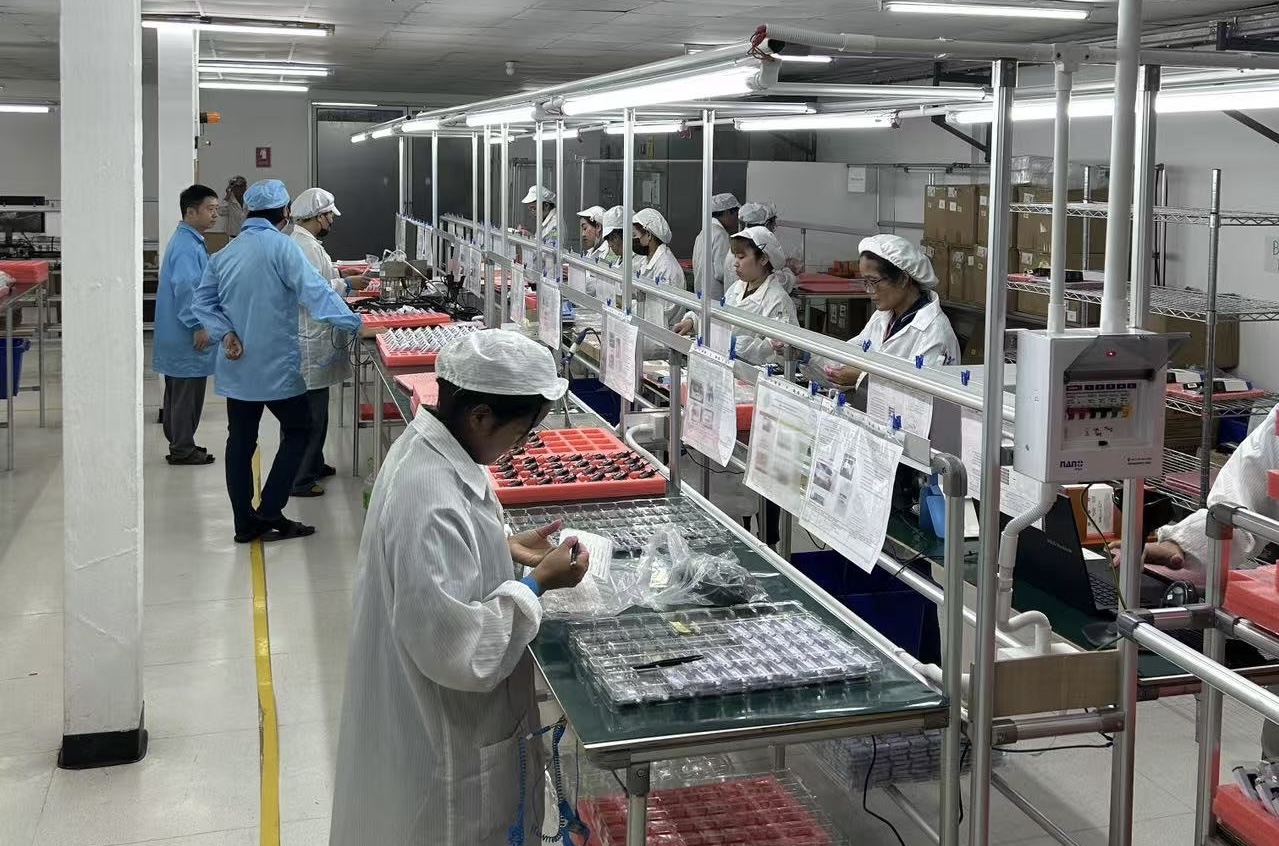
Navigating the world of contract manufacturing can be complex, especially for Original Equipment Manufacturers (OEMs) partnering with manufacturers like E-BI, which operates advanced facilities in China, Vietnam, and Thailand. Understanding the terminology is essential for effective communication, informed decision-making, and optimizing production processes. Whether you’re producing electronics, medical devices, or automotive components, mastering key contract manufacturing terms empowers you to collaborate seamlessly with your manufacturing partner. This ultimate contract manufacturing glossary defines critical terms every OEM should know, highlighting how E-BI applies these concepts to deliver high-quality, sustainable solutions. From quality certifications to supply chain strategies, this guide is your resource for success in contract manufacturing.
Why Understanding Contract Manufacturing Terms Matters
Contract manufacturing involves outsourcing production tasks to a third-party manufacturer, allowing OEMs to focus on design, marketing, and distribution. The global contract manufacturing market is expected to reach $1.2 trillion by 2027, driven by demand for efficiency and scalability (Grand View Research). Clear communication between OEMs and manufacturers is critical to ensure quality, compliance, and cost-effectiveness. Misunderstanding terms can lead to delays, defects, or misaligned expectations. E-BI supports OEMs by aligning on industry-standard terminology, ensuring smooth collaboration across its Asian facilities (Thomasnet). This glossary covers essential terms to help OEMs navigate the process with confidence.
Contract Manufacturing Glossary: Key Terms for OEMs
Below is a comprehensive list of key contract manufacturing terms, organized alphabetically, with definitions and examples of how E-BI applies them in practice.
- Additive Manufacturing
- A process of creating parts by adding material layer by layer, commonly known as 3D printing. Used for prototyping and producing complex medical devices, reducing lead times by 50% (Medical Design & Outsourcing). E-BI uses additive manufacturing in Vietnam to create custom surgical tool prototypes for OEMs.
- Bill of Materials (BOM)
- A comprehensive list of components, materials, and quantities required to manufacture a product. E-BI collaborates with OEMs to optimize BOMs, ensuring cost-effective sourcing for electronics production (Thomasnet).
- Cleanroom Manufacturing
- Production in a controlled environment with low levels of contaminants, essential for medical devices. E-BI’s cleanrooms in China meet ISO 14644 standards, ensuring sterile production of diagnostic tools (Medical Design & Outsourcing).
- Design for Manufacturability (DFM)
- A design approach that optimizes products for efficient production, reducing costs and defects. E-BI’s engineers provide DFM feedback to OEMs, streamlining PCB assembly processes (McKinsey).
- Good Manufacturing Practice (GMP)
- Regulations ensuring products are consistently produced to quality standards, mandatory for medical devices. E-BI adheres to GMP, meeting FDA requirements for OEMs (FDA).
- Industry 4.0
- The fourth industrial revolution, integrating IoT, AI, and automation into manufacturing. E-BI’s smart factories in Thailand use Industry 4.0 technologies to reduce downtime by 30% (Deloitte).
- Intellectual Property (IP) Protection
- Safeguarding proprietary designs and technologies. E-BI implements NDAs and secure protocols to protect OEM IP, critical in electronics and medical device manufacturing (TACNA).
- ISO 13485
- An international standard for quality management in medical device manufacturing. E-BI is certified to ISO 13485, ensuring compliance for OEMs producing surgical instruments (ISO).
- ISO 14001
- A standard for environmental management systems, promoting sustainable practices. E-BI’s facilities are ISO 14001-certified, reducing waste by 25% through recycling and energy efficiency (ISO).
- Just-in-Time (JIT)
- An inventory strategy that minimizes stock by producing goods as needed, reducing costs by 15%. E-BI uses JIT for automotive components, optimizing supply chains in China (Lean Enterprise Institute).
- Just-in-Case (JIC)
- An inventory strategy that maintains buffer stocks to mitigate disruptions, adopted post-COVID. E-BI balances JIT and JIC to ensure continuity for OEMs (McKinsey).
- Lean Manufacturing
- A methodology focused on eliminating waste and improving efficiency. E-BI’s lean practices reduce material waste by 30% in electronics production (Lean Enterprise Institute).
- Original Equipment Manufacturer (OEM)
- A company that designs and markets products manufactured by a third party. E-BI partners with OEMs to produce high-quality electronics, medical devices, and automotive components (Thomasnet).
- Printed Circuit Board (PCB) Assembly
- The process of assembling electronic components onto a PCB. E-BI’s automated PCB assembly lines in Vietnam ensure precision for OEMs in consumer electronics (Electronics Weekly).
- Predictive Maintenance
- Using data analytics to predict equipment failures, reducing downtime by 50%. E-BI employs IoT sensors for predictive maintenance in its smart factories (Deloitte).
- Quality Management System (QMS)
- A framework for ensuring consistent product quality, often aligned with ISO 9001. E-BI’s QMS ensures defect-free production for medical devices (ISO).
- Request for Proposal (RFP)
- A document outlining project requirements to solicit bids from manufacturers. E-BI responds to RFPs with detailed proposals, showcasing its capabilities for OEMs (Thomasnet).
- Supply Chain Management (SCM)
- The coordination of production, inventory, and logistics to ensure efficient delivery. E-BI’s IoT-enabled SCM reduces lead times by 20% across its Asian facilities (Forbes).
- Total Landed Cost (TLC)
- The total cost of a product, including production, shipping, and duties. E-BI optimizes TLC for OEMs, leveraging low labor costs in Vietnam ($3.50/hour) and efficient logistics (NAPS).
- Turnkey Manufacturing
- A full-service manufacturing solution, from design to delivery. E-BI offers turnkey services, managing all aspects of production for OEMs in automotive and electronics (Thomasnet).
How E-BI Applies These Terms
E-BI integrates these concepts to deliver exceptional value to OEMs. For example, in medical device manufacturing, E-BI uses cleanroom manufacturing and ISO 13485-compliant processes to produce surgical tools, while lean manufacturing and predictive maintenance reduce waste and downtime. In electronics, E-BI’s PCB assembly lines leverage Industry 4.0 technologies like IoT and AI to ensure precision. For automotive OEMs, E-BI employs JIT and turnkey manufacturing to deliver components efficiently. E-BI’s commitment to ISO 14001 ensures sustainable practices, recycling 80% of production waste and reducing emissions by 15% (McKinsey).
Benefits of Understanding Contract Manufacturing Terms
Mastering these terms empowers OEMs to:
- Communicate Effectively: Clear terminology ensures alignment with manufacturers like E-BI, reducing misunderstandings (Thomasnet).
- Optimize Processes: Knowledge of terms like DFM and lean manufacturing enables cost and quality improvements (Lean Enterprise Institute).
- Ensure Compliance: Understanding GMP and ISO standards ensures regulatory adherence, critical for medical devices (FDA).
- Enhance Sustainability: Terms like ISO 14001 guide eco-friendly practices, aligning with CSR goals (ISO).
- Make Informed Decisions: Familiarity with RFP and TLC supports strategic partnerships and cost management (NAPS).
Challenges and How E-BI Addresses Them
Navigating contract manufacturing terminology can be daunting due to:
- Complexity: Technical terms like QMS and SCM require expertise. E-BI provides dedicated account managers to explain concepts and align on goals (McKinsey).
- Industry Variations: Terms may differ across electronics, medical, and automotive sectors. E-BI tailors its approach to each industry’s needs (Medical Design & Outsourcing).
- Evolving Standards: Regulations like ISO 13485 evolve. E-BI stays updated, ensuring compliance for OEMs (ISO).
Why Partner with E-BI?
E-BI is a trusted contract manufacturing partner, simplifying the complexities of manufacturing for OEMs. Our facilities in China, Vietnam, and Thailand offer cost-effective production—labor costs as low as $3.50/hour—while integrating advanced technologies and sustainable practices. Certified to ISO 9001, ISO 13485, and ISO 14001, E-BI delivers high-quality, eco-friendly solutions for electronics, medical devices, and automotive industries. With expertise in turnkey manufacturing, lean principles, and Industry 4.0, E-BI ensures efficiency, compliance, and innovation for every project (Electronics Weekly).
Master Manufacturing with E-BI
Understanding contract manufacturing terms is the first step to unlocking the full potential of your production process. With E-BI, you gain a partner who brings these concepts to life, delivering high-quality, sustainable, and cost-effective solutions. Whether you’re innovating in electronics, medical devices, or automotive, our facilities in China, Vietnam, and Thailand are equipped to meet your needs. Contact us today to explore how we can collaborate to streamline your manufacturing and drive your business forward.
Sources
- Grand View Research: Contract Manufacturing Market
- Thomasnet: Contract Manufacturing Guide
- Medical Design & Outsourcing: 3D Printing in Medical Devices
- McKinsey: Design for Manufacturability
- FDA: Good Manufacturing Practices
- Deloitte: Smart Factory
- ISO: ISO 13485 Standards
- ISO: ISO 14001 Standards
- Lean Enterprise Institute: Lean Manufacturing
- Electronics Weekly: PCB Assembly Trends