

Introduction
Driver 1: Cost Efficiency Through High Output
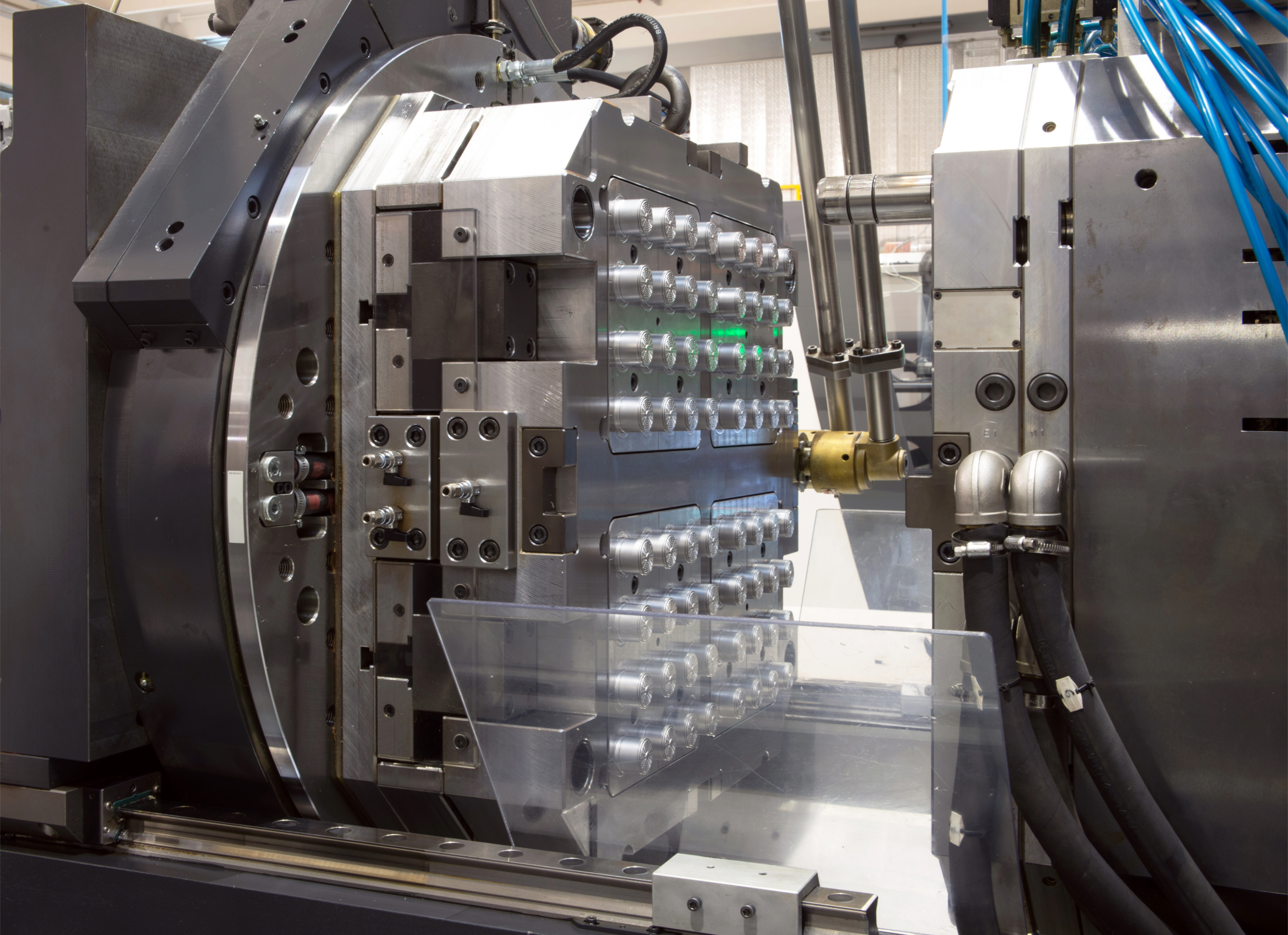
Multi-cavity molds produce multiple parts in a single molding cycle, reducing per-unit costs by distributing tooling, labor, and energy expenses across a higher output. For IoT devices requiring millions of components, such as enclosures or connectors, this efficiency is critical. For example, a 16-cavity mold can cut production costs by up to 60% compared to single-cavity molds, as noted by McKinsey & Company.
At E-BI, we design and manufacture multi-cavity molds to maximize cost efficiency for IoT production. Our facilities in China and Vietnam produce 32-cavity molds for ABS casings for smart plugs, enabling thousands of parts per hour with per-unit costs as low as $0.10. We optimize runner systems and material usage to minimize waste, ensuring cost-effective production of thermoplastics like PC or PA for IoT components. Our expertise extends to balancing cavity layouts, ensuring uniform filling to maintain quality across all parts.
E-BI’s cost-saving approach includes lifecycle cost analysis to justify the higher initial investment in multi-cavity molds, typically $20,000–$100,000, based on projected volumes. By leveraging our multi-cavity molding capabilities, IoT manufacturers can achieve significant savings, making high-volume production economically viable while maintaining profitability in competitive markets.
Driver 2: Consistent Quality Across Cavities
Maintaining consistent quality across multiple parts in a single mold is a challenge in multi-cavity molding, as variations in pressure, temperature, or flow can lead to defects like warpage or flash. For IoT devices, such as smart sensors, uniform dimensions and tolerances (often ±0.01 mm) are critical for functionality and assembly. Advanced process control ensures consistency, as highlighted by Boston Consulting Group, improving yield by up to 25%.
E-BI’s facilities in Thailand and China employ state-of-the-art injection-molding machines with in-process monitoring to ensure consistent quality in multi-cavity production. We produce 16-cavity molds for PC enclosures for IoT smoke detectors, using real-time sensors to regulate injection parameters and ensure uniform filling across cavities. Our mold flow analysis optimizes gate design and cooling channels, achieving dimensional consistency for components like TPU seals or PA connectors with micro-features.
Best practices include using hot-runner systems to control melt flow and automated vision systems for cavity-specific inspections. E-BI’s quality assurance includes statistical process control (SPC) and 100% dimensional checks for critical IoT features, ensuring compliance with standards like ISO 9001 or ISO 13485 for medical IoT. By partnering with E-BI, manufacturers can achieve uniform, high-quality IoT components at scale, minimizing defects and ensuring reliability.
Driver 3: Scalability for Rapid Market Growth
IoT markets require rapid scaling to meet demand surges, such as during product launches or seasonal spikes. Multi-cavity molds enable high-throughput production, supporting volumes from tens of thousands to millions of units annually. According to Deloitte, multi-cavity molding can increase production capacity by up to 300% compared to single-cavity molds, critical for IoT manufacturers targeting global markets.
E-BI’s facilities in China, Vietnam, and Thailand are optimized for scalable IoT production using multi-cavity molds. We produce 64-cavity molds for PP casings for smart home sensors, supporting daily outputs of over 50,000 units. Our automated production lines and flexible scheduling allow rapid scaling, accommodating orders from 100,000 to 10 million units without retooling. For medical IoT devices, we offer cleanroom molding with 8-cavity molds for COC diagnostic components, meeting stringent hygiene standards.
Best practices include designing molds with modular cavities to adjust output and using standardized materials like PC or ABS to ensure supply chain resilience. E-BI’s supply chain management ensures material availability and production capacity, enabling startups and established brands to scale seamlessly. By leveraging our scalability expertise, IoT manufacturers can respond to market growth with confidence and efficiency.
Driver 4: Design Flexibility for Complex Geometries
IoT devices often feature complex geometries, such as thin walls, snap-fits, or overmolded seals, to integrate electronics and enhance user experience. Multi-cavity molds must accommodate these designs while maintaining precision and cycle efficiency. Mold flow analysis and advanced tooling enable complex geometries in high-volume production, as noted by PwC, reducing design iterations by up to 20%.
E-BI’s facilities in China, Vietnam, and Thailand integrate mold flow analysis with multi-cavity mold design to support complex IoT geometries. We produce 24-cavity molds for TPU-overmolded PC casings for wearable IoT devices, incorporating features like IP67 seals and antenna channels with tolerances of ±0.02 mm. Our expertise in overmolding and insert molding enables functional integration, such as embedding metal contacts in PA connectors for smart meters, streamlining assembly.
Best practices include optimizing cavity layouts to balance flow and using precision tooling with side actions for undercuts. E-BI’s collaborative DFM process refines IoT designs to ensure moldability and scalability, supported by simulations and prototype testing. By partnering with E-BI, manufacturers can produce complex IoT components with multi-cavity molds, achieving design flexibility and high-volume efficiency without compromising quality.
Conclusion
Multi-cavity molds for scalable IoT production, driven by cost efficiency, consistent quality, rapid scalability, and design flexibility, enable manufacturers to meet the demands of high-volume markets while maintaining precision and reliability. These four drivers empower IoT businesses to produce millions of components with optimized costs and performance. At E-BI, we harness these drivers to deliver advanced multi-cavity molding solutions from our facilities in China, Vietnam, and Thailand, supporting IoT manufacturers in achieving global success.
Whether you’re scaling production for smart home devices, wearables, or industrial sensors, E-BI is your trusted partner for precision manufacturing. Our expertise in multi-cavity injection molding ensures that your IoT components deliver exceptional quality, scalability, and market readiness. Visit E-BI.com to explore how we can collaborate to create scalable IoT solutions that drive your success in competitive markets.