

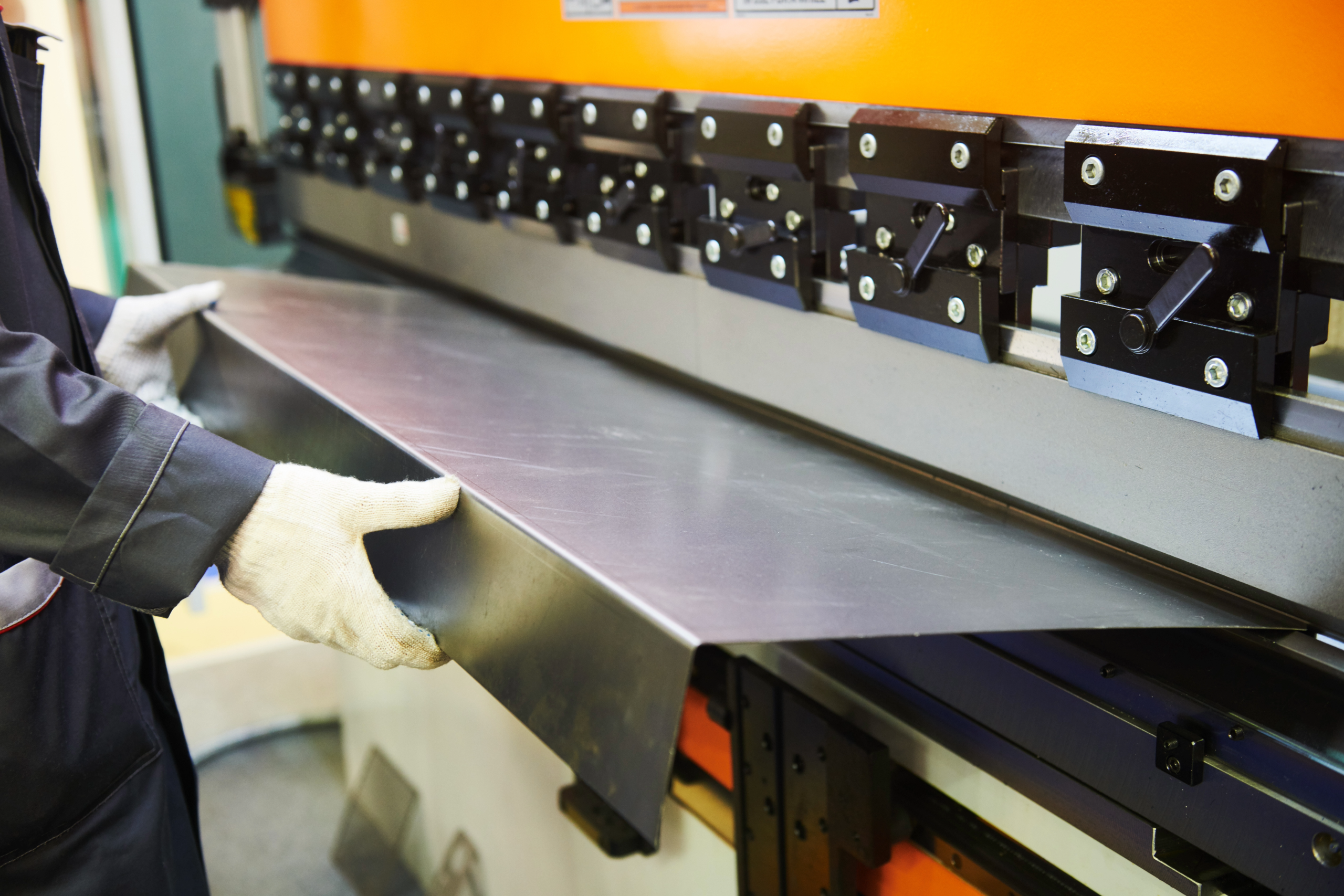
Small-scale robot manufacturing—custom cobots, research platforms, inspection drones, medical assistants, and niche automation cells—often requires bespoke sheet metal chassis, covers, brackets, and enclosures. While CNC bending delivers the precision and flexibility these designs demand, small production runs introduce unique challenges that differ from high-volume automotive or appliance bending. As a specialist in precision sheet metal fabrication, E-BI manufactures custom bent components in its facilities in China, Vietnam, and Thailand. This article examines the primary bending challenges in small-scale robotics and how E-BI overcomes them to deliver high-quality, low-volume parts on time and on budget.
Challenge 1: Material Spring-Back & Angular Accuracy
High-strength aluminum (5052-H32, 6061-T6) and stainless steel (304/316) common in robotics exhibit significant spring-back—especially in thin gauges (0.8–3 mm). Achieving ±0.5° angular tolerance on multi-bend chassis parts is difficult without real-time compensation.
Solution
E-BI uses press brakes with:
- Real-time angle measurement & automatic crowning
- Material-specific bend allowance tables & spring-back databases
- Offline simulation software to predict & correct spring-back before bending
Typical result: ±0.3° on 90° bends in 2 mm 6061-T6 aluminum.
Challenge 2: Distortion & Warpage on Thin Stock
Small robots often use 0.8–2 mm sheet to minimize weight. Thin material warps easily during bending due to residual stress release, especially on long flanges or asymmetrical parts.
Solution
E-BI counters distortion with:
- Backgauge crowning & adaptive bending sequences
- Stress-relieved material & pre-bending flattening passes
- Post-bend straightening fixtures & roller leveling
- Strategic bend order (inside-out, alternating directions)
Challenge 3: Low-Volume Economics & Tooling Cost
Small-scale runs (10–500 units) cannot amortize dedicated tooling. Standard V-dies may not produce tight radii or sharp inside corners needed for compact robot designs.
Solution
E-BI offers:
- Universal segmented dies & gooseneck punches for flexible radii
- Quick-change tooling & offline setup
- Air bending for most jobs (no dedicated bottom die)
- Hybrid bending + laser cutting for complex features without extra tooling
Challenge 4: Tight Bend Radii & Material Limits
Robotic chassis often require inside bend radii of 0.5×–1× material thickness (e.g., 0.8 mm radius on 1.5 mm aluminum) to maximize space. Standard tooling cracks high-strength alloys or creates large radii that interfere with fitment.
Solution
E-BI uses:
- Small V-opening dies (6–10 mm) & acute-angle punches
- High-nickel tooling steel for tight-radius durability
- Pre-heating or warm bending for titanium & hard stainless
- Coined hems & crushed flanges for zero-radius edges
Challenge 5: Consistency Across Small Batches
Small runs mean less opportunity to “dial in” the process. Variations in material properties, tool wear, or operator setup can cause inconsistent angles or dimensions across batches.
Solution
E-BI implements:
- Statistical process control (SPC) with first-article inspection
- Material certification & incoming gauge/thickness checks
- Digital bend programs stored & reused
- Automated backgauge & angle measurement on every part
Powering Small-Scale Robotics with E-BI
CNC bending enables custom robotic chassis with the precision, complexity, and rapid turnaround small-scale manufacturers require. E-BI’s advanced press brake technology, material expertise, and regional production in China, Vietnam, and Thailand overcome the unique challenges of low-volume bending—delivering accurate, repeatable, cost-effective sheet metal parts for prototype-to-production robotics.
For robotics teams building cobots, inspection drones, medical assistants, research platforms, or niche automation cells, partnering with E-BI provides a strategic advantage. Our proven CNC bending capabilities and flexible manufacturing model can help you iterate fast and scale confidently. Connect with E-BI today to bend the limits of small-scale robotic design.