

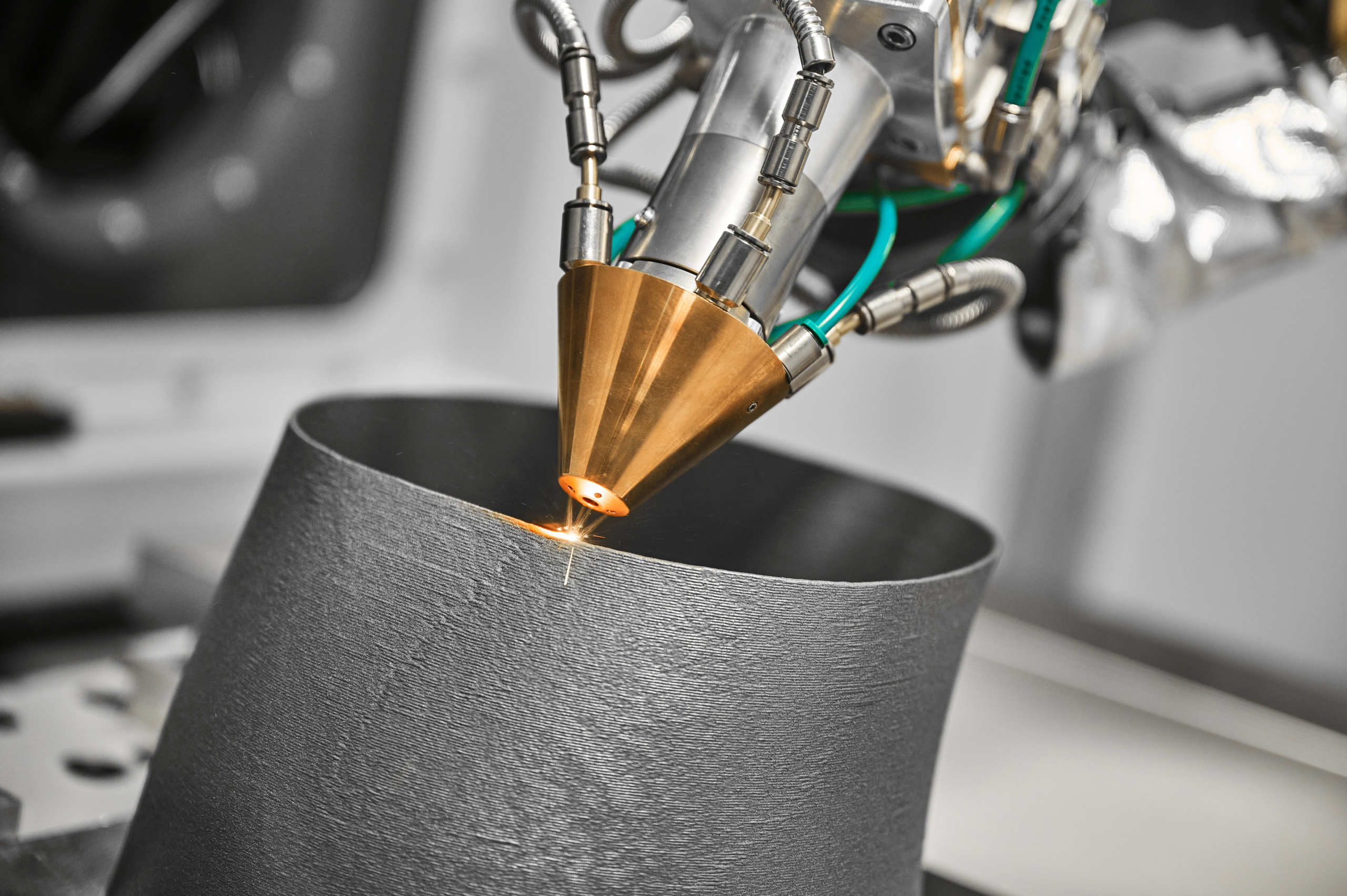
Robotic end-effectors, the tools at the end of robotic arms, are critical for tasks like gripping, welding, and assembly in autonomous robotics. Additive manufacturing, commonly known as 3D printing, is revolutionizing the design and production of these custom components by offering flexibility, precision, and rapid iteration. As a global leader in technical manufacturing, E-BI leverages its facilities in China, Vietnam, and Thailand to deliver 3D-printed end-effectors that enhance robotic performance. This article explores how additive manufacturing enables custom robotic end-effectors and how E-BI’s expertise drives innovation in this field.
The Role of Additive Manufacturing in End-Effectors
Additive manufacturing builds components layer by layer, enabling complex geometries and customization without the constraints of traditional manufacturing. The global robotics market, valued at USD 40.1 billion in 2023, is projected to grow at a CAGR of 15.2% through 2030, with custom end-effectors driving specialized applications Grand View Research. 3D printing is ideal for creating tailored end-effectors that meet specific robotic requirements, from lightweight grippers to intricate welding tools.
Customization for Specialized Tasks
End-effectors must be tailored to specific tasks, such as picking delicate objects or handling heavy materials. Additive manufacturing allows engineers to design complex, lightweight structures with integrated features like internal channels or sensor mounts, optimizing performance Jabil. For example, a 3D-printed gripper for a logistics robot can be customized to handle diverse package shapes.
Rapid Prototyping and Iteration
3D printing enables rapid prototyping, allowing engineers to test and refine end-effector designs in hours rather than weeks. This speed accelerates development cycles, critical for robotics startups and innovators creating autonomous systems Manufacturing Tomorrow. Iterative design ensures end-effectors meet precise functional requirements.
Production of Functional End-Effectors
Beyond prototyping, additive manufacturing produces functional end-use end-effectors using advanced materials like carbon-fiber-reinforced plastics or metals. These components offer strength, durability, and lightweight properties, ideal for applications in manufacturing, healthcare, and logistics Assembly Magazine.
E-BI’s Additive Manufacturing Expertise
E-BI’s facilities in China, Vietnam, and Thailand are equipped with advanced 3D printing technologies, including fused deposition modeling (FDM), selective laser sintering (SLS), and metal additive manufacturing, to deliver custom end-effectors for robotics. Our expertise ensures precision, durability, and scalability.
Advanced 3D Printing Capabilities
Our 3D printers support a range of materials, from ABS and PLA for prototyping to titanium and aluminum for production parts. We achieve tolerances as tight as 0.05 mm, ensuring precision for intricate end-effectors like grippers and tool holders The Robot Report. Multi-material printing enables hybrid designs that combine strength and flexibility.
Custom Design and Integration
E-BI collaborates with robotics designers to create tailored end-effectors, integrating features like sensor mounts or IoT modules for smart functionality. Our expertise in post-processing, such as surface finishing, enhances durability and aesthetics Foundry Management & Technology. We ensure end-effectors meet stringent performance standards.
Regional Manufacturing Strengths
China’s advanced additive manufacturing ecosystem provides access to cutting-edge 3D printing technologies and skilled engineers, driving innovation. Vietnam and Thailand offer cost-effective production and robust supply chains, enabling E-BI to deliver scalable end-effector solutions for global robotics brands IndustryWeek.
Challenges in Additive Manufacturing for End-Effectors
Additive manufacturing for end-effectors faces challenges, including material limitations, production speed, and IoT integration. Some materials lack the strength for heavy-duty applications, while large-scale production can be slower than traditional methods Wiley. Integrating IoT-enabled sensors into 3D-printed end-effectors adds complexity Automation World.
Overcoming Manufacturing Challenges
E-BI addresses these challenges through advanced material selection, using reinforced composites and metals for durability. We optimize printing processes to improve speed and scalability, and our expertise in IoT integration ensures end-effectors support smart robotics functionalities, enhancing performance and connectivity.
Driving Robotics Innovation with E-BI
Additive manufacturing is transforming the design and production of custom robotic end-effectors, enabling tailored solutions that enhance performance and efficiency. E-BI’s expertise in 3D printing and contract manufacturing in China, Vietnam, and Thailand delivers high-quality end-effectors that power the robotics revolution.
For robotics innovators aiming to create specialized, high-performance end-effectors, partnering with E-BI offers a strategic advantage. Our advanced additive manufacturing solutions and regional strengths can bring your custom robotic designs to life with precision and scalability. Connect with E-BI today to drive the future of robotics.
Sources
- Grand View Research: Robotics Technology Market
- Jabil: 3D Printing in Robotics Manufacturing
- Manufacturing Tomorrow: Additive Manufacturing for End-Effectors
- Assembly Magazine: Additive Manufacturing for Robotics
- The Robot Report: Additive Manufacturing for End-Effectors
- Foundry Management & Technology: Additive Manufacturing for Robotics
- IndustryWeek: Custom End-Effectors in Robotics
- Wiley: Additive Manufacturing Challenges in Robotics
- Automation World: IoT in Additive Manufacturing for Robotics