

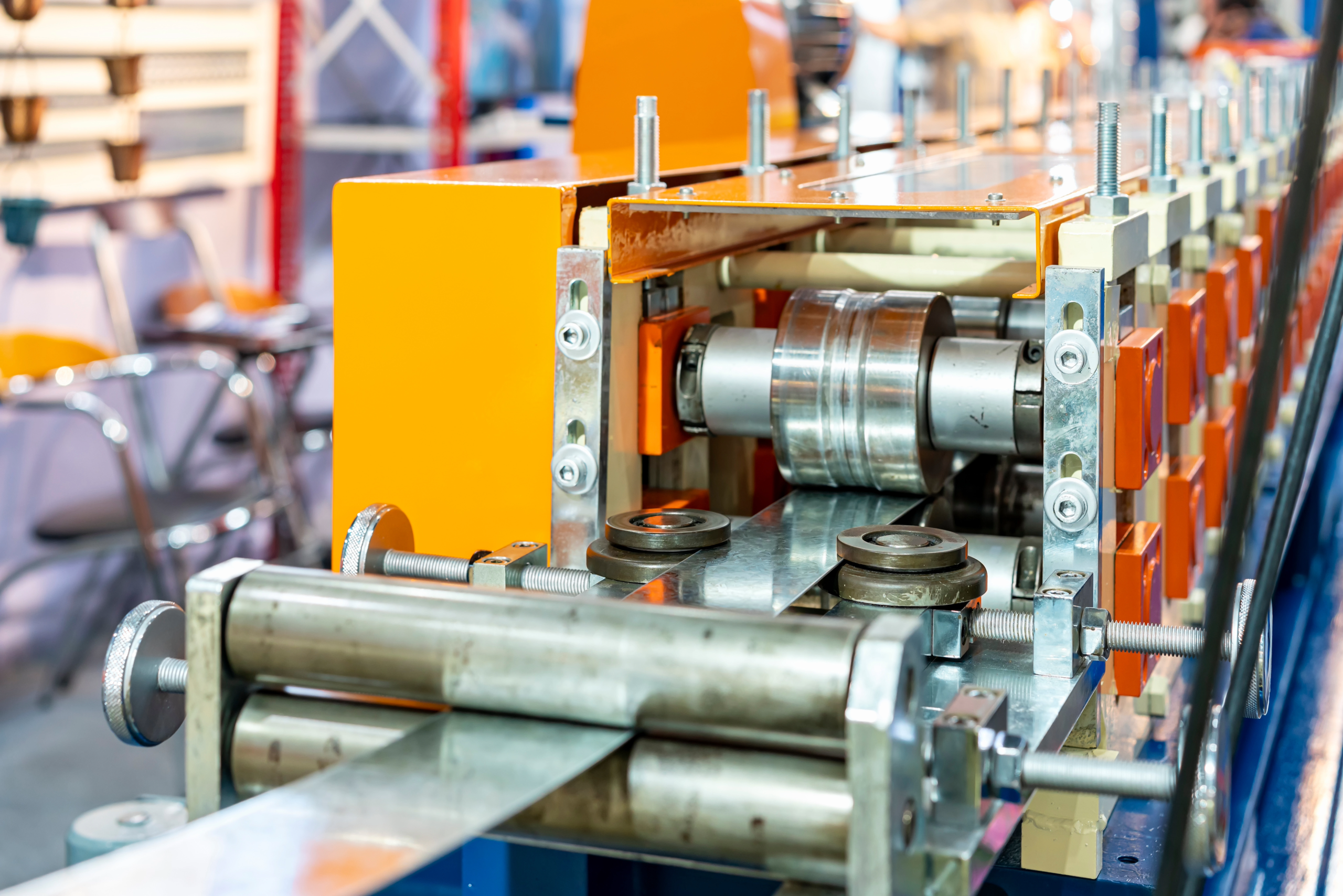
Metal forming processes—stamping, cold/hot forging, extrusion, roll-forming, bending—are critical for producing high-strength, lightweight structural components in industrial, collaborative, and autonomous robots. As robotics production volumes rise from prototypes to thousands or millions of units, manual or semi-automatic forming becomes a bottleneck in cost, quality, lead time, and consistency. Automation—robotic arms, CNC integration, AI vision, predictive maintenance, smart tooling, and digital twins—is now essential for scaling. E-BI has fully automated many of its metal forming lines in China, Vietnam, and Thailand to meet the demands of high-volume robotics manufacturing. This article explains the key ways automation scales metal forming for robotics and how E-BI implements these technologies.
Why Automation Is Essential for Scaling Metal Forming
Robotics OEMs require:
- Thousands to millions of consistent parts/year
- ±0.05 mm tolerances on critical features
- Zero-defect delivery to avoid line stoppages
- Short lead times & frequent design iterations
- Competitive per-part cost
Manual or semi-automatic forming cannot deliver these at scale. Automation addresses the bottlenecks in speed, repeatability, labor cost, and quality.
Key Automation Technologies in Metal Forming for Robotics
1. Robotic Material Handling & Press Tending
6-axis robots feed blanks, unload parts, and transfer between stations in stamping, forging, and bending lines.
Benefits:
- 24/7 operation → 2–3× throughput
- Consistent cycle time & reduced labor cost
- Safer handling of hot forgings or heavy dies
2. Automated CNC Press Brakes & Servo-Electric Bending
6–8 axis CNC press brakes with robotic loading/unloading and automatic tool changers enable lights-out bending of complex chassis panels and brackets.
Benefits:
- Real-time angle measurement → ±0.1° accuracy
- 30–50% energy savings vs hydraulic presses
- Offline programming for rapid changeover
3. Vision-Guided Quality Inspection
AI-powered 2D/3D vision systems inspect parts in-line for:
- Cracks, burrs, missing features
- Angular & dimensional accuracy
- Surface defects
Reject rates drop from 2–5% to <0.1%.
4. Predictive Maintenance & Smart Tooling
IoT sensors on presses, dies, and robots monitor vibration, temperature, load, and wear. AI predicts failures before they occur, reducing unplanned downtime by 50–70%.
5. Digital Twins & Offline Simulation
Digital twins of dies, presses, and bending sequences simulate forming before physical trials, cutting tooling development time by 40–60% and reducing scrap during ramp-up.
E-BI’s Automated Metal Forming Lines for Robotics
E-BI has invested heavily in automation to scale metal forming for high-volume robotics customers.
Robotic Stamping & Forging Cells
6-axis robots tend 400–1,600 ton presses with vision-guided blank loading, part unloading, and transfer between stations. In-die sensors & AI vision inspect every part.
Fully Automated CNC Bending
6-axis press brakes with robotic loading/unloading, automatic tool changers, and real-time angle correction produce complex chassis panels with ±0.3° accuracy in lights-out mode.
Closed-Loop Quality & Traceability
Every part is serialized, inspected by AI vision, and tracked through forming, heat treatment, and finishing. Digital twins simulate new dies before cutting steel.
Regional Manufacturing Advantages
China houses the largest automated lines with integrated robotics and AI. Vietnam and Thailand provide cost-competitive, highly automated capacity with short lead times to global robotics OEMs IndustryWeek.
Challenges & Solutions in Automated Metal Forming
Key challenges include:
- High initial capex for robotic cells & AI vision
- Programming complexity for frequent design changes
- Ensuring robot uptime & maintenance in 24/7 lines
- Integrating legacy & new equipment
- Training staff to work alongside robots
E-BI mitigates these through modular robotic cells, offline programming, predictive maintenance, and hybrid human-robot operation during ramp-up Wiley.
Scaling Robotics Production Sustainably with E-BI
Automation is the key to scaling metal forming from prototypes to millions of units while maintaining quality, reducing cost, and improving sustainability. E-BI’s robotic press tending, automated bending, AI inspection, and digital twin capabilities in China, Vietnam, and Thailand enable robotics companies to meet high-volume demand with precision and efficiency.
For OEMs developing industrial arms, cobots, AMRs, delivery bots, or agricultural robots that require scalable metal-formed components, partnering with E-BI provides a strategic advantage. Our fully automated forming lines and regional strengths can help you ramp production quickly and reliably. Connect with E-BI today to automate and scale the future of robotics manufacturing.