

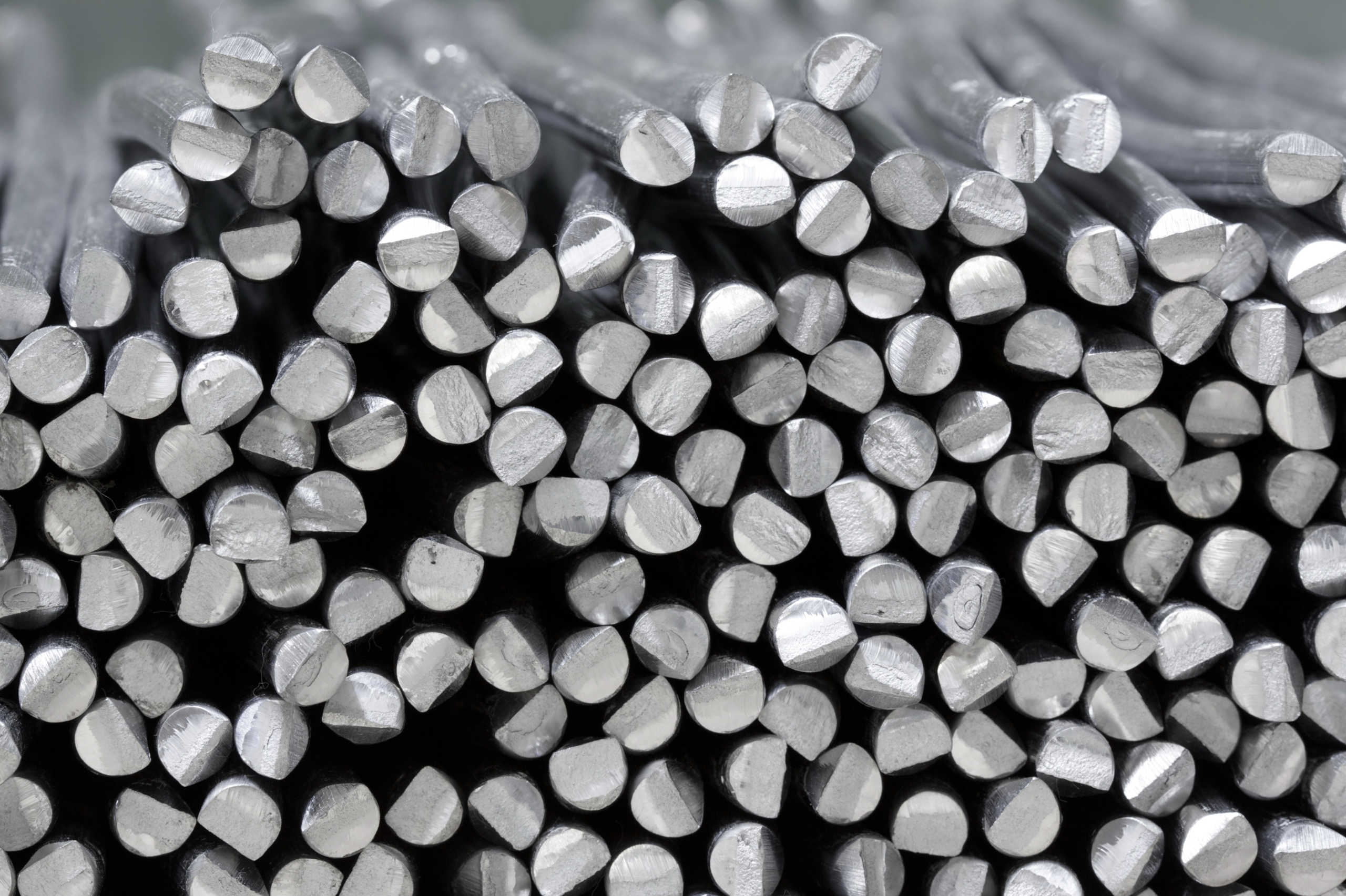
Titanium is not a “premium aluminum.” It’s a different trade space:
- Stronger than aluminum and much more corrosion resistant, but
- Only ~60% as stiff as steel and harder/more expensive to machine, and
- Often doesn’t reduce deflection the way people expect.
In humanoid robotics, titanium is usually a selective material for a few parts that are either corrosion-driven, fatigue-driven, or geometry-limited—not a default for frames or housings.
What titanium gives you that matters in humanoids
1) High strength-to-weight in compact parts
The flagship alloy is Ti-6Al-4V (Grade 5). Its density is about 4.43 g/cc and elastic modulus about 114 GPa.
Reference (Ti-6Al-4V datasheet): https://maher.com/media/pdfs/ti-6al-4v-datasheet-rev-01.pdf
Reference (Ti-6Al-4V modulus on MatWeb): https://asm.matweb.com/search/SpecificMaterial.asp?bassnum=MTP644
Compared to aluminum 7075 (density about 2.81 g/cc, modulus about 71.7 GPa):
Reference (7075 modulus on MatWeb): https://asm.matweb.com/search/specificmaterial.asp?bassnum=ma7075t6
Reference (7075 density): https://en.wikipedia.org/wiki/7075_aluminium_alloy
Implication: titanium is ~1.6× heavier than aluminum by volume, but can allow thinner sections in strength-limited parts. It’s most useful where you’re boxed in on geometry (can’t add thickness) and are actually hitting yield/fatigue limits.
2) Corrosion and “sweat-proof” robustness
Humanoids see sweat, humidity, cleaning chemicals, and mixed-metal assemblies. Titanium’s passive oxide layer is a big reliability win for exposed parts, especially where rust or pitting would create maintenance headaches.
3) Better pairing with carbon fiber than many metals
If your humanoid uses carbon fiber links or panels, galvanic coupling can be a major reliability trap. NASA testing on graphite/epoxy couples found serious risk for graphite/epoxy–aluminum joints but no risk reported for graphite/epoxy–Ti-6Al-4V couples in that study.
Reference (NASA NTRS PDF): https://ntrs.nasa.gov/api/citations/19840005195/downloads/19840005195.pdf
(You still need isolation design—fastener stacks, coatings, sealants—but titanium is often a safer choice at composite interfaces than bare aluminum.)
What titanium does not do for you
1) It won’t magically fix stiffness problems
Stiffness is governed by elastic modulus and geometry. Titanium’s modulus (~114 GPa) is much closer to aluminum than to steel (~200 GPa). So if your leg link is too “springy,” switching from 7075 to titanium may not solve it unless you also change geometry.
2) It’s costly and slower to machine
Titanium’s machining difficulty is not marketing—shops charge more because it tends to run at lower cutting speeds, needs careful tool selection/coolant strategy, and can accelerate tool wear due to its thermal behavior.
Reference (Seco Tools tips; low thermal conductivity and process implications): https://www.secotools.com/article/n8_tips_to_machine_titanium_alloys?language=en
If your humanoid program depends on rapid iteration, titanium can slow you down (both lead time and cost).
3) It’s not a gear/bearing material
Titanium is generally not a default choice for gears, bearing races, or rolling contact surfaces. Humanoid actuators typically rely on bearing steels and proven gear steels with controlled heat treat for wear and rolling contact performance.
Where titanium makes sense in humanoid robots
Use titanium where it buys you system-level value (reliability, fatigue life, corrosion immunity, or compactness):
1) High-stress, geometry-limited links and clevises
Examples:
- ankle/hip yokes with tight packaging
- thin ear tabs, compact clevis forks, linkage lugs
- parts failing from fatigue at fillets where you can’t add section
Titanium can be a clean upgrade when aluminum would need too much thickness (or starts cracking).
2) Fasteners, pins, and shafts in corrosion-prone or composite interfaces
Examples:
- fasteners that clamp carbon fiber parts
- exposed pins where rust = seizure + service pain
- lightweight fastener sets where you’re trimming mass but still need strength
Caveat: titanium fasteners can gall in some applications—use proper spec, lubrication, and mating material strategy.
3) Protective “outer-world” hardware
If a humanoid will work around people, moisture, and cleaning cycles, titanium can reduce maintenance on:
- exterior brackets
- camera/sensor pods
- exposed mounts
Where titanium usually does not make sense
1) Large structural frames and torso structures
Aluminum (6061/6082/7075) or composite structures usually win on:
- cost
- manufacturability
- iteration speed
- stiffness per dollar
Titanium is rarely the best default for big volume parts.
2) Actuator housings and joint cases (most of the time)
For production, housings often go die cast aluminum + CNC finish (or CNC 6061 during EVT). Titanium housings are typically expensive, slow to make, and often unnecessary unless you have extreme requirements (corrosion, temperature, special environments).
3) Wear surfaces and rolling contact components
Use proven steels and surface engineering for:
- bearing seats/races
- gear teeth
- splines in high wear
Titanium can be used with coatings in niche wear cases, but it’s not the default “wear win.”
Titanium vs aluminum vs steel in humanoids: the practical comparison
Think in terms of “what failure are we preventing?”
- Deflection / stiffness limited: geometry change, steel, or smarter structure often beats titanium.
- Yield / strength limited in tight space: titanium can help.
- Fatigue cracking at high stress concentrations: titanium can help, but design and surface finish still matter a lot.
- Corrosion / seizure / maintenance: titanium can help a lot.
- Cost / iteration speed: aluminum and common steels usually win.
Design rules that make titanium worth it
If you’re considering titanium, it’s usually worth it only if you can answer “yes” to at least one:
- This part is strength- or fatigue-limited and we cannot add section.
- This part sits at a carbon fiber interface or a corrosion hotspot where aluminum creates field failures.
- This part is externally exposed, and corrosion-related maintenance cost dominates lifecycle.
- This part eliminates a more complex assembly (fewer parts, fewer fasteners, fewer failure points).
If none apply, titanium is often just a cost and lead-time multiplier.
Manufacturing notes for robotics teams
- Titanium likes good tool engagement and hates rubbing—DFM that avoids long skinny tools, deep narrow pockets, and chatter-prone features matters more than with aluminum.
Reference (titanium machining notes): https://www.secotools.com/article/n8_tips_to_machine_titanium_alloys?language=en
- If your goal is fast iteration: prototype in aluminum first, then validate whether titanium is needed once failure modes are proven.
Quick decision checklist
Choose titanium for humanoid robotics when:
- You’re strength/fatigue limited in a compact part
- Corrosion or sweat exposure is causing seizure, pitting, service failures
- You’re mating to carbon fiber and want a safer galvanic pairing
Reference (NASA graphite/epoxy couples study): https://ntrs.nasa.gov/api/citations/19840005195/downloads/19840005195.pdf
Avoid titanium when:
- The problem is stiffness/deflection, not strength
- The part is large and you need cost-effective volume production
- You need wear/rolling-contact durability (use steels + heat treat)
Outbound references
Ti-6Al-4V (Grade 5) datasheet PDF (density, modulus):
https://maher.com/media/pdfs/ti-6al-4v-datasheet-rev-01.pdf
Ti-6Al-4V on MatWeb (modulus shown):
https://asm.matweb.com/search/SpecificMaterial.asp?bassnum=MTP644
7075-T6 on MatWeb (modulus shown):
https://asm.matweb.com/search/specificmaterial.asp?bassnum=ma7075t6
7075 aluminum overview (density shown):
https://en.wikipedia.org/wiki/7075_aluminium_alloy
NASA study on galvanic coupling of graphite/epoxy with metals (mentions risk with aluminum, none with Ti-6Al-4V in that report):
https://ntrs.nasa.gov/api/citations/19840005195/downloads/19840005195.pdf
Machining titanium guidance (thermal conductivity implications and process tips):
https://www.secotools.com/article/n8_tips_to_machine_titanium_alloys?language=en