

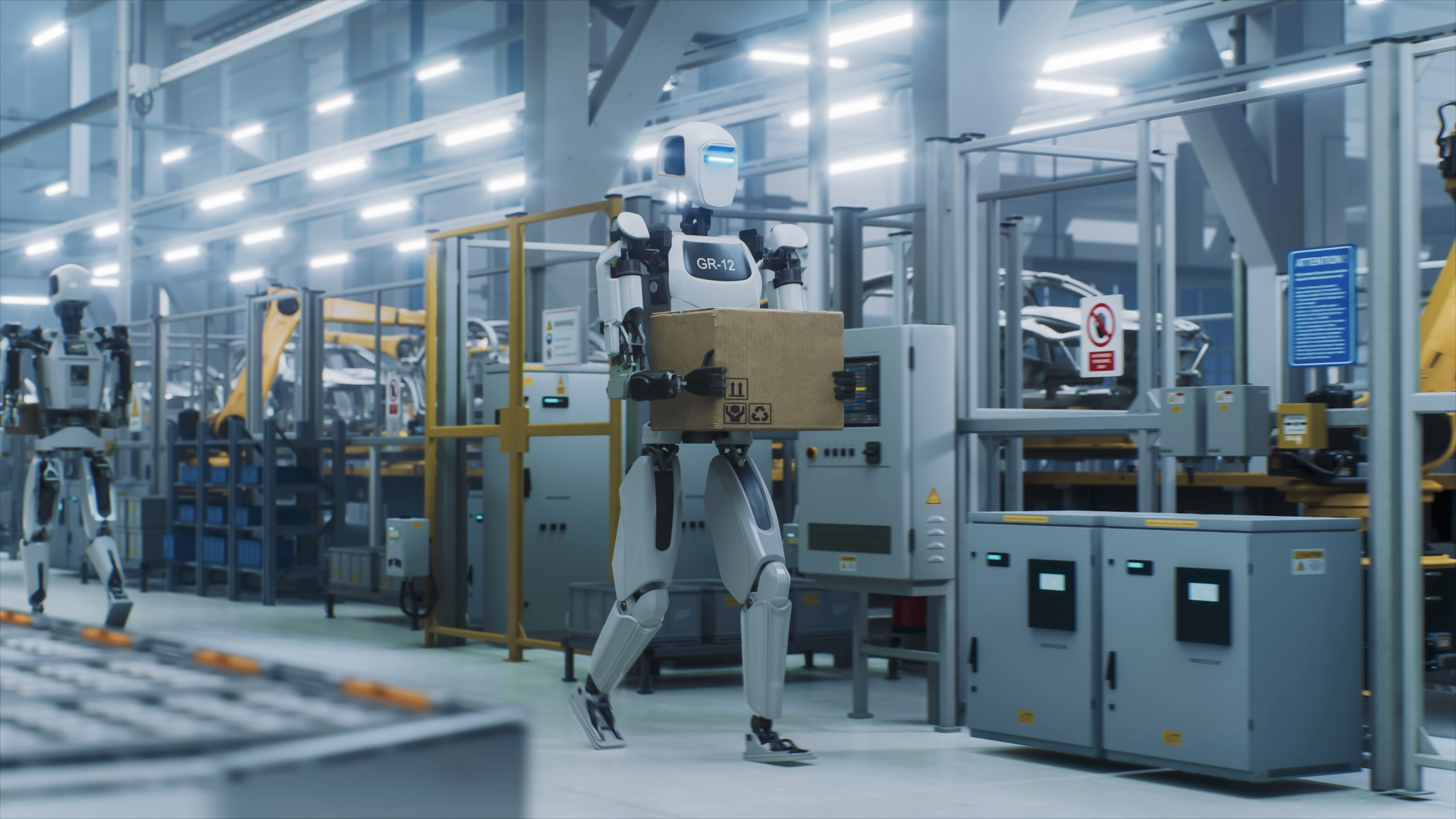
Humanoid robots push manufacturing into a tough corner: you need lightweight structures, high stiffness, fatigue resistance, tight alignment at joints, and repeatable assembly—often while iterating designs quickly and then scaling to volume later.
That’s why most successful humanoid hardware roadmaps end up using both processes:
- CNC machining to iterate fast and hold critical alignment/tolerance features (especially for actuators and joints).
- Die casting to reduce cost and mass at scale for housings, covers, brackets, and structural nodes—often followed by selective CNC machining on functional features.
What matters most in humanoid robot hardware
Humanoid-specific requirements that strongly influence the choice:
- Joint alignment and bearing fits
Small misalignments increase friction, heat, wear, and control error—so bores, bearing seats, and gear interfaces typically require machining.
- Stiffness-to-weight and impact survivability
Falls and dynamic locomotion create shock loads; the structure needs good stiffness without excessive mass (ribs, gussets, optimized wall thickness help).
- Thermal management around actuators
Motor/drive heat needs a controlled path; material choice and surface finish matter.
- Assembly repeatability and serviceability
Humanoids are “assembled products,” not one-off mechanisms—datum strategy, stack-up control, and rework loops matter.
- Cost and manufacturability at scale
Early prototypes optimize performance; later units must optimize $/robot without degrading reliability.
Die casting for humanoid robotics: where it shines
Die casting is best when you want thin-wall, ribbed, complex geometry with high repeatability at medium-to-high volume, especially in aluminum or zinc alloys.
Best humanoid part candidates for die casting
- Actuator housings and motor endbells (when designed for casting + post-machining)
- Joint covers, cosmetic shells, protective guards
- Structural brackets, link housings, sensor pods
- Ribbed structural nodes that would be expensive to hog out of billet
Why die casting helps humanoids
- Ribs and bosses are cheap in casting and expensive in machining
Ribs add stiffness without thick walls. Bosses provide repeatable mounting points. Design references:
Ribs: https://www.diecastingdesign.org/ribs/
Bosses: https://www.diecastingdesign.org/bosses/
- Lower cost per part at scale
Tooling is expensive, but once running, piece price falls quickly with volume.
- Better “packaging geometry”
Castings can integrate cable channels, mounting bosses, and complex envelopes that reduce assembly steps.
Die casting risks in humanoids (and how teams mitigate them)
- Porosity and leakage risk
Porosity can show up after machining, and it matters for sealed volumes, coolant paths, or cosmetic anodizing. Many teams mitigate by:
- Designing gates/vents for critical surfaces
- Using vacuum-assisted die casting when needed
- Sealing/impregnation when required
- Machining sealing lands rather than relying on as-cast surfaces
Technical background reference:
- ASM “Engineering Die Castings” (porosity + critical surfaces): https://dl.asminternational.org/technical-books/monograph/116/chapter/2204345/Engineering-Die-Castings
- Tolerance limits on “as-cast” features
Casting is repeatable, but the tightest alignment features should be machined.
- Design changes are expensive once tooling exists
If you’re still iterating actuator layouts or joint geometry, casting tooling can lock you in too early.
CNC machining for humanoid robotics: where it wins
CNC machining is best for prototypes, low-to-mid volumes, and any component where alignment, bearings, gear interfaces, and datums are the main risk.
Best humanoid part candidates for CNC machining
- Precision joint components: bearing blocks, bearing seats, pivot bores
- Gearbox and harmonic drive interfaces (or any tight coaxial alignment features)
- Critical structural links where stiffness and dimensional control dominate early development
- Test fixtures, calibration hardware, sensor alignment brackets
- Any evolving design (rapid iteration without tooling commitment)
Why CNC machining helps humanoids
- Best for datums and stack-up control
Joint performance depends on geometric relationships across multiple faces; machining maintains these relationships reliably.
- Fast iteration
Firmware, control, and mechanical design co-evolve in humanoids—machining supports continuous revision.
- Material flexibility
You can choose alloys/conditions not commonly die cast (certain high-strength aluminum, steels, titanium, engineered plastics), depending on the component’s role.
The most common “correct” answer: die cast + CNC machine
For humanoids, a high-performance approach is:
- Die cast the near-net housing (shape, ribs, bosses, packaging)
- CNC machine only functional features (bearing seats, sealing lands, threads, datum pads)
Features typically post-machined on cast humanoid parts
- Bearing bores and bearing pockets
- Gearbox mounting faces
- Motor stator/rotor alignment features
- Sealing lands for gaskets / O-rings
- Datum pads for assembly fixtures
- Precision threads and insert features
This approach minimizes:
- machining time (cost)
- weight (by using ribs instead of thick billet)
- assembly variation (by machining critical datums)
Practical decision guide for humanoid components
Use CNC machining when:
- You’re in prototype / EVT / DVT phases (design is moving)
- The part has critical alignment: bearings, gears, coaxial bores
- You need tight GD&T relationships across multiple faces
- The quantity is low enough that tooling won’t amortize well
Use die casting when:
- Geometry benefits from thin walls + ribs + bosses
- Design is stable and you’re preparing for pilot and production
- You want lower $/robot at volume
- Surface cosmetics and packaging features are important (with finishing planned)
Use die casting + CNC when:
- You want the economics and stiffness benefits of casting without compromising actuator/joint precision.
Humanoid-specific DFM tips
If you’re designing for die casting
- Use uniform wall thickness as much as possible (reduces shrink/warpage risk)
- Add ribs for stiffness instead of thick walls
- Include draft and plan parting line early
- Add dedicated datum pads for fixturing during post-machining
- Don’t rely on as-cast surfaces for seals—machine sealing lands
Helpful checklist-style reference:
- Die casting design tips: https://xometry.pro/en/articles/die-casting-design-tips/
If you’re designing for CNC machining
- Keep deep pockets reasonable (tool reach drives cost and chatter risk)
- Standardize fasteners, threads, and hole sizes across the robot
- Put tight tolerances only on truly critical features (bearing fits, gear alignment, sensor datums)
- Design parts to reduce setups and allow probing/inspection access
How to connect manufacturing choices to robot performance requirements
If you’re targeting repeatable robot performance, consider aligning manufacturing and validation to standardized metrics for accuracy and repeatability.
References for robot performance testing context:
- ISO 9283 standard overview (ISO): https://www.iso.org/standard/22244.html
- Practical explanation of ISO 9283 testing (RoboDK docs): https://robodk.com/doc/en/Robot-Validation-ISO9283.html
Recommended outbound resources
- NADCA / DieCastingDesign.org (feature-level die casting design guidance):
https://www.diecastingdesign.org/ribs/
https://www.diecastingdesign.org/bosses/
- ASM International (porosity and engineering considerations in die castings):
https://dl.asminternational.org/technical-books/monograph/116/chapter/2204345/Engineering-Die-Castings
- Die casting DFM tips (practical engineer checklist):
https://xometry.pro/en/articles/die-casting-design-tips/
- Robot performance testing reference (ISO 9283 context):
https://robodk.com/doc/en/Robot-Validation-ISO9283.html
https://www.iso.org/standard/22244.html
Takeaways for humanoid robotics
- Machining dominates early humanoid development because joint alignment and iteration speed are everything.
- Die casting becomes valuable when designs stabilize and you need weight-efficient stiffness features and lower $/robot.
- For most production humanoid assemblies, cast the housing, machine the precision features is the best cost-performance compromise.