

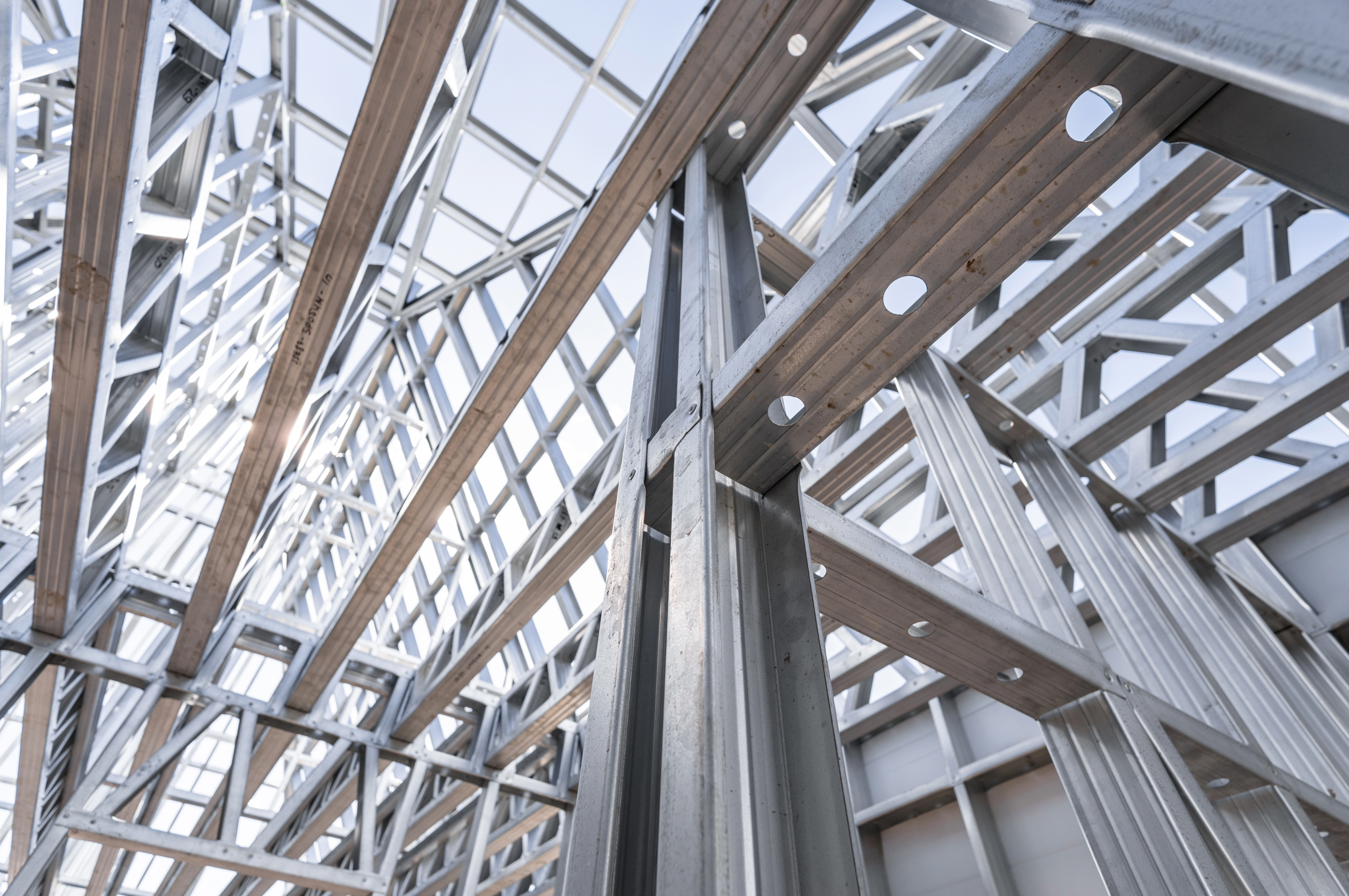
Construction robotics—autonomous bricklayers, rebar-tying bots, 3D-printing gantries, material-handling AMRs, welding robots, and demolition units—must survive dust, vibration, impacts, weather exposure, and heavy loads while maintaining precision and uptime. Formed steel structures (roll-formed rails, stamped frames, cold-forged joints, CNC-bent profiles, and welded assemblies) provide the optimal balance of strength, rigidity, cost, and manufacturability for these demanding applications. As a leader in precision metal forming, E-BI produces these rugged steel components in its facilities in China, Vietnam, and Thailand. This article explores the key roles and advantages of formed steel structures in construction robotics and how E-BI supports the industrialization of building sites.
Why Formed Steel Structures Excel in Construction Robotics
Construction environments are among the harshest for mobile robotics: heavy payloads (50–2,000 kg), shock from dropped tools/materials, constant vibration from nearby machinery, dust/silica exposure, and temperature swings (−20 °C to +50 °C). Formed steel delivers:
- High modulus of elasticity (~210 GPa) → minimal deflection under load
- Superior fatigue & impact resistance
- Cost-effective high-volume production
- Robust weldability & repairability on site
- Galvanizing & powder coating for corrosion resistance
Comparison to Alternatives
Formed steel outperforms:
- Aluminum extrusion: higher strength & lower cost for heavy-load applications
- Cast iron/steel: better fatigue life & lighter weight
- Composite structures: lower cost & easier field repair
Key Formed Steel Components in Construction Robots
1. Roll-Formed Steel Rails & Linear Guides
Used in: gantry-style 3D-printing robots, long-reach bricklaying arms, track-guided demolition units.
Advantages: continuous lengths up to 12 m, integrated tracks/cable channels, galvanized for outdoor use.
2. Stamped & Bent Frame Plates & Chassis
Used in: mobile material-handling bots, rebar-tying robots, autonomous scaffolding erectors.
Advantages: high-volume production of ribbed, flanged plates for stiffness; integrated mounting bosses & holes.
3. Cold-Forged Load-Bearing Joints & Yokes
Used in: articulated arms, scissor lifts, payload grippers, pivot points on heavy-duty robots.
Advantages: 30–50% higher fatigue strength, net-shape tooth profiles on gears/pinions.
4. CNC-Bent Protective Covers & Access Panels
Used in: electronics enclosures, battery compartments, sensor guards.
Advantages: custom angles, hemmed edges for safety, quick setup for small-to-medium runs.
5. Welded Structural Assemblies
Used in: complete chassis frames, mast towers, counterweight mounts.
Advantages: combines stamped/bent/extruded parts into rigid, repairable structures.
E-BI’s Formed Steel Capabilities for Construction Robotics
E-BI integrates multiple forming technologies with welding, machining, and finishing to deliver complete structural assemblies for construction robots.
Roll Forming & Extrusion
Long guide rails, frame stringers, and T-slot profiles in galvanized steel or anodized aluminum.
Stamping & CNC Bending
Progressive dies for high-volume brackets & covers; 6-axis press brakes for complex multi-bend chassis parts.
Cold Forging & Heat Treatment
High-strength joints, yokes, and shafts with carburizing & shot peening for extreme fatigue life.
Regional Manufacturing Advantages
China provides high-tonnage capacity and integrated heat treatment. Vietnam and Thailand offer cost-competitive production with short lead times to North American, European, and Middle Eastern construction robotics customers IndustryWeek.
Challenges & Optimization in Formed Steel for Construction Robots
Key challenges include:
- Surviving combined impact, vibration, and dust exposure
- Maintaining tight tolerances on long roll-formed/extruded profiles
- Achieving fatigue life under millions of load cycles
- Balancing weight & strength for mobile platforms
- Keeping costs low in a price-sensitive construction industry
E-BI optimizes through material selection (HSLA/galvanized steel), advanced die simulation, fatigue testing, and hybrid forming + machining + welding Wiley.
Building Tougher Construction Robots with E-BI
Formed steel structures provide the durability, rigidity, and cost-efficiency required for construction robotics to succeed in real-world job sites. E-BI’s multi-process metal forming expertise in China, Vietnam, and Thailand helps robotics companies build reliable, high-payload machines that can handle bricks, rebar, concrete, and demolition tasks day after day.
For teams developing autonomous bricklayers, rebar-tying robots, 3D-printing gantries, material-handling AMRs, or demolition units, partnering with E-BI provides a strategic advantage. Our proven formed steel capabilities and regional strengths can help you create tougher, more efficient construction robots. Connect with E-BI today to form the future of construction automation.