

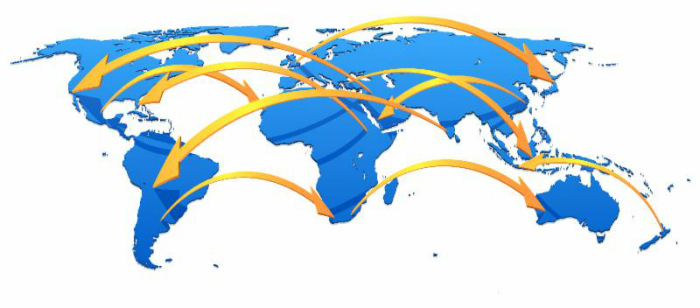
In the modern age of business, technology has made the world more interconnected than ever. This interconnectedness creates many new opportunities. Companies can now source from virtually anywhere in the world, and can create more efficient international supply chains. A company with international relationships, if applied properly, can have distinct competitive advantages such as lower material cost, operational costs, more equipment, labor, and manufacturing expertise. As a result, it can dedicate more effort to their core business.
International relationships have many benefits, but this is at the cost of having a more complex supply chain network which exposes to all international risk factors. As the complexity of a supply chain increases, it renders more prone to disruptions. If not properly managed, these supply chain disruptions can be surprisingly frequent, and can have disastrous consequences. In a survey conducted by the Business Continuity Institute (BCI), an international organization with over 5000 members, 85% of companies have suffered a supply chain disruption, and 50% have suffered multiple disruptions. The study also showed that companies with extended disruptions never recover. The most common mistake is to neglect the reliability and recovery ability of a supply chain in favor of greater cost reduction (Isn’t this what a buyer is supposed to do?). Bloomberg Business Week (October 5, 2015) describes this as a strategic risk management failure.
Although often overlooked, proper supply chain stabilization is essential to running an effective company. BCI studies have shown that companies that maintain established long term relationships with key suppliers and partners are less likely to have supply chain disruptions. If a supply network does get interrupted, such as a key sub-contractor going out of business, a company needs immediate resources to change suppliers, dial in manufacturing processes, and re-establish the supply chain to sustain business flow to prevent catastrophic business failure.
For over 15 years, E-BI has been helping clients in setting up and managing reliable international supply chains. From our years of experience, we understand how to incorporate resiliency into supply chain networks, minimizing the risks of disruptions. Our onsite teams help to prevent and rescue from risky supply chain situations, fighting against uncertainties far from clients’ home land.