

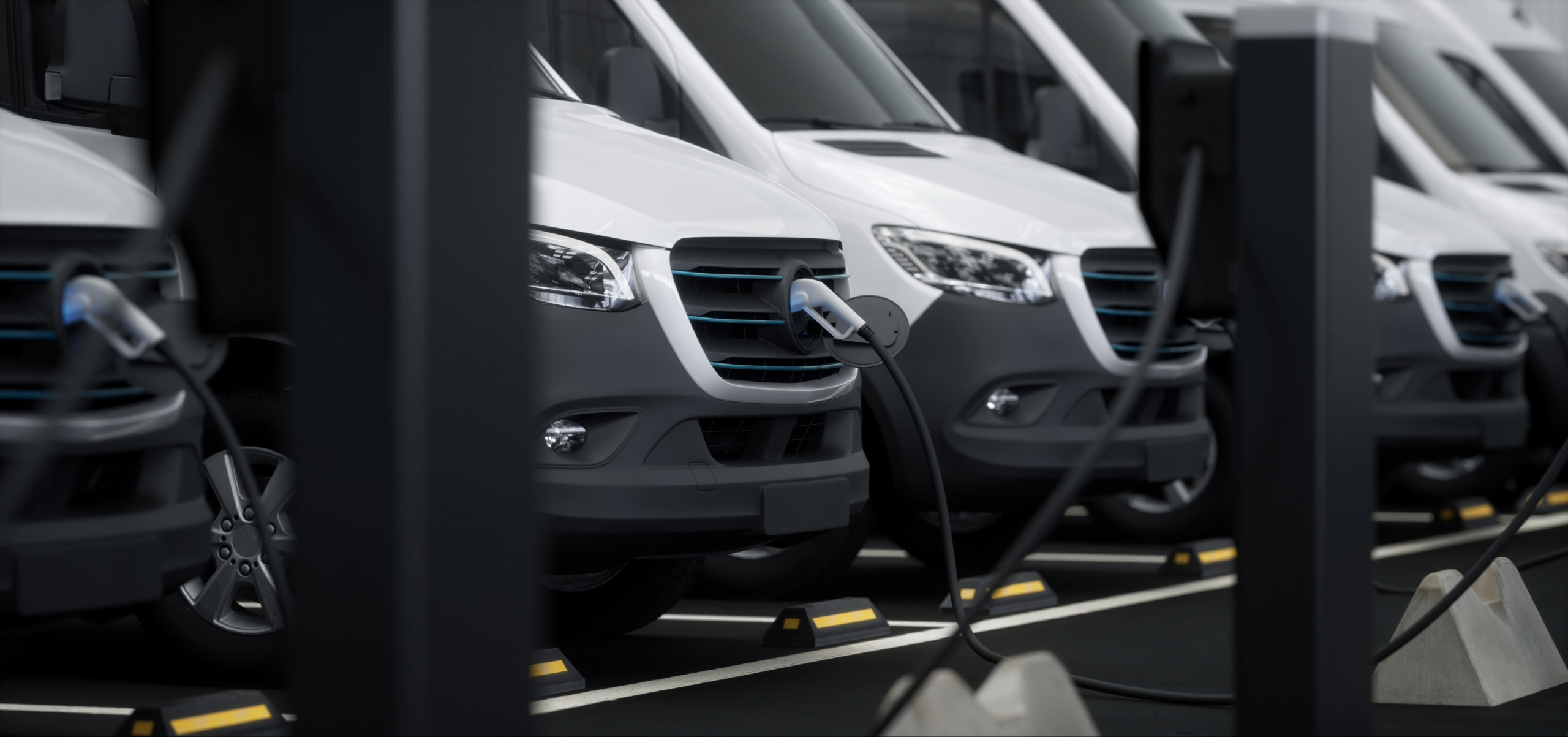
Electric delivery vehicles (vans, last-mile trucks, cargo bikes) are rapidly replacing diesel fleets in urban logistics due to zero tailpipe emissions, lower operating costs, and government incentives. The power management boards (PMBs) in these vehicles handle battery balancing, charging control, DC-DC conversion, and energy distribution—making them one of the most critical and heavily stressed electronic assemblies. E-BI manufactures high-current, automotive-grade PMBs in its IATF 16949-certified facilities across China, Vietnam, and Thailand. This article explores the design and manufacturing requirements for power management boards in EV delivery vehicles and how E-BI supports the electrification of last-mile logistics.
The Role of Power Management Boards in EV Delivery Vehicles
The global electric commercial vehicle market is projected to grow from USD 39.7 billion in 2022 to USD 162.0 billion by 2030, at a CAGR of 19.2% Grand View Research. In delivery applications, vehicles face frequent stop-start cycles, high payload variations, and urban driving patterns that stress the battery and power electronics.
Key Functions of Power Management Boards
PMBs in EV delivery vehicles typically integrate:
- High-voltage DC-DC converter (400–800 V to 12/24 V)
- Battery junction box / PDU (power distribution unit)
- Active cell balancing circuits
- On-board charger (OBC) control electronics
- Pre-charge / discharge circuits
- Current / voltage sensing and isolation
These boards must handle continuous currents of 100–400 A and peak currents exceeding 1,000 A during acceleration or regenerative braking.
Harsh Environment & Safety Requirements
Delivery vehicles operate in:
- Temperature range: −40 °C to +85 °C (under-hood & battery pack)
- Vibration & shock: 5–2000 Hz, 50 g
- Humidity & condensation: 95 % RH
- IP67–IP69K ingress protection
- Functional safety: ISO 26262 ASIL B–D for critical paths
PMBs must survive these conditions while maintaining high efficiency (> 95 %) and long service life (> 10 years) Jabil.
E-BI’s Capabilities for EV Power Electronics
E-BI’s automotive-grade lines are optimized for high-current, high-reliability power electronics used in EV powertrains and charging systems.
High-Current PCB & Assembly
We manufacture:
- 8–16 layer boards with thick copper (4–8 oz) for power planes
- Press-fit & screw terminals rated for 300–600 A
- Heavy-gauge busbars laminated or bolted to PCBs
- High-temperature laminates (FR-4 TG170, polyimide)
- Conformal coating & potting for humidity protection
Thermal & Reliability Engineering
Key features:
- Thermal vias, copper coins, and embedded heat spreaders
- Active cooling interfaces for liquid-cooled packs
- Extended thermal cycling & power cycling qualification
- Partial discharge & high-voltage withstand testing
Regional Manufacturing Advantages
China provides access to high-current power semiconductors and thick-copper PCB capability. Vietnam and Thailand offer cost-effective scaling with short lead times to North America, Europe, and Asia-Pacific markets IndustryWeek.
Challenges in EV Power Management Board Manufacturing
Key challenges include:
- Managing high current density without excessive heating
- Achieving low parasitic inductance for fast switching
- Ensuring long-term reliability under thermal cycling
- Maintaining ISO 26262 functional safety compliance
- Balancing cost with high-power performance
E-BI mitigates these through thermal simulation, low-inductance layouts, extensive HALT/HASS testing, and safety-certified processes Wiley.
Powering Electric Delivery Fleets with E-BI
Power management boards are critical for safe, efficient, and reliable electric delivery vehicles. E-BI’s automotive-grade manufacturing expertise in China, Vietnam, and Thailand delivers the high-current capability, thermal performance, and durability required for last-mile electrification.
For fleet operators, OEMs, and charging infrastructure providers developing electric vans, cargo e-bikes, or urban delivery robots, partnering with E-BI provides a strategic advantage. Our proven power electronics capabilities and regional strengths can accelerate your EV roadmap and help reduce urban emissions. Connect with E-BI today to electrify the future of delivery.