

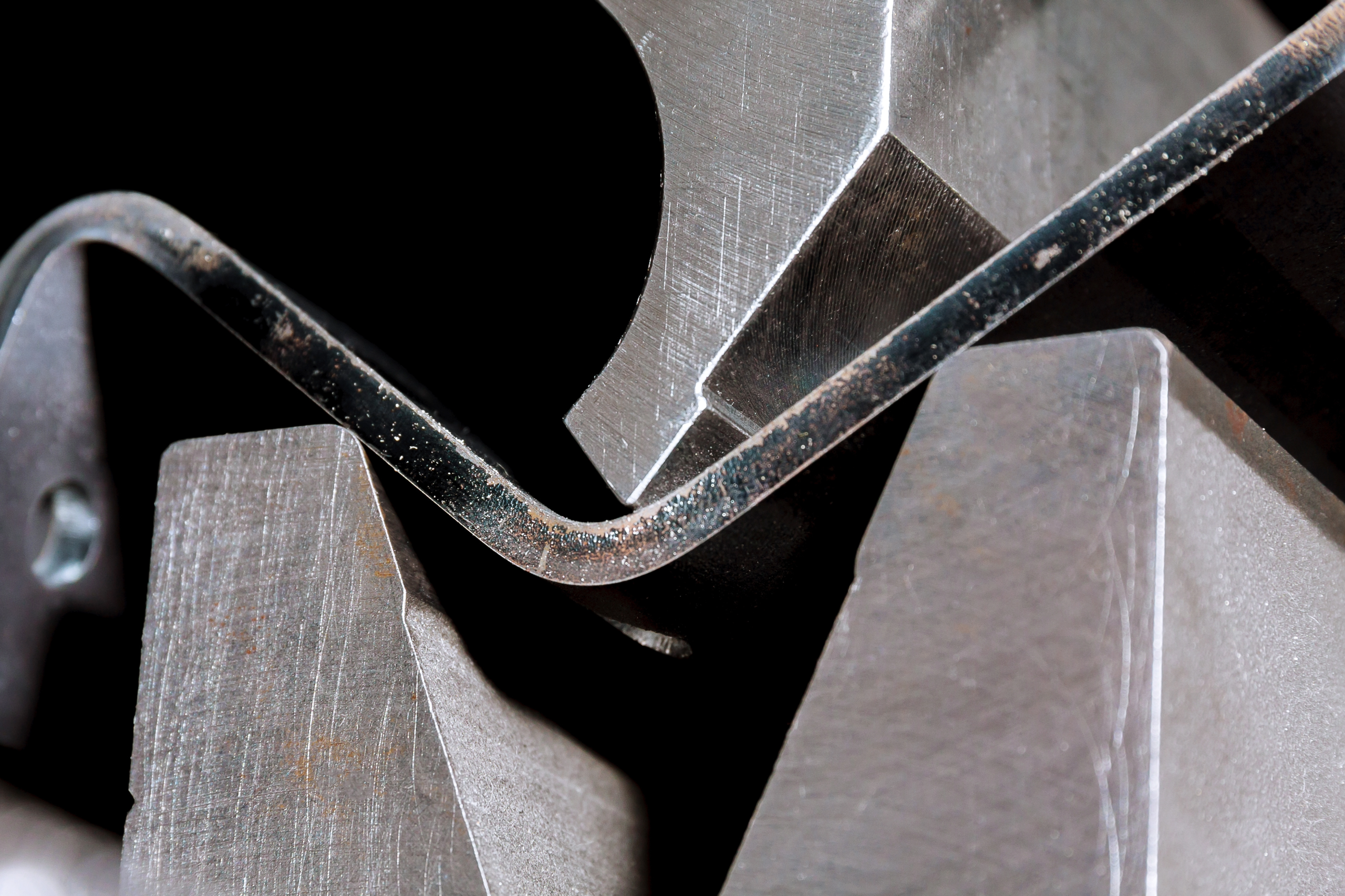
Custom robotic chassis designs require precise, repeatable bends in sheet metal or aluminum profiles to create complex geometries, mounting points, and structural features. CNC bending (also called CNC press brake forming) has become the gold standard for producing these high-accuracy, high-strength chassis components in both prototyping and production volumes. As a leader in precision sheet metal fabrication, E-BI specializes in CNC bending at its facilities in China, Vietnam, and Thailand. This article explains how CNC bending enables custom robotic chassis designs and how E-BI supports robotics companies with scalable, high-precision solutions.
Why CNC Bending Is Essential for Robotic Chassis
CNC bending uses computer-controlled press brakes to form sheet metal or thin extrusions into precise angles with consistent results. The global industrial robotics market is projected to reach USD 74.1 billion by 2026 Grand View Research, and custom chassis are a key differentiator in payload capacity, rigidity, and integration of sensors/actuators.
Key Advantages of CNC Bending for Robotics
- High angular accuracy: ±0.3° typical, ±0.1° achievable with advanced machines
- Repeatability: ±0.05 mm across thousands of parts
- Complex multi-bend sequences: 3–8 bends per part with automatic backgauge positioning
- Material versatility: aluminum (1–10 mm), stainless steel, mild steel, titanium
- Zero tooling change for most jobs: flexible V-dies and crowning systems
- Integrated features: hemmed edges, flanges, louvers, embosses in one setup
Typical Robotic Chassis Applications
CNC-bent components are used for:
- Frame rails and cross-members
- Battery trays and mounting plates
- Sensor brackets and camera housings
- Motor mounts and gearbox enclosures
- Protective covers and access panels
E-BI’s CNC Bending Capabilities for Robotics
E-BI operates modern CNC press brakes (up to 6 m length, 400-ton capacity) with 6–8 axis backgauges and automatic crowning for high-precision robotic chassis production.
Precision Bending Process
We deliver:
- Bend angles accurate to ±0.3° (down to ±0.1° on critical parts)
- Inside bend radii as small as 0.5× material thickness
- Multi-bend parts with automatic sequencing
- Offline programming & simulation for complex geometries
- Material spring-back compensation via real-time angle measurement
Materials & Post-Processing
Common materials:
- 5052-H32 & 6061-T6 aluminum (most common for robotics)
- 304/316 stainless steel for corrosion resistance
- Mild steel for cost-sensitive prototypes
Post-bending services:
- CNC laser cutting for holes/slots
- TIG/MIG/robotic welding
- Anodizing, powder coating, chem film
- Full chassis assembly & hardware installation
Regional Manufacturing Advantages
China offers high-tonnage press brakes and fast tooling turnaround. Vietnam and Thailand provide cost-competitive production with shorter lead times to North American and European robotics OEMs IndustryWeek.
Challenges in CNC Bending for Robotic Chassis
Key challenges include:
- Controlling spring-back in high-strength alloys
- Achieving consistent angles on long, multi-bend parts
- Preventing material cracking in tight radii
- Maintaining flatness after multiple bends
- Balancing precision with cost in medium-volume production
E-BI overcomes these through real-time angle measurement systems, material-specific bend allowances, offline simulation, and experienced operators Wiley.
Building Superior Robotic Chassis with E-BI
CNC bending enables custom robotic chassis with unmatched precision, repeatability, and design freedom. E-BI’s advanced press brake capabilities and regional manufacturing strengths in China, Vietnam, and Thailand deliver the high-quality bent sheet metal components that robotics companies need for strong, lightweight, and cost-effective designs.
For teams developing autonomous mobile robots, collaborative arms, inspection drones, or custom automation platforms, partnering with E-BI provides a strategic advantage. Our proven CNC bending expertise can help you create chassis that optimize weight, rigidity, and manufacturability. Connect with E-BI today to bend the future of robotic chassis design.