

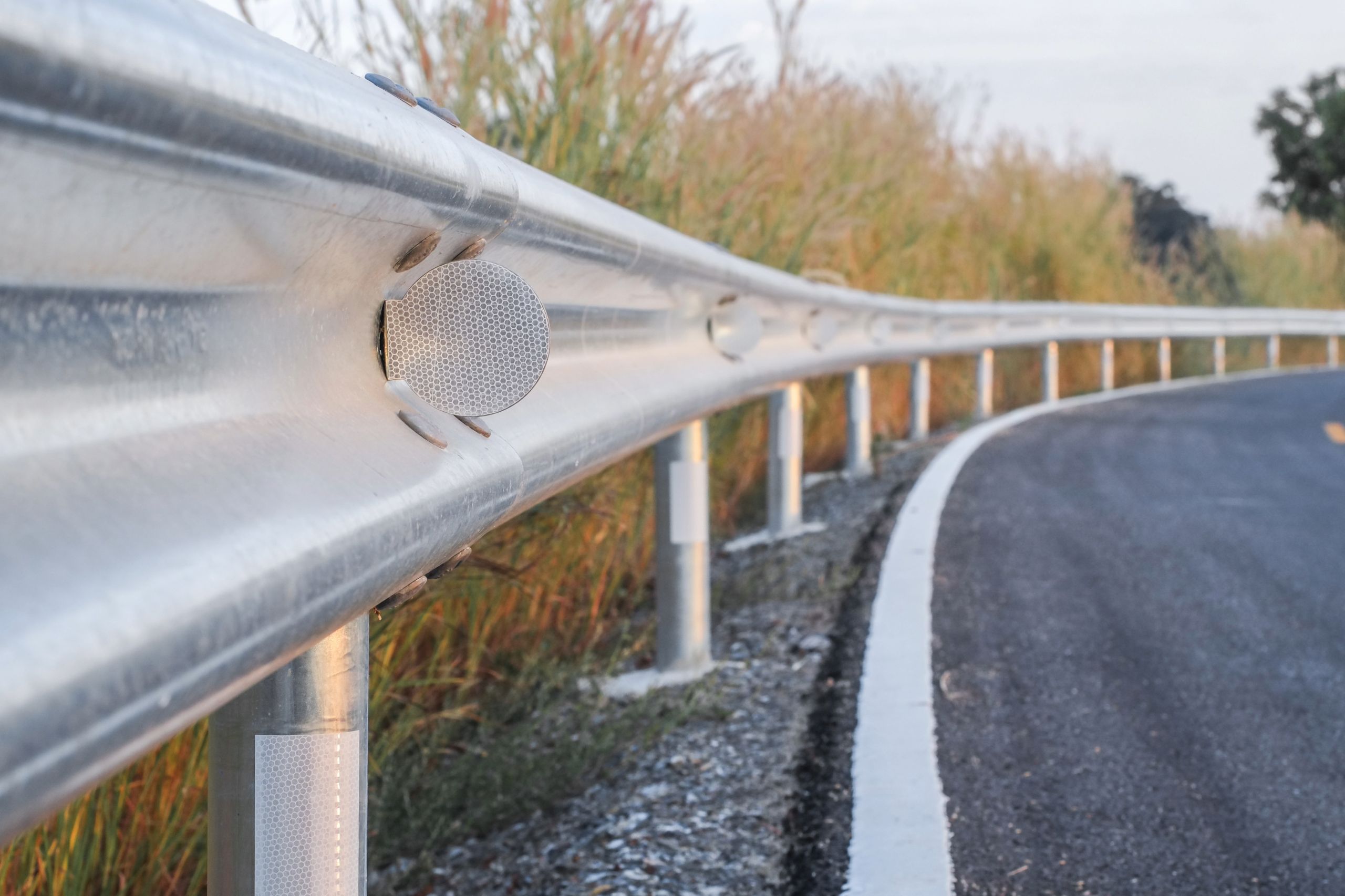
Roll-formed steel rails provide high-strength, cost-effective linear guidance and structural support in a wide range of robotic applications. Unlike extruded aluminum (light but lower load capacity) or machined steel (expensive and slow), roll-formed steel combines excellent stiffness, durability, and production scalability. As a specialist in precision metal forming, E-BI manufactures custom roll-formed steel rails and integrated assemblies in its facilities in China, Vietnam, and Thailand. This article explores the key robotic applications that benefit from roll-formed steel rails and how E-BI delivers high-volume, high-performance solutions.
Why Roll-Formed Steel Rails Excel in Robotics
Roll forming continuously shapes steel coil through a series of progressive dies, producing long, uniform profiles with tight tolerances and superior straightness. The global roll-formed steel market supports growing demand in automation, with robotics being a fast-growing segment Grand View Research.
Key Advantages Over Alternatives
- High stiffness & load capacity: Steel modulus (≈210 GPa) is ~3× that of aluminum
- Excellent straightness & flatness: roll-formed rails achieve <0.5 mm/m deviation
- Cost-effective at scale: continuous process with minimal secondary machining
- Custom cross-sections: integrated tracks, cable channels, mounting slots in one profile
- Durability: galvanized, stainless, or hardened steel for harsh environments
- Long lengths: continuous forming up to 12+ m without joints
Robotic Applications That Benefit Most from Roll-Formed Steel Rails
1. Linear Motion Guides in Industrial Robots
6-axis articulated arms and gantry robots use roll-formed steel rails as linear ways or support beams. Steel’s superior rigidity minimizes deflection under heavy payloads (50–500 kg), maintaining accuracy over long strokes (2–10 m).
2. Autonomous Mobile Robots (AMRs) & AGVs
AMRs and automated guided vehicles use roll-formed steel rails as floor tracks or chassis side rails. Galvanized or stainless profiles provide corrosion resistance in warehouses, while integrated T-slots allow easy mounting of sensors, batteries, and drive units.
3. Material Handling & Conveyor Systems
Robotic sorting lines, palletizers, and conveyor robots use roll-formed steel rails as structural frames and guide rails. Steel’s high load capacity supports heavy pallets (up to 1,500 kg) without sagging or twisting.
4. Collaborative Robot (Cobot) Frames & Extensions
Cobots with extended reach or custom tooling use roll-formed steel rails for lightweight yet rigid extensions. Steel profiles with integrated cable channels protect wiring during motion.
5. Heavy-Payload & Welding Robots
Robots handling large parts (automotive body-in-white, shipbuilding) use roll-formed steel rails for base frames and linear axes. High-strength steel (S355, S700) maintains rigidity under 1,000+ kg loads.
E-BI’s Roll-Formed Steel Rail Capabilities for Robotics
E-BI operates multi-stage roll forming lines (up to 20 stations) with in-line punching, notching, and cutoff, optimized for robotic applications.
Profile & Material Range
We produce:
- Standard & custom linear rail profiles (C-channel, I-beam, T-slot, U-channel)
- Thickness: 1.0–6.0 mm
- Materials: mild steel, high-strength low-alloy (HSLA), galvanized, stainless 304/316
- Lengths up to 12 m (single piece)
- Tolerances: ±0.2 mm width, ±0.5 mm/m straightness
Secondary Processing & Finishing
Value-added services:
- In-line CNC punching & notching
- Precision cutting & deburring
- Galvanizing, powder coating, zinc plating
- Welding & assembly of complete rail systems
- 100% straightness & dimensional inspection
Regional Manufacturing Advantages
China offers high-speed roll forming and large-scale capacity. Vietnam and Thailand provide cost-competitive production with shorter lead times to North American and European robotics OEMs IndustryWeek.
Challenges in Roll-Formed Steel Rails for Robotics
Key challenges include:
- Maintaining tight straightness over long lengths
- Controlling twist & bow in asymmetric profiles
- Achieving consistent hardness after galvanizing
- Ensuring repeatability across large production runs
- Balancing weight & strength for mobile robots
E-BI overcomes these through advanced roll tooling design, real-time monitoring, straightening presses, and statistical process control Wiley.
Building Better Robots with E-BI
Roll-formed steel rails deliver unmatched stiffness, durability, and cost-efficiency for linear motion, structural framing, and heavy-duty robotic applications. E-BI’s roll forming, machining, and assembly expertise in China, Vietnam, and Thailand provides robotics companies with the high-quality steel profiles they need for reliable, high-performance machines.
For teams designing industrial 6-axis robots, AMRs, gantry systems, or heavy-payload automation, partnering with E-BI offers a strategic advantage. Our proven roll-formed steel capabilities and regional strengths can help you build stronger, more precise, and more economical robotic structures. Connect with E-BI today to roll-form the future of robotics.