

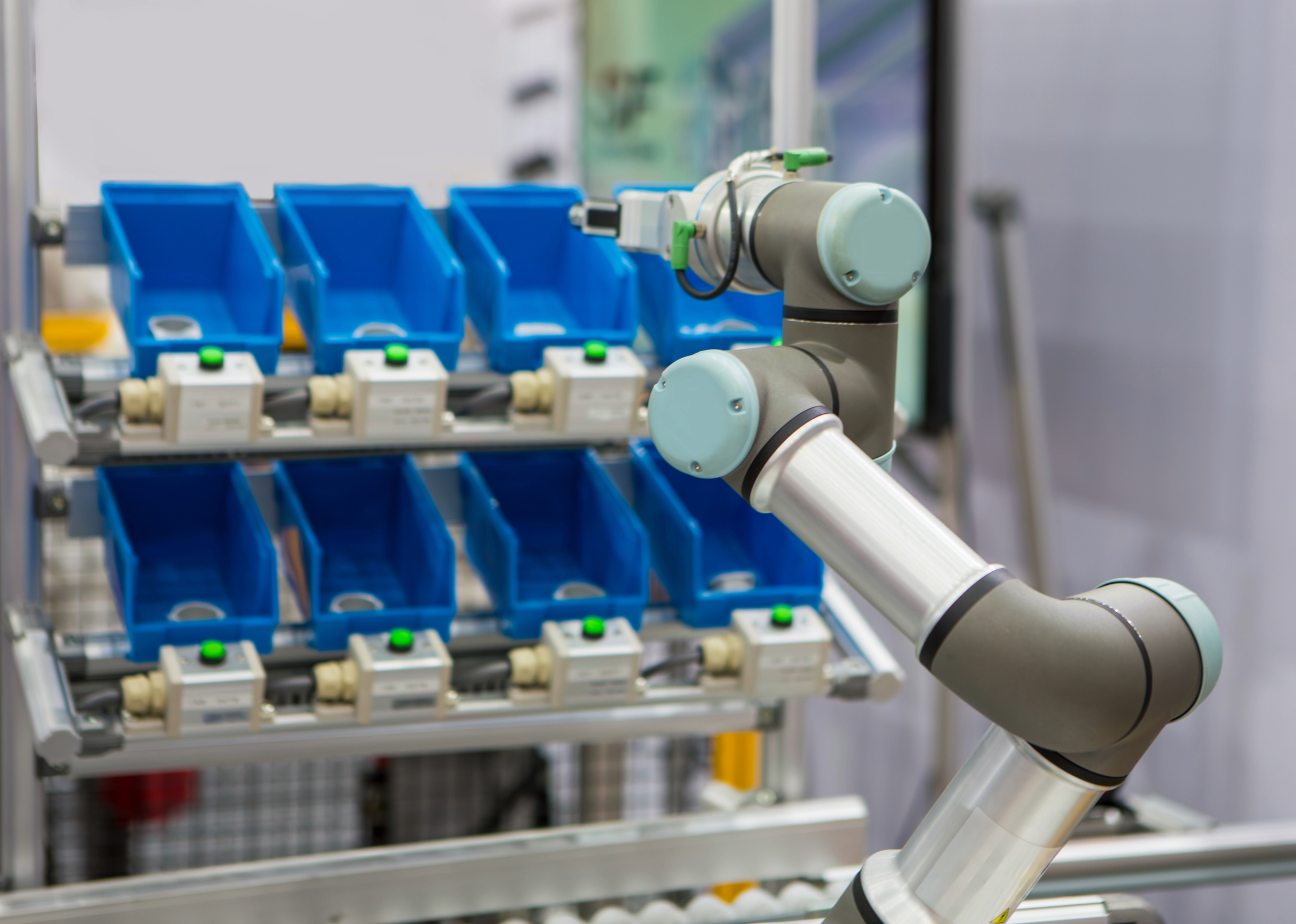
3D vision robotic bin picking matters because automation becomes more flexible when robots can handle parts that are not perfectly arranged. Traditional automation often depends on trays, fixtures, feeders, or repeated part positioning to make robot motion predictable. Bin picking changes that requirement by using 3D machine vision to identify parts in less structured environments and guide the robot toward a successful pick. This is valuable for manufacturers that want to reduce manual handling, simplify material flow, and automate repetitive loading tasks. For companies building robotic bin picking systems, reliable performance depends on the full system working together: 3D sensing, robot motion, gripper selection, software, calibration, and manufacturing quality.
Why Bin Picking Matters
Many automated systems work best when parts arrive in a predictable position. That can be effective, but it often requires extra equipment to organize parts before the robot can interact with them. Trays, fixtures, vibratory feeders, and manual staging can make automation easier for the robot, but they also add cost, space requirements, and process steps.
Robotic bin picking addresses this problem by allowing a robot to identify and pick parts directly from a bin. Instead of designing the entire process around perfectly presented parts, manufacturers can use 3D vision to help the robot understand where parts are and how they are oriented. This is especially useful at the beginning of a manufacturing process, where bulk parts may need to be loaded into a machine, placed on a conveyor, or moved into the next step of production.
The value of bin picking is flexibility. When it works well, it reduces the need for manual part handling and makes automation more practical in environments where parts are not naturally organized.
How 3D Vision Supports Robotic Picking
A robotic bin picking system needs to answer several questions before the robot moves. It needs to identify where a part is located, determine its orientation, decide whether it can be picked, and guide the robot through a safe path. 3D vision provides the depth information needed to make those decisions.
In a typical system, a 3D camera or sensor captures the bin and creates spatial data that software can use to locate pickable parts. The robot then uses that information to approach the part with the correct angle and avoid surrounding objects. Modern 3D vision systems for bin picking are built around this connection between perception and motion.
This makes bin picking different from simple inspection. The vision system is not only judging whether something is acceptable. It is helping the robot physically interact with the part. That means perception errors can turn into failed picks, dropped parts, collisions, or interrupted production.
Why Unstructured Parts Are Difficult
Bin picking is challenging because parts rarely sit in the bin in a clean, predictable pattern. Parts can overlap, tilt, reflect light, block each other, or sit too deep for the robot to reach easily. A system may also need to handle parts with dark surfaces, shiny finishes, or complex geometry.
These conditions make sensing more difficult. A flat part with clean edges may be easy to detect, while a pile of reflective metal components can produce noisy or incomplete 3D data. If the system cannot understand the part position accurately, the robot may choose a poor grasp or move toward a location that is not safe.
The robot also needs a suitable gripper for the part. Vacuum, magnetic, and mechanical grippers each work better in different situations. The best bin picking systems are designed around the part, the bin, the robot, and the production goal rather than treating vision as a camera added at the end.
From Detection to Grasp Planning
The most important difference between bin picking and standard machine vision is that detection is only the first step. Once the system sees the part, it still needs to decide how the robot should pick it.
This is where grasp planning becomes important. The software must evaluate which parts are accessible, which surfaces can be gripped, and whether the robot can move without colliding with the bin or surrounding parts. In some applications, machine learning can help improve recognition and picking decisions by learning from examples of successful and unsuccessful picks.
That makes robotic bin picking a full automation problem. The vision system, robot arm, gripper, and control software all affect whether the cell performs reliably. A good image is not enough if the robot cannot turn that information into repeatable motion.
Manufacturing Reliability Behind Bin Picking
Systems
For companies developing robotic bin picking systems, reliability depends on consistent hardware and repeatable integration. A system may include 3D cameras, lighting, processing electronics, robot mounts, protective enclosures, grippers, cables, and factory communication components. Each part must support accurate sensing and stable operation in the production environment.
Manufacturing quality matters because small physical changes can affect the data the robot receives. Sensor alignment, mounting stiffness, enclosure durability, cable routing, and calibration repeatability all influence how well the robot identifies and picks parts. If those elements vary from unit to unit, the system may perform differently after deployment than it did during development.
Production testing should reflect the real task the system is built to perform. A bin picking system needs validation that considers part presentation, robot motion, grasp success, sensor stability, and communication with the rest of the production line. This is especially important because the system is not only inspecting parts, it is physically moving them.
Conclusion
3D vision robotic bin picking shows how machine vision is moving beyond inspection and into flexible automation. These systems help robots understand unstructured parts, plan picks, and reduce the need for manual staging or fixed presentation.
For companies building bin picking systems, long term reliability depends on more than software performance. 3D sensors, mounts, grippers, enclosures, calibration, production testing, and component quality all affect whether the system works consistently in real industrial environments. At e-bi, this is where manufacturing expertise becomes valuable: helping companies turn robotic bin picking technology into scalable products built for dependable automation.