

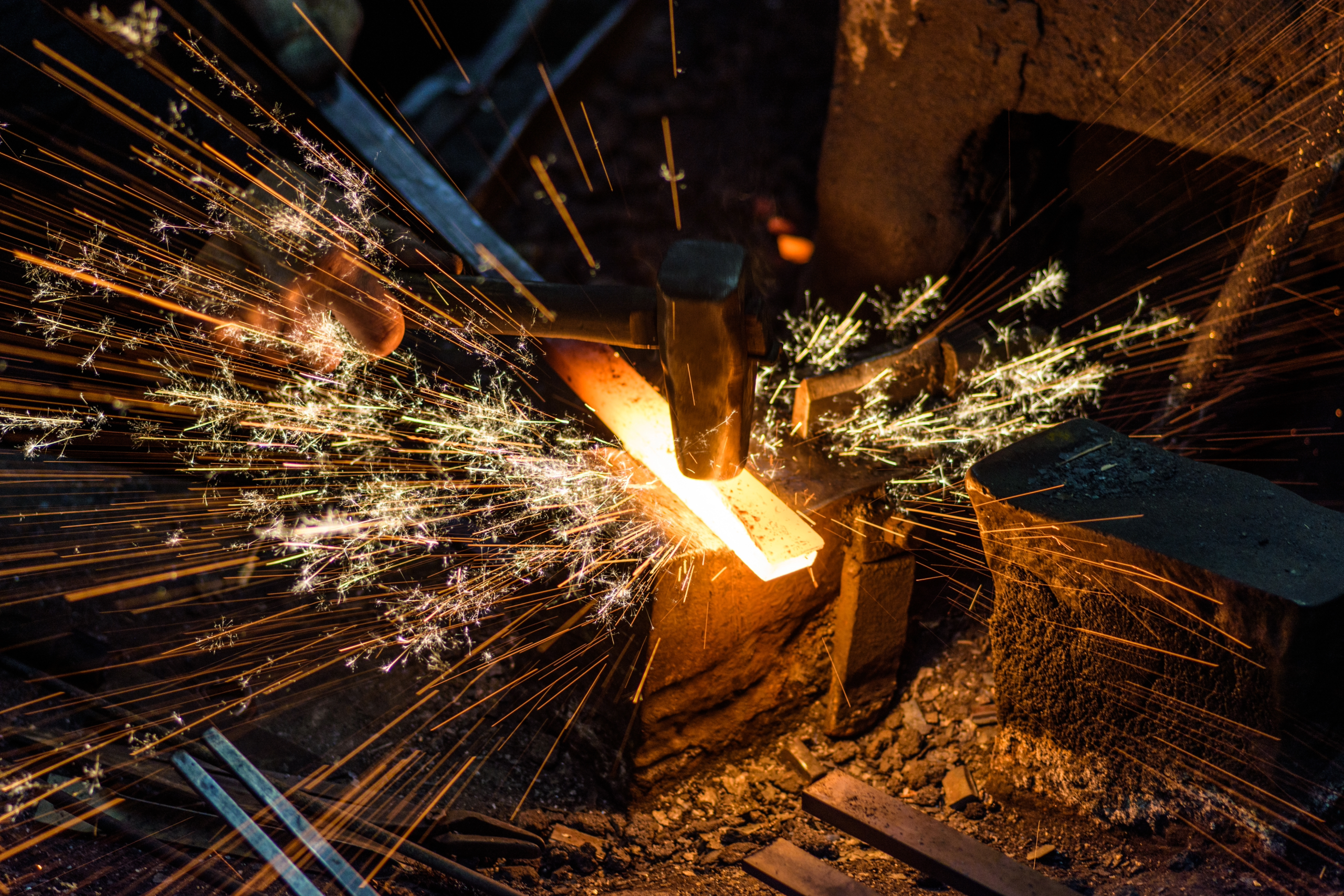
Robotic gears must endure millions of cycles under high torque, shock loads, and continuous operation while maintaining precise backlash and minimal wear. Cold forging has emerged as the preferred manufacturing method for producing high-strength, fatigue-resistant gears for industrial, collaborative, and mobile robots. As a leader in precision metal forming, E-BI specializes in cold-forged gears and components at its facilities in China, Vietnam, and Thailand. This article explains how cold forging delivers superior durability for robotic gears and how E-BI supports robotics OEMs with scalable, high-performance solutions.
Why Cold Forging Outperforms Other Gear Manufacturing Methods
Cold forging shapes metal at room temperature using extreme pressure (up to 2,000 MPa), resulting in superior material properties compared to machining, warm forging, or casting. The global precision gear market is expected to exceed USD 25 billion by 2030, with cold-forged gears gaining share in high-performance robotics Grand View Research.
Key Benefits of Cold-Forged Robotic Gears
Cold forging produces gears with:
- Improved grain structure and work-hardening → 20–40% higher fatigue strength
- Excellent surface finish (Ra 0.4–0.8 μm) → reduced need for secondary grinding
- Tight tolerances (±0.01–0.03 mm) directly from the die
- Material savings of 30–50% vs machining from bar stock
- Consistent mechanical properties across high-volume batches
Comparison to Other Methods
Cold forging outperforms:
- Machining: faster cycle time, better grain flow, lower cost per part
- Warm/hot forging: no scale, tighter tolerances, higher surface quality
- Powder metallurgy: superior density and fatigue life for high-load gears
E-BI’s Cold Forging Capabilities for Robotic Gears
E-BI operates multi-stage cold forging presses (up to 1,600 tons) and secondary finishing lines dedicated to precision gears and transmission components.
Precision Cold Forging Process
We produce:
- Spur, helical, bevel, and planetary gears up to module 6
- High-strength alloys: 16MnCr5, 18CrNiMo7-6, SCM420H
- Complex tooth profiles with net-shape or near-net-shape forming
- Multi-stage progression dies for high complexity
- Tolerances ±0.015 mm on pitch diameter and tooth profile
Secondary Operations & Finishing
Post-forging capabilities include:
- Precision gear shaving & grinding (AGMA 10–12 quality)
- Heat treatment (carburizing, carbonitriding, induction hardening)
- Surface finishing (shot peening for fatigue improvement)
- 100% inspection with gear measuring centers
Regional Manufacturing Advantages
China offers large-tonnage presses and full heat-treatment integration. Vietnam and Thailand provide cost-competitive finishing and assembly with short lead times to North American and European robotics OEMs IndustryWeek.
Challenges in Cold Forging Robotic Gears
Key challenges include:
- Die life under high tonnage and abrasive materials
- Maintaining tight tolerances on helical & bevel gears
- Controlling residual stress & distortion after heat treatment
- Achieving consistent tooth profile accuracy at scale
- Balancing tooling cost with medium-to-high volume economics
E-BI overcomes these through carbide dies, finite element die simulation, controlled heat treatment, and automated inspection Wiley.
Building More Durable Robots with E-BI
Cold forging produces robotic gears with exceptional fatigue life, precision, and material efficiency—critical for high-cycle, high-torque applications. E-BI’s cold forging and finishing expertise in China, Vietnam, and Thailand delivers the durable, accurate gears that robotics companies need for long-service-life transmissions.
For robotics teams developing industrial arms, collaborative cobots, AMRs, or planetary gearboxes, partnering with E-BI provides a strategic advantage. Our proven cold forging capabilities and regional strengths can help you achieve superior gear performance and cost efficiency. Connect with E-BI today to forge stronger, longer-lasting robotic gears.