

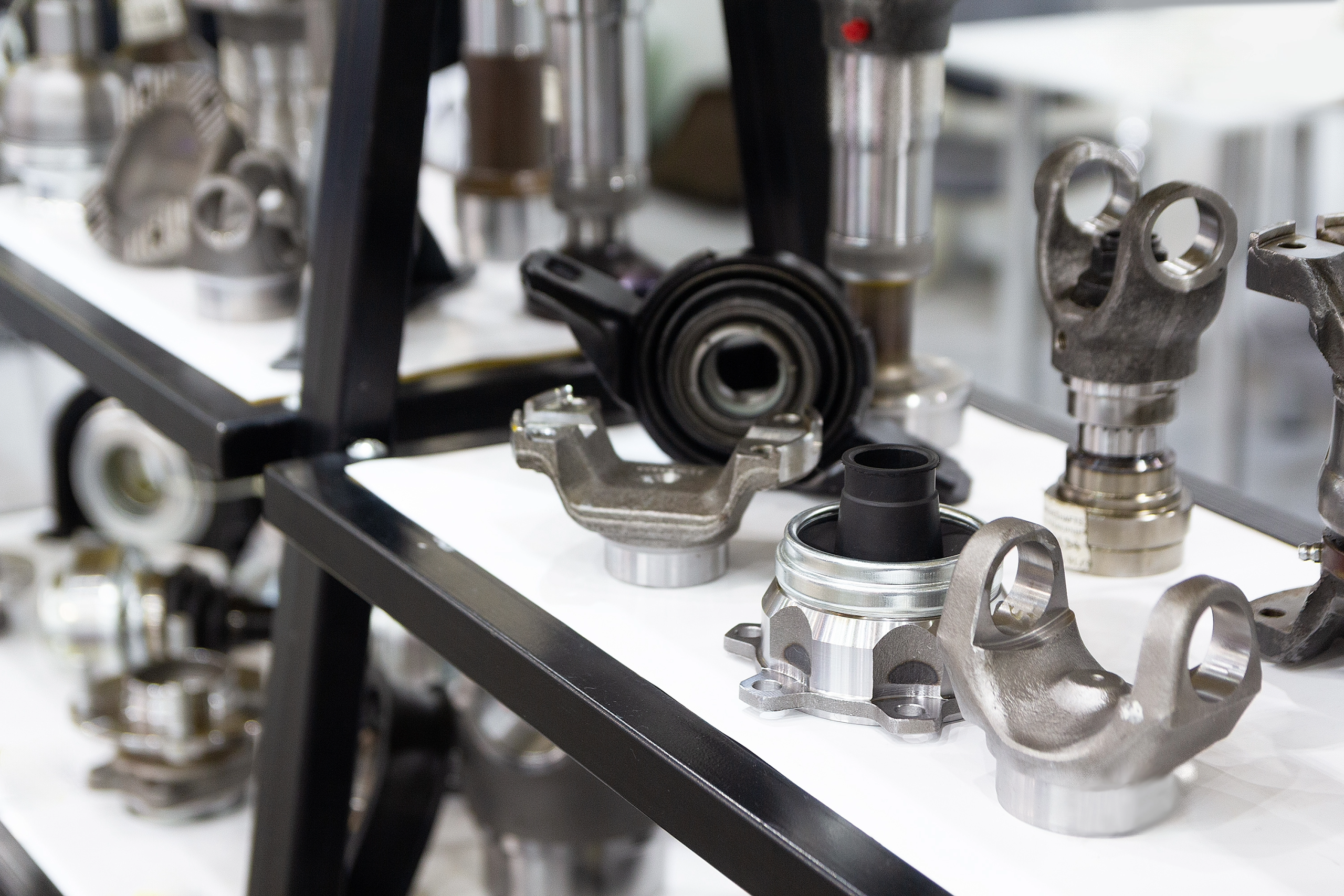
Warehouse automation robots—autonomous mobile robots (AMRs), automated guided vehicles (AGVs), robotic picking arms, sortation systems, and palletizers—depend on formed metal components for structural integrity, precise motion, and long service life under heavy loads and continuous operation. Formed metal parts (stamped, forged, extruded, roll-formed, bent, and deep-drawn) offer the strength, repeatability, and cost-efficiency required for high-throughput logistics. As a leader in precision metal forming, E-BI manufactures these components in its facilities in China, Vietnam, and Thailand. This article explores the key formed metal applications in warehouse robots and how E-BI delivers scalable, high-performance solutions.
Why Formed Metal Components Dominate Warehouse Robotics
Warehouse robots handle payloads from 10 kg (small AMRs) to 1,500+ kg (pallet movers), operate 20+ hours/day, and must survive impacts, vibration, and frequent stops/starts. Formed metal components provide:
- High strength-to-weight ratio
- Excellent fatigue and impact resistance
- Repeatable tolerances for reliable assembly
- Cost-effective high-volume production
- Design flexibility for custom features (mounting bosses, cable channels)
Key Forming Processes Used in Warehouse Robots
- Stamping / Progressive Die — chassis brackets, sensor mounts, battery trays
- Cold Forging — drive shafts, wheel hubs, load-bearing yokes
- Aluminum Extrusion — frame rails, linear guide supports, mast structures
- Roll Forming — long guide rails, conveyor side channels
- CNC Bending — protective covers, access panels, custom enclosures
- Deep Drawing — motor housings, wheel wells, battery compartments
Critical Applications of Formed Metal in Warehouse Robots
1. AMR / AGV Chassis & Frame Rails
Most AMRs use aluminum extrusion for main frame rails (lightweight, rigid) combined with stamped steel brackets and forged load-bearing nodes. Roll-formed steel rails provide low-cost linear guidance for heavy-payload AGVs.
2. Lifting & Payload Handling Mechanisms
Scissor lifts, forks, and conveyor tops require:
- Stamped high-strength steel links & yokes
- Cold-forged pivot pins & bushings
- Bent & welded sheet metal lift platforms
These parts endure millions of lift cycles under 500–1,500 kg loads.
3. Drive & Wheel Assemblies
Wheel hubs, motor mounts, and gearbox housings use:
- Cold-forged steel hubs for durability
- Stamped steel motor adapters
- Deep-drawn aluminum motor covers
4. Protective Covers & Enclosures
CNC-bent and stamped sheet metal covers protect electronics from dust, impacts, and liquid spills. Formed metal offers better impact resistance than injection-molded plastic in high-traffic warehouses.
E-BI’s Formed Metal Capabilities for Warehouse Robotics
E-BI operates a full suite of forming technologies tailored to warehouse automation.
Stamping & Cold Forging
Progressive dies for high-volume brackets & covers; 400–1,600 ton presses for cold-forged hubs & yokes with near-net-shape teeth and splines.
Extrusion & Roll Forming
Custom T-slot aluminum profiles for AMR frames; roll-formed steel C-channels and guide rails up to 12 m long.
Secondary Operations & Finishing
CNC machining, robotic welding, powder coating, galvanizing, and full chassis assembly—all under one roof.
Regional Manufacturing Advantages
China provides high-tonnage capacity and rapid tooling. Vietnam and Thailand offer cost-competitive production with short lead times to North America, Europe, and Asia-Pacific markets IndustryWeek.
Challenges in Formed Metal for Warehouse Robots
Key challenges include:
- Balancing weight & payload capacity in mobile robots
- Achieving tight tolerances across long extruded/roll-formed rails
- Ensuring fatigue life under millions of cycles
- Managing cost in competitive logistics markets
- Integrating formed metal with sensors & electronics
E-BI overcomes these through material optimization, advanced die simulation, fatigue testing, and hybrid manufacturing (formed metal + machining + assembly) Wiley.
Powering Warehouse Automation with E-BI
Formed metal components—stamped brackets, cold-forged hubs, extruded frames, roll-formed rails—deliver the strength, precision, and cost-efficiency required for high-throughput warehouse robots. E-BI’s comprehensive forming and assembly expertise in China, Vietnam, and Thailand helps robotics companies build reliable, scalable automation solutions.
For teams developing AMRs, AGVs, sortation robots, or pallet-handling systems, partnering with E-BI provides a strategic advantage. Our proven formed metal capabilities and regional strengths can help you optimize weight, durability, and cost. Connect with E-BI today to form the future of warehouse robotics.